Pearson's holiday peaks, in one paragraph
Pearson's peaks are the Christmas fortnight (the Friday before the holiday to the first Sunday of January — December 20–23 and January 2–4 the worst days of the year), the March Break week, the Thanksgiving Friday and Monday, the Family Day and Easter weekends, the summer Fridays and Sundays from late June to Labour Day, and the US Thanksgiving Wednesday and Sunday for the cross-border flights; a peak day means terminal roads queued to the 427, a departures curb policed to a thirty-second stop, sixty to ninety minutes at check-in and security, an hour in the customs hall on the return, full garages and surging taxi and rideshare queues; the fleet's rules are the pickup moved thirty to sixty minutes earlier (how early to book), the flat rate that does not surge, the meet-and-greet inside the terminal on the return with the wait included, the flight tracked through the winter's cancellations, and the booking window of a month for the Christmas fortnight; the Sprinters carry the family peak, Billy Bishop and Hamilton are the alternatives, and the cancellation policy covers the flight that does not fly.
Toronto Pearson is Canada's busiest airport — more than 45 million passengers a year through two terminals on one set of roads — and its year has a shape that every dispatcher knows by heart: a Christmas fortnight that carries a tenth of the year's traffic, a March Break week when the sun flights fill every Sprinter in the fleet, the long weekends' Fridays, the summer's every Friday and Sunday, and the January Monday when the corporate accounts fly back. On those days the airport's roads, curbs, queues and taxi ranks all fail at once, and the black car's value is that it does not: the pickup is earlier, the rate is the same, the chauffeur is inside the terminal, and the cancelled flight has a plan. This guide sets out the peaks by date, what the peak looks like, the fleet's rules, the winter overlay, the family and the corporate peaks, the terminal notes, the alternatives, the cancellations, and a worked December 22.
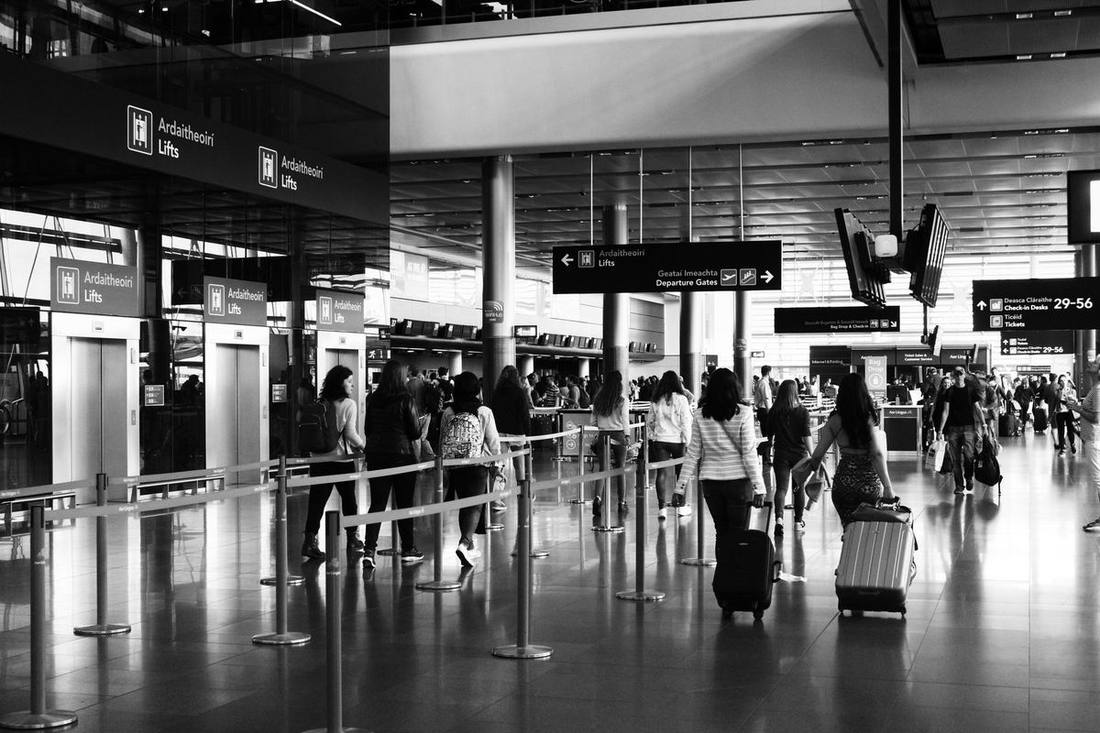
The peaks by date
The GTAA's own pattern, repeated every year: the Christmas fortnight — from the Friday before Christmas week to the first Sunday of January, with the departures peaking on December 20–23 (the last school day and the three after) and the returns on January 2–4 (the Sunday and the Monday after New Year's are the two busiest arrival days of the year — the customs hall's hour); the March Break (Ontario's schools' second week of March — the Friday and the Saturday before are the sun-flight departures peak, the Sunday after the return; the families with luggage article); Thanksgiving (the Friday out, the Monday back — the long weekends article); Family Day and Easter (the same shape, smaller); the summer — every Friday afternoon and Sunday evening from the last week of June to Labour Day, with the Canada Day and Civic Holiday Fridays and the last Sunday of August the peaks (the Europe flights, the domestic, the cruise passengers); the US Thanksgiving (the Wednesday before and the Sunday after — the cross-border and the Black Friday shoppers' Buffalo alternative); and the conference peaks (PDAC's first Sunday of March, Collision-scale events, the trade show season) that stack a business peak on a leisure one. The daily count on a peak day passes 150,000 passengers against an average of 125,000.
What the peak looks like
The roads: the terminal loop road backed up to the 427's ramps at 6 a.m. and 4 p.m., the Terminal 1 departures level's inner and outer curbs both full, the Terminal 3's tighter loop worse; the curb: the GTAA's and the Peel police's enforcement — a thirty-second stop, no waiting, the vehicles waved on and ticketed, the arrivals pickup doors article's designated limo zones the only legal wait; check-in and security: sixty to ninety minutes for the international departures at Terminal 1 in the morning peak (the CATSA's queues, the airlines' bag-drop lines, the NEXUS and the Verified Traveller lanes as the escape), forty-five for the domestic; the customs hall: an hour on January 2–4 and the March Break Sunday (the primary inspection kiosks' queue, the CBSA's staffing, the connecting passengers — the international arrivals article); the parking: the garages full by the fortnight's second day, the Value Park lots and the shuttle's queue; the taxi and rideshare: the ranks' queues of forty minutes, the rideshare surge pricing doubling and tripling (the limo vs UP Express vs taxi article); the UP Express: standing room on the peak days; the lounges: full, and the Financial District's executives who arrive early have nowhere to sit.
The fleet's rules
The pickup moved earlier: the how early to book article's standard (three hours before an international departure, two before a domestic, plus the rush hour's buffer) gets thirty to sixty minutes added on a peak day — dispatch moves it and tells the passenger the night before; the December 22 international departure at 9 a.m. from Yorkville is a 5:15 pickup. The flat rate does not surge: the flat rate article's number is the same on December 22 as on a Tuesday in February — the how much does a black car cost article's comparison with the rideshare's tripled fare is the peak's argument. The meet-and-greet inside: on the return the meet-and-greet is the standard on a peak day — the chauffeur at the arrivals hall's door with the sign, the bags to the cart, the walk to the limo zone, no curb chaos; the wait through the customs hall's hour is included in the flat rate (the flight delays article's policy — the fleet tracks the flight's actual arrival and the customs time and does not charge the wait). The flight tracked: the winter storm article's tracking through the de-icing delays, the cancellations and the rebookings — the chauffeur's text at the curb and the car that comes back for the rebooked flight. The booking window: a month for the Christmas fortnight's runs (the fleet's peak-day roster is full by December 1), a fortnight for the March Break and the summer Fridays, a week for the long weekends; the corporate account's standing bookings hold their slots. The right vehicle: the luggage capacity article's rule — the family of four with four large bags is an Escalade, the six with the ski bags a Sprinter, and the fleet does not send a sedan to a March Break pickup.

The winter overlay
The Christmas fortnight and the March Break are winter peaks, and the winter storm article's conditions stack on the crowd's: the de-icing queue that adds forty minutes to every departure on a freezing-rain morning, the cancellations on a storm day (the December 2022 storm's thousands of stranded passengers is the fleet's reference), the diversions and the two-hour holds, the winter driving article's 427 in a squall; the fleet's plan — the earlier pickup, the AWD vehicle, the passenger's cancelled flight met with the car that takes them home or to the airport strip hotels and returns for the rebooking, and the long-distance article's Ottawa or Montreal by road when the corridor is grounded.
The family peak
March Break and the Christmas fortnight are the families with luggage article's peaks — the sun flights to Cancún, Punta Cana, Orlando and the Caribbean (the Thursday and the Friday of the break's start, the Sunday of its end), the child seats installed the night before, the Sprinters for the two families travelling together, the Terminal 1 vs 3 split by charter airline, the check-in's ninety minutes with the stroller, and the return's lost luggage at the carousel on the Sunday night; the fleet's family rule is the pickup at the door with the bags carried, the red-eye's 4 a.m. for the 7 a.m. charter, and the airport etiquette article's gratuity for the chauffeur who carried six bags and a car seat through the Terminal 3 curb's chaos.
The corporate peak
The first Monday and Tuesday of January — the corporate accounts' return (the consulting firms article's Monday-out, Thursday-back cycle restarting), the Financial District's 6 a.m. departures to New York and Calgary, the executive assistants' guide's standing bookings that the fleet holds through the fortnight; the PDAC Sunday (the mining conferences article's 30,000 delegates' arrival); the September's first week (the return from the summer); and the private aviation FBOs' peaks that mirror the terminals' (the Christmas fortnight's charters — the FBO page).
Terminal notes on a peak day
Terminal 1 (Air Canada, Star Alliance, the international) — the departures level's inner curb for the limo drop, the arrivals level's Door D and the limo zone for the pickup, the customs hall's exit at the arrivals hall's centre where the meet-and-greet stands, the connecting flights article's LINK train; Terminal 3 (WestJet, the charters, the American and the Oneworld) — the smaller loop's worse queue, the departures curb's tighter enforcement, the arrivals hall's two exits (the domestic and the international), the charter airlines' Friday morning at 4 a.m.; both — the cell phone lot where the chauffeur waits for the "I have my bags" text on a point-to-point pickup, the limo zones' twenty-minute allowance, and the GTAA's peak-day advisories that dispatch reads at 4 a.m.
The alternatives
Billy Bishop — Porter's domestic and American flights from the island, the tunnel, no terminal-road queue, the ten minutes from the core — is the peak's escape for the Ottawa, Montreal, Halifax, Boston, New York, Chicago and Washington passenger (Pearson vs Billy Bishop); Hamilton's Swoop and Flair sun flights an hour west with no queue (the Hamilton airport article); Buffalo's American fares for the US destinations (with the border's own peak); Waterloo's Flair; and the train — VIA's corridor to Montreal and Ottawa from Union, or the long-distance article's car for two or more.
The cancellation and the rebooking
The cancellation policies article's airport clause: the flight cancelled by the airline or the weather cancels the car without charge; the rebooked flight rebooks the car at the same rate; the passenger who cancels the trip gives the fortnight's notice the peak roster needs (24 hours on a standard day, 48 on a peak day); the chauffeur already at the airport for a cancelled arrival takes the passenger home when the flight is cancelled on the tarmac elsewhere, or returns when the rebooking lands; and the corporate account's statement shows the cancellation as zero.
A worked December 22
A Tuesday, the fortnight's worst departures day, a Midtown family of five — the parents, three children (14, 11 and 7) — on Air Canada's 10:15 a.m. to Barbados from Terminal 1, and the grandparents on the same flight from Oakville; an Escalade ESV for the family, an S-Class for the grandparents, booked November 18. Dispatch's December 21 message: "Peak day tomorrow — pickup moved from 6:45 to 6:00; Terminal 1 security is running 75 minutes; leave the coats in the car." 5:15 a.m.: the chauffeur's start, the Escalade warmed, the booster for the seven-year-old installed; 6:00 the door — five bags and three carry-ons, the seniors' grandparents' S-Class leaving Oakville at 6:10 on the QEW; the 401 west at 6:15 in the winter driving's salted dark, the 427 at 6:40, the terminal loop's queue from the 427 ramp — twelve minutes to the departures level (the chauffeur's text to the grandparents' car: "loop is backed to the ramp; inner curb, door 4"); 7:02 the inner curb, thirty seconds — the bags to the cart, the coats in the car, the family through the door; the S-Class at 7:15 at the same door (the QEW's 6:10 was the rush hour's early edge); the check-in's bag drop at 7:30, security's seventy minutes to 8:45, the gate at 9:00 for a 9:45 boarding — an hour and a quarter to spare that the family had called "too early" on December 21. January 3, 4:40 p.m.: the return — the flight's actual arrival tracked at 4:52, the customs hall's fifty-five minutes, the meet-and-greet at the arrivals hall's exit at 5:50 with the sign and two carts, the limo zone's Escalade and S-Class side by side, the 427 and the 401 east in the year's second-busiest arrival evening, the Midtown door at 6:50 and the Oakville door at 7:10. Two flat rates each way, no surge, no curb ticket, two pickups moved earlier, one hour in the customs hall included, and a family that booked the March Break run in the car.
Holiday peaks quick reference
| Peak | When | Worst days | The fleet's rule |
|---|---|---|---|
| Christmas fortnight | Fri before Christmas week → 1st Sun of Jan | Dec 20–23 out; Jan 2–4 back (the year's busiest arrivals) | Book a month ahead; pickup 30–60 min earlier; meet-and-greet inside on the return |
| March Break | Ontario's 2nd week of March | The Fri / Sat before out; the Sun after back | Sprinters and child seats; a fortnight ahead; the 4 a.m. charter pickup |
| Thanksgiving / Family Day / Easter | The long weekends | Fri out, Mon back | A week ahead; the long weekends article's buffer |
| Summer | Every Fri p.m. and Sun p.m., late June → Labour Day | Canada Day and Civic Fridays; the last Sun of Aug | A fortnight ahead for the Fridays |
| US Thanksgiving | The Wed before, the Sun after | The cross-border flights | Buffalo's fares as the alternative |
| Corporate | 1st Mon–Tue of Jan; PDAC Sun; 1st week of Sept | The 6 a.m. departures | Standing bookings held |
| The peak day | — | 150,000+ passengers; the loop to the 427; 60–90 min security; an hour in customs; taxi surge | The flat rate does not move; the wait is included; the flight is tracked; the cancelled flight cancels the car free |
| Alternatives | — | — | Billy Bishop (Porter); Hamilton (Swoop / Flair); Buffalo; Waterloo; VIA to Montreal / Ottawa; the car for 2+ |
Booking the peak
The engine books the flat rate a month ahead for the Christmas fortnight; the Pearson page has the pickup-time rule; the meet-and-greet is added on the return; dispatch moves the peak day's pickup and tells you the night before. Book by December 1.






