Two terminals, one airport
Toronto Pearson has two passenger terminals. Terminal 1 handles Air Canada and its Star Alliance partners (United, Lufthansa, Swiss, Austrian, Turkish, Air New Zealand and others), plus a few non-alliance carriers such as Emirates and Etihad. Terminal 3 handles WestJet, Porter (for its Pearson flights), and most Oneworld and SkyTeam airlines — British Airways, American, Delta, KLM, Air France, Qatar, Cathay Pacific — plus the sun carriers (Sunwing, Air Transat) and most discount airlines. Pre-arranged limousine and black car pickups are at Door A on the arrivals level of both terminals; the terminals are connected by the free Terminal Link train, which runs every four to eight minutes and takes about four minutes.
Pearson is Canada's largest airport — more than 45 million passengers a year — and its two terminals sit on opposite sides of the central apron with a train, a road loop and a kilometre of taxiway between them. For a passenger the terminal matters twice: at departure, where being dropped at the wrong building means a train ride with luggage and a check-in deadline getting closer, and at arrival, where a chauffeur waiting at Terminal 1 for a WestJet passenger walking out of Terminal 3 costs both of them twenty minutes. Our dispatch checks the terminal against the airline and flight number on every booking, but the passenger who knows which building they are in has the calmer day. This article covers which airlines use each terminal, the pickup procedure at both, the connection between them, the differences in layout and parking, and what to write in the booking so it is never wrong.
Which airlines use Terminal 1
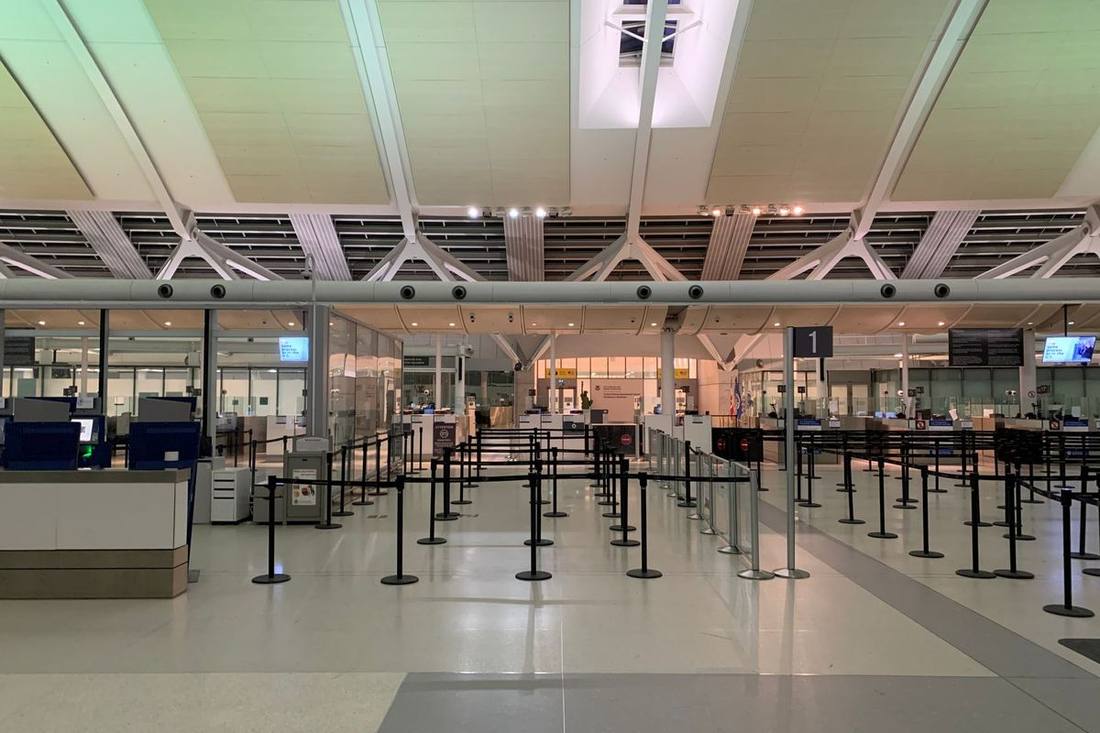
Terminal 1 is Air Canada's hub building and the home of the Star Alliance at Pearson. Air Canada, Air Canada Express (Jazz) and Air Canada Rouge operate every domestic, transborder and international flight from Terminal 1, which makes it the terminal for the majority of Canadian travellers. The Star Alliance partners share it: United from the US hubs, Lufthansa from Frankfurt and Munich, Swiss from Zurich, Austrian from Vienna, Turkish from Istanbul, Air India, EVA Air, Air New Zealand (seasonal), Ethiopian, Egyptair, Copa and Avianca. Emirates (from Dubai) and Etihad (from Abu Dhabi) also use Terminal 1 despite not being alliance members, as do a handful of others that have moved between terminals over the years — dispatch keeps the current list, because airlines do move, and the airport's own website is the authority on the day of travel.
Terminal 1 is the larger and newer of the two buildings, opened in 2004 and extended since, with its own parking garage across the road, the UP Express station on the departures level and the Terminal Link train's station at the eastern end. Its arrivals level is split into domestic (the western end) and international (the eastern end, after the customs hall), and both feed into the same arrivals road where Door A sits.
Which airlines use Terminal 3
Terminal 3 handles everyone else. WestJet is the largest tenant — every WestJet, WestJet Encore and Swoop flight uses Terminal 3 — and the Oneworld and SkyTeam alliances are based there: British Airways, American Airlines, Cathay Pacific, Qatar Airways, Japan Airlines, Finnair and Iberia for Oneworld; Delta, KLM, Air France, Korean Air, Aeromexico and China Eastern for SkyTeam. The sun carriers — Sunwing and Air Transat — fly from Terminal 3, as do Porter's Pearson flights (Porter's Billy Bishop flights are a different airport entirely; see the Billy Bishop guide), Flair, Lynx (while it operated), Icelandair, Aer Lingus, Alitalia's successor ITA, LOT, Pakistan International, Philippine Airlines, Caribbean Airlines and most of the charter operators.
Terminal 3 opened in 1991 and was renovated through the 2010s; it is a single long building with a hotel (the Sheraton Gateway) attached by a bridge, its own parking garage, and the Terminal Link station at its northern end. Its arrivals level is a single hall with domestic and international arrivals exiting at different points into the same arrivals road, where Door A is at the western end.
Door A: the pre-arranged pickup at both terminals
The Greater Toronto Airports Authority designates a pre-arranged ground transportation zone at each terminal for limousines and black cars that have been booked in advance, and at both terminals it is at Door A on the arrivals level — the far end of the arrivals road from the taxi and limo stand where the on-demand vehicles queue. At Terminal 1, Door A is at the western end of the arrivals level; walk out of either the domestic or international arrivals hall, turn toward the lower-numbered doors, and follow the signs for "Pre-arranged Limousines". At Terminal 3, Door A is also at the western end of the arrivals level, past the taxi stand, with the same signage. The Pearson page has the procedure in detail and the arrivals doors article walks it door by door.
Our chauffeur's confirmation text names the door and the licence plate; the chauffeur is at the curb at Door A or, if the GTAA's staff are moving vehicles along (which they do at busy times), circling and back within two minutes of the passenger's text. Passengers with meet and greet are met inside the arrivals hall instead, at the exit from customs, by a chauffeur with a name board who walks them to the car.
The Terminal Link and getting from one to the other
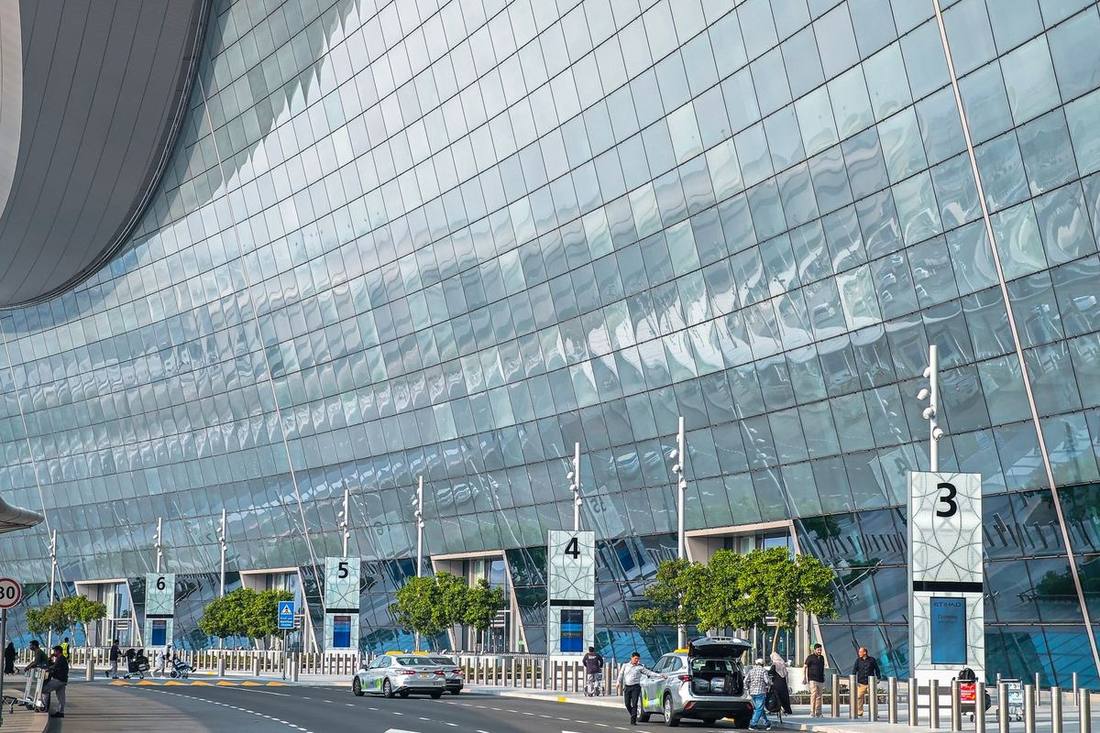
If you are at the wrong terminal, the fix is the Terminal Link — a free automated train that runs between Terminal 1, Terminal 3 and the Viscount station (the reduced-rate parking and the ALT Hotel) every four to eight minutes, 24 hours a day, with a four-minute ride between the terminals. Its stations are on the departures level at both terminals (the eastern end of Terminal 1, the northern end of Terminal 3), so from arrivals you take an elevator or escalator up one level. With luggage it is a ten-to-fifteen-minute exercise from arrivals hall to the other terminal's Door A. Walking between the terminals is not practical — the buildings are connected only by the train and by the road loop — and a taxi between them is a short, expensive and unnecessary ride. If you land at the wrong terminal for your car, the better move is to text the chauffeur, who will drive the loop to your terminal in five minutes; the chauffeur's move is always cheaper than the passenger's.
Departures: which door, which level
For departures the terminal matters just as much and the mistake is more expensive, because a check-in deadline does not wait. Our chauffeur confirms the airline and terminal against the booking the evening before and again at pickup, and drops at the departures level curb closest to the airline's check-in — Terminal 1's departures level is long, with Air Canada's domestic check-in at the western end and international at the eastern end, and Terminal 3's is a single hall with the airlines' counters in zones. Passengers who tell us the airline (not just "Pearson") get the right terminal and the right end of it. For a departure at the wrong terminal, the Terminal Link from the departures level is the remedy and costs fifteen minutes.
Parking, cell lots and where the car waits
Both terminals have a multi-level parking garage across the arrivals road and a cell phone lot off the airport's road system where drivers wait for a passenger's call without paying to park; the GTAA's staff move vehicles that dwell at the curb. Our chauffeurs wait in the cell lot or the garage's short-term area until the passenger texts from the baggage hall, then move to Door A — which is why the chauffeur is at the curb within two minutes of the text and not sitting there for forty minutes accumulating fees that would find their way into someone's fare. The airport's short-term parking is charged by the half hour and its rates are on the GTAA's website; our fixed fare includes the standard wait and the parking that goes with it, and the flat rate article explains what the fare covers.
Terminal differences that matter to passengers
Customs and connections. Both terminals have full customs halls for international arrivals; Terminal 1's is larger and, for US-bound passengers, Terminal 1 and Terminal 3 both have US pre-clearance so passengers clear US customs in Toronto before boarding. Lounges. Terminal 1 has the Maple Leaf Lounges and the Air Canada Signature Suite; Terminal 3 has the Plaza Premium lounges and the airline lounges of British Airways, American and KLM. Hotels. The Sheraton Gateway is attached to Terminal 3 by a bridge — the only on-airport hotel; the ALT Hotel is at Viscount station on the Terminal Link; the airport strip's hotels on Dixon Road are a five-minute car ride and the airport strip guide covers them. UP Express. The train to Union Station leaves from Terminal 1 only; Terminal 3 passengers take the Terminal Link to Terminal 1 first, which adds fifteen minutes to the train's twenty-five and is part of why the UP Express comparison favours the car for Terminal 3 arrivals with luggage.
Connecting passengers between terminals
A connection between an Air Canada flight and a WestJet flight, or between a Star Alliance arrival and a Oneworld departure, means a change of terminal, and the connecting flights article covers the layover options. For a short connection the Terminal Link is the answer; for a long one, a car into the city and back is a genuine alternative to five hours in a terminal, and the fixed fare each way makes the arithmetic easy.
Which terminal for the sun flights, the discounters and the charters
The sun carriers — Sunwing and Air Transat, and WestJet's Caribbean and Mexican routes — and the discount airlines all use Terminal 3, and their departure times cluster in the early morning (5 to 7 a.m.) and their returns in the late evening, which makes Terminal 3's Door A the busiest pre-arranged pickup at Pearson between 10 p.m. and 1 a.m. in the winter. The chauffeur's confirmation names the door; the passenger's text from the baggage hall brings the car; and the early-morning guide covers the 4 a.m. departures that these flights require.
A worked example: two arrivals, one afternoon
3:40 p.m. — a passenger lands on Air Canada from Vancouver, Terminal 1 domestic. She texts from the carousel; the chauffeur, waiting in the Terminal 1 cell lot, is at Door A in four minutes; she walks out of the domestic arrivals hall, turns west, and the car is at the curb with the plate from her confirmation. 4:10 p.m. — a passenger lands on WestJet from Calgary, Terminal 3. He booked "Pearson" without an airline; dispatch caught it the evening before, checked the flight number, and moved the booking to Terminal 3. He texts from the carousel; the chauffeur is at Terminal 3's Door A in five minutes. Both are on the 427 by 4:30. The one that would have gone wrong did not, because the flight number was on the booking.
Terminal quick reference
| Terminal 1 | Terminal 3 | |
|---|---|---|
| Main airlines | Air Canada, Star Alliance, Emirates, Etihad | WestJet, Oneworld, SkyTeam, Porter (YYZ), sun & discount carriers |
| Pre-arranged limo pickup | Door A, arrivals level (west end) | Door A, arrivals level (west end) |
| UP Express station | Yes (departures level) | No — Terminal Link to T1 first |
| Attached hotel | No (ALT Hotel at Viscount via Terminal Link) | Sheraton Gateway (bridge) |
| US pre-clearance | Yes | Yes |
| Terminal Link station | East end, departures level | North end, departures level |
| Opened | 2004 (current building) | 1991 |
What to put on the booking
Three things: the airline, the flight number and the origin city. With those, dispatch confirms the terminal, tracks the flight for delays (the flight delays article explains how), and the chauffeur is at the right Door A when the bags come off. Without them, the booking says "Pearson" and the chauffeur is guessing between two buildings a kilometre apart. The booking engine has fields for all three, and the notes field takes anything else — a wheelchair request, a child seat, a meet and greet.






