The storm plan, in one paragraph
When a winter storm hits Pearson: cancelled flights cancel the car at no charge; rebooked flights move the booking with a text of the new flight number; the fleet runs on winter tires with extended buffers (a 4 a.m. pickup becomes 3:30) and dispatch texts every affected passenger as the forecast firms up the day before. The roads that close first are the 401 at the 400 and the 404, the Gardiner and the DVP, and the chauffeur's routes avoid them; the airport's runway snow clearing and de-icing add one to three hours to departures even when flights operate. Stranded passengers are taken to the airport strip's hotels five minutes away or home. The day after is the busiest of the winter, when every rebooked flight leaves at once and the fleet is committed by 10 a.m. the night before; book the rebooked flight's car the moment you have the new number.
Toronto's winters produce a few genuine storms a year — a 30-centimetre snowfall, an ice storm that coats the trees and the wires, a blizzard off the lake with visibility at zero — and Pearson handles them better than most airports of its size, with runway teams that clear a runway in under an hour and a de-icing operation among the world's largest. But a storm still cancels hundreds of flights, delays the rest by hours, closes highways and strands people in terminals overnight, and the next day it produces the rebooking surge that fills every seat and every car. A black car service that runs the airport has to have a plan for both days, and this article is ours: the forecast and the day before, the cancellations and how they are handled, the roads and the fleet on the day, the airport's own operation and what it does to timing, the stranded passenger and the hotels, the ice storm's special case, the day after, and what a passenger should do at each stage.
The day before: the forecast and the texts
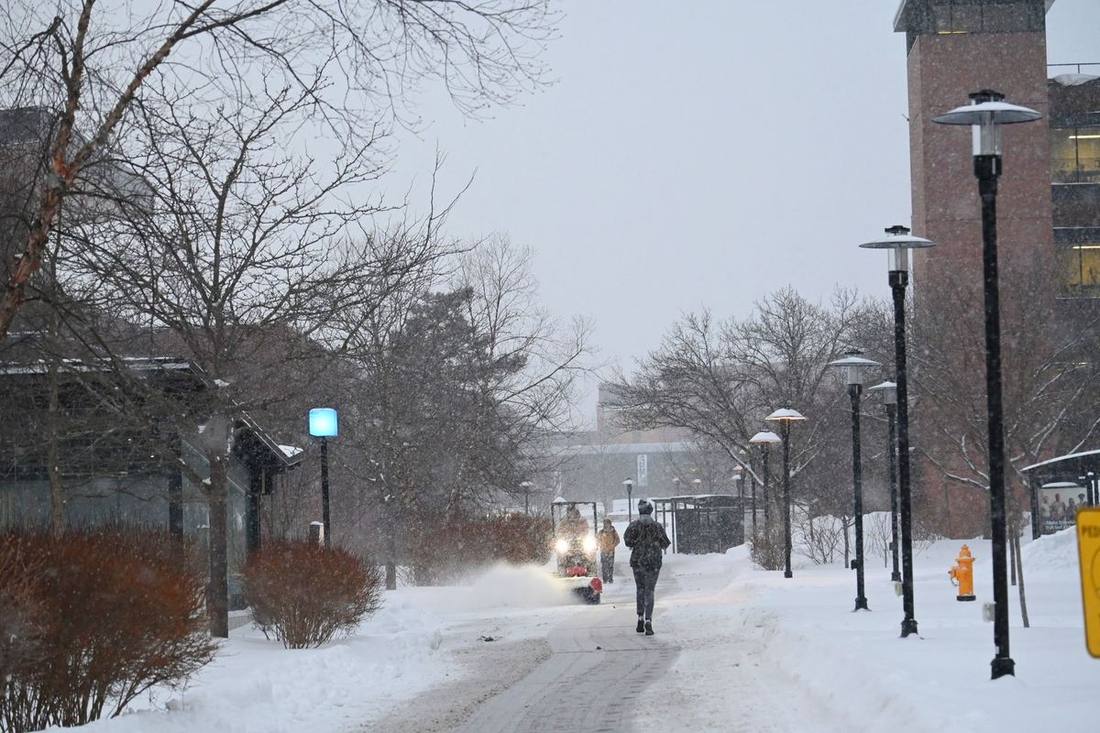
Environment Canada's warnings — a snowfall warning at 15 centimetres, a winter storm warning at 25, a freezing rain warning — reach dispatch a day or two ahead, and the airlines begin cancelling proactively twelve to twenty-four hours before a major storm, consolidating flights and offering free rebooking. Our plan starts with the forecast: dispatch reviews every airport booking in the storm's window, texts each passenger with the forecast and the options ("your flight is currently scheduled; if it is cancelled your car cancels free; if you rebook, text us the new flight number"), moves the fleet's overnight roster earlier, and confirms the winter tires and the equipment (the winter tires article explains the fleet's policy — winter tires from November to April on every vehicle). Passengers who rebook onto the day before the storm to beat it create a small pre-storm peak, and their cars are assigned the same hour they text.
Cancellations: free, confirmed, and no phone call needed
A cancelled flight cancels the car at no charge, whatever the notice — an hour, a day. Dispatch sees the cancellation in the flight tracking feed (the flight delays article explains the tracking) and texts the passenger to confirm before releasing the chauffeur; a passenger who hears from the airline first texts us and the reply is "cancelled, no charge, send the new flight when you have it." A flight that is delayed rather than cancelled — a 6 a.m. departure pushed to 2 p.m. by de-icing and the ripple — moves the pickup with it. The cancellation policies article has the general rules; on a storm day they collapse to one: nothing costs the passenger anything.
Rebooking: the new flight number is the whole procedure
A passenger rebooked onto a later flight — the same day, the next day, two days on — texts or emails the new flight number and the booking moves to it, with the same chauffeur where the roster allows. The rebooked flight may be a different airline and a different terminal (the Terminal 1 vs Terminal 3 article explains why it matters) and the new number carries the terminal. On a storm day the airlines' rebooking lines and apps are overwhelmed and a passenger may not have the new flight for hours; the car is held cancelled-without-charge until the number arrives, and dispatch texts once more in the evening to ask.
The roads on the day
The GTA's highways close in a predictable order in a heavy snowfall: the 401's express lanes at the 400 and the 404 interchanges (jackknifed trucks), the Gardiner's elevated section (ice), the DVP's valley section (drifting), the 400 north of Vaughan (whiteouts), the QEW's Skyway (wind), the 407 last (it is plowed aggressively and its traffic is light). The chauffeur's route on a storm day is planned from the provincial feed and the city's notices and avoids the closures; the arterials — Eglinton, Lawrence, Dundas, Kingston Road — are slower but open; and the buffer is doubled: a downtown-to-Pearson run that is 30 minutes on a clear night is 60 to 90 in a storm and the pickup is set for it. The winter driving article covers the season's roads and the fleet's handling of them; the Gardiner and DVP closures article the downtown highways.
The fleet on the day
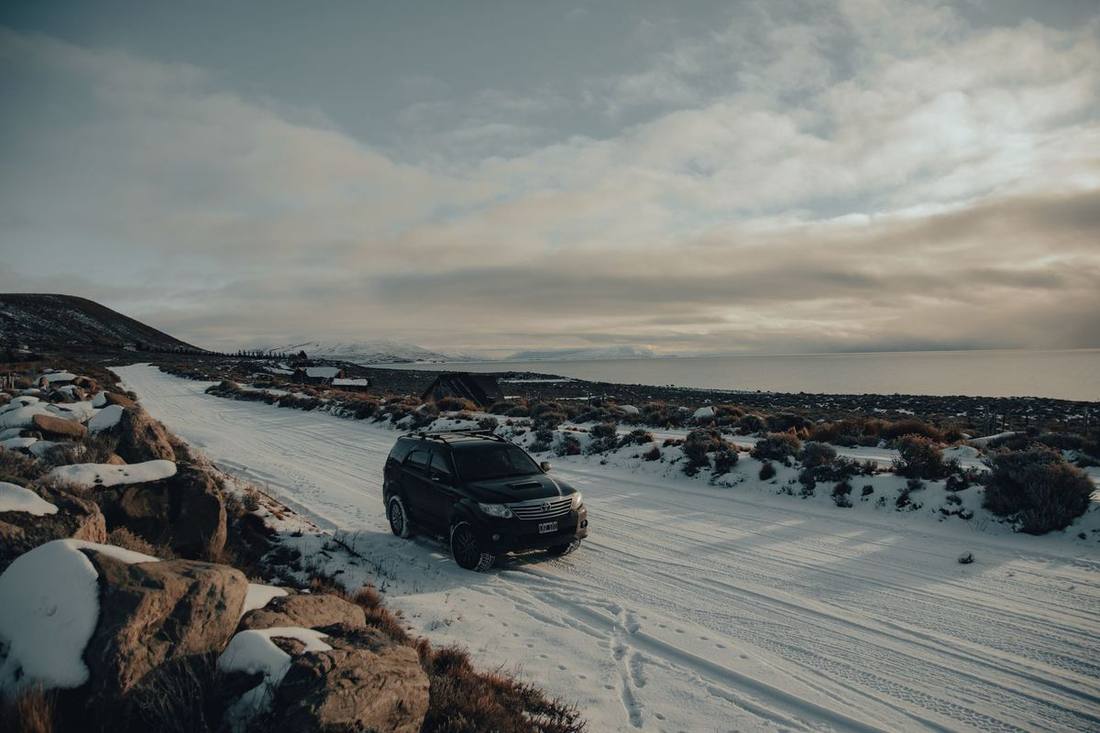
Every vehicle is on winter tires; the SUVs (all-wheel drive) take the runs the sedans should not; the Sprinters, which are the fleet's least sure-footed vehicles in deep snow, are held for cleared routes; the chauffeurs on the overnight roster start earlier and finish later; dispatch runs with an extra person on the phones and the texts. A storm day's bookings are fewer (most flights are cancelled) but each takes longer, and the fleet's capacity is spent on buffers. A passenger whose flight is operating on a storm day has a chauffeur who left an hour early and a text when the car is outside; the red-eye article describes the overnight routine that the storm stretches.
The airport's own operation: what it does to timing
Pearson's airfield teams clear and reopen runways in rotation — the airport rarely closes entirely, but it operates on fewer runways at reduced rates — and every departing aircraft is de-iced at the central de-icing facility, which on a heavy day queues aircraft for an hour or more; departures that operate leave one to three hours late, arrivals are held or diverted (to Hamilton, Ottawa, Montreal, Buffalo — the flight delays article covers diversions), and the terminals' departure boards are a wall of amber. For the passenger with an operating flight this means arriving on time and waiting; for the arriving passenger it means a car that tracked the flight through its holds and diversions and is at Door A when the aircraft finally reaches the gate, with the included wait running from the actual arrival.
The stranded passenger
A passenger whose flight cancels after they are at the airport — it happens to thousands on a storm day — has three options: home, if they live in the GTA (a car on the storm-day buffer, the fare fixed); the airport strip's hotels five minutes away (the Sheraton Gateway by bridge from Terminal 3, the ALT at Viscount by the Terminal Link, the Dixon Road hotels by car — the airport strip guide covers them, and they fill by early afternoon on a storm day); or a downtown hotel, forty to ninety minutes away on the storm's roads. Under Canada's Air Passenger Protection Regulations the airline owes accommodation for a cancellation within its control and does not for weather, so the hotel is usually the passenger's own cost. Our dispatch on a storm day fields these calls all afternoon, and a car to the strip's hotels is the most common booking of the day.
The ice storm: the special case
An ice storm — freezing rain that coats every surface — is worse than snow for the roads (the arterials glaze before the highways, the hills of Rosedale and the Don Valley become impassable, trees and wires come down and close streets) and for the airport (de-icing takes longer and aircraft cannot be loaded on a glazed apron); the December 2013 ice storm closed Pearson's operations for most of a day and left parts of the city without power for a week. Our ice-storm plan is the snow plan with the SUVs only, the buffers tripled, and the readiness to say no: a run we cannot make safely is a run we cancel and refund, and the passenger is told in time to make another plan.
The day after: the rebooking surge
The morning after a storm is the winter's busiest day at Pearson — every cancelled flight's passengers rebooked onto the day's flights, the airlines adding sections, the terminals at capacity from 4 a.m. — and it is the fleet's busiest too: every rebooked passenger needs the car they cancelled yesterday, at the same 4 to 7 a.m. window, on roads that are plowed but slow. The fleet is committed by 10 p.m. the night before; a passenger who texts the new flight number at 6 p.m. has a car and one who texts at midnight may not. The how early to book article treats the day after a storm as a peak like December 20, and the advice is the same: the moment you have the new flight number, send it.
What a passenger should do, stage by stage
Two days out: read the forecast; if you can fly a day early, do, and text us. The day before: expect our text; reply with any change; charge your phone. The morning of: check the flight before leaving; if it operates, be ready early — the chauffeur will be; if it cancels, text us and it costs nothing. At the airport when it cancels: decide between home and the strip's hotels quickly — the hotels fill; text us either way. When rebooked: send the new flight number the same minute. The day after: be at the door when the chauffeur texts; the roads are slow and the airport is full.
A worked example: February, 28 centimetres, Boxing Day-week flights
A winter storm warning is issued Tuesday for Wednesday; Air Canada begins cancelling Wednesday's flights Tuesday afternoon. Dispatch texts forty-one affected passengers Tuesday evening. Wednesday: twenty-eight flights cancelled and cars cancelled free; nine flights operating, with pickups moved an hour earlier and SUVs on the runs — a Leaside-to-Terminal 1 run takes seventy-five minutes via Eglinton and the 401's collectors; four arrivals diverted to Hamilton and held, three passengers choosing to wait for the aircraft's eventual return and one collected at Hamilton. Wednesday afternoon: six stranded passengers taken to the Dixon Road hotels and two home to Oakville. Wednesday evening: nineteen passengers text new flight numbers for Thursday; the fleet is assigned by 9 p.m. Thursday: the winter's busiest morning, every car out from 3 a.m., plowed roads and a full airport, every passenger at the door when the text came. Nobody paid for a cancelled car.
Storm plan quick reference
| Situation | What happens | Cost to you |
|---|---|---|
| Flight cancelled (any notice) | Car cancelled; dispatch confirms by text | None |
| Flight delayed hours | Pickup moves with the flight | None |
| Rebooked flight | Text the new number; booking moves (new terminal if needed) | None |
| Flight operating in the storm | Pickup an hour earlier; SUV; slow roads | Same fixed fare |
| Diverted to Hamilton / Buffalo | Options by text: wait, meet there, or cancel | None to cancel; new fare to meet |
| Stranded at the terminal | Car to the strip's hotels (5 min) or home | Fixed fare |
| Day after (rebooking surge) | Send the new number early; fleet committed by 10 p.m. | Same fixed fare |
Booking through a storm
The engine takes the flight number that makes all of this work; the Pearson page has the procedure; the winter driving article the season. Cancelled flights cost nothing; new flight numbers move the car.






