Two airports, one downtown
Billy Bishop (YTZ) is two kilometres from Bay Street on the Toronto Islands, served by Porter's turboprops and Air Canada's Montreal–Ottawa shuttle; ground time to the Financial District is 8 to 15 minutes. Pearson (YYZ) is 25 kilometres north-west in Mississauga, served by every airline and destination; ground time downtown is 30 to 45 minutes off-peak and 50 to 90 at the peaks. For a downtown passenger flying to Ottawa, Montreal, Boston, Chicago, Newark or another Porter city, Billy Bishop wins on total door-to-door time by an hour or more. Pearson wins for every other destination, for passengers starting outside the core, for connections, and in bad weather.
The comparison matters because a fare difference of forty dollars on the flight can be reversed three times over by the ground time and its cost at each end. A Bay Street lawyer who flies to Ottawa twice a month from Pearson spends roughly ninety minutes more per round trip than a colleague who flies from Billy Bishop, plus the difference in ground fares, plus the difference in terminal time; over a year that is two working days. This article compares the two airports on the measures that matter — destinations, ground time from the neighbourhoods, fares to each, the terminal experience, weather reliability, connections, luggage, and the starting-point question — and gives the verdict case by case. It is written from the driver's seat: we make the Billy Bishop run twenty times a day and the Pearson run two hundred, and we know what each costs the passenger.

Destinations: where each airport can take you
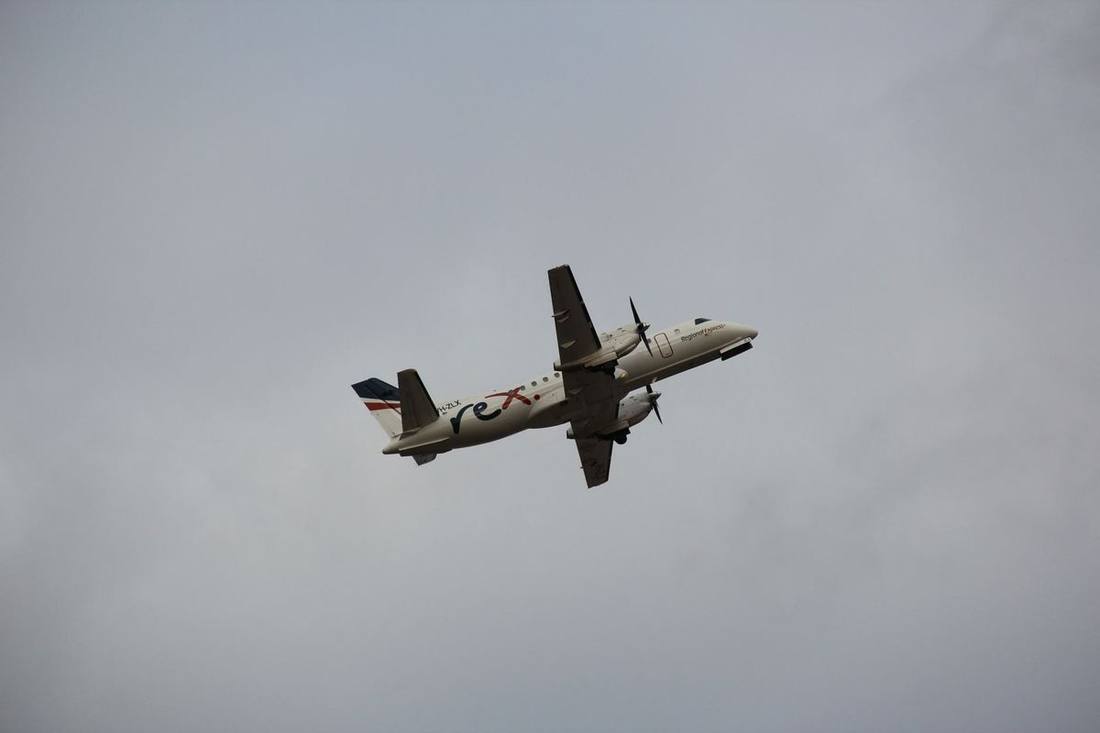
Billy Bishop's list is short by design: Porter's turboprops reach Eastern Canada (Ottawa, Montreal, Quebec City, Halifax, Moncton, Fredericton, Saint John, St. John's, Thunder Bay, Sudbury, Sault Ste. Marie, Timmins, North Bay, Windsor) and the US Northeast and Midwest (Boston, Newark, Chicago Midway, Washington Dulles, plus seasonal points like Myrtle Beach and Orlando via a stop); Air Canada Express adds Montreal and Ottawa. No jets, no long haul, no West Coast, no Europe. Pearson reaches everywhere — 180-odd destinations on six continents — and is the only option for anything Billy Bishop does not list. The comparison therefore applies only to the twenty or so cities both airports serve; for the rest, it is Pearson.
Ground time from downtown
From the Financial District, Eireann Quay is 8 to 15 minutes at any hour — Queens Quay and Lake Shore are congested but short. Pearson from the same address is 30 to 40 minutes at 5 a.m., 35 to 50 midday, and 55 to 90 in the afternoon peak via the Gardiner and 427 (the Pearson to downtown hotels article has the ranges by hotel). From Yorkville: Billy Bishop 15 to 25, Pearson 35 to 60. From King West: Billy Bishop 10 to 15, Pearson 30 to 50. From the Distillery: Billy Bishop 15 to 20, Pearson 40 to 65. The ground-time gap downtown is 25 to 60 minutes each way, and it is widest at exactly the hours business travellers fly — the 7 a.m. departures and the 6 p.m. returns.
Ground time from outside the core
The picture reverses north of Bloor and outside the city. From North York Centre, Billy Bishop is 35 to 55 minutes down Yonge or the Allen and the Gardiner; Pearson is 25 to 40 via the 401. From Mississauga's Square One, Pearson is 15 minutes and Billy Bishop 35 to 50. From Markham, Pearson via the 407 is 35 to 45 and Billy Bishop 50 to 75 via the 404 and DVP. From Oakville, Pearson 30 to 40 and Billy Bishop 40 to 55. The rule: if you start south of Bloor, Billy Bishop; if you start north of the 401 or outside Toronto, Pearson, because Pearson is on the highways and Billy Bishop is at the bottom of the grid.
Fares to each airport
Our fares are fixed by distance and vehicle class. From the Financial District, the Billy Bishop fare is the minimum downtown fare — a short hop — and the Pearson fare is the standard airport transfer; the difference is significant and is shown in the engine for any address. From North York or the 905 the difference narrows or reverses. A round trip downtown to Billy Bishop and back typically costs less than one way to Pearson; the how much does a black car cost article has the structure.
Terminal time: check-in, security and boarding
Billy Bishop's terminal is small: one check-in hall, one security checkpoint that processes a passenger in five to fifteen minutes at the peaks, a lounge with free coffee and snacks that Porter has made part of its brand, and gates a two-minute walk away with boarding from the apron. Passengers arrive forty-five minutes before a domestic flight and sixty before a US one and are not rushed. Pearson's Terminal 1 and Terminal 3 are large: check-in halls with queues at the peaks, security that takes ten to forty minutes depending on hour and lane, long walks to gates, and the airlines' recommended two hours domestic and three international. The terminal-time gap is 45 to 90 minutes in Billy Bishop's favour.
Total door-to-door: the arithmetic
Financial District to Ottawa, 7 a.m. departure, one passenger. Via Billy Bishop: car at 5:55, Eireann Quay at 6:05, tunnel and check-in by 6:15, boarding 6:40, wheels up 7:00. Via Pearson: car at 4:45 (the peak has not started but the buffer is real), Terminal 1 at 5:25, security and gate by 6:10, boarding 6:30, wheels up 7:00. Billy Bishop saves seventy minutes at the Toronto end alone, and the Ottawa end (Billy Bishop's Q400 and Pearson's jet both land at the same Ottawa airport) is a wash. The return at 6 p.m. saves more, because Pearson's afternoon peak adds thirty minutes to the car.
Weather and reliability
Here Pearson wins. Billy Bishop's lakeside runway, its turboprop fleet and its single main runway make it more sensitive to fog, ice and crosswinds; Porter's on-time performance is good in summer and worse in winter, and a bank of cancellations in a January fog is not rare — passengers are rebooked or bused to Pearson. Pearson has five runways, instrument landing systems on all of them, jets that fly in weather turboprops do not, and de-icing capacity for a hundred aircraft an hour. A traveller with a must-make meeting in January should weigh the risk; the winter storm article covers what happens at both airports when the weather closes in.
Connections and onward travel
A passenger connecting to a long-haul flight has no choice: Pearson. A passenger flying Toronto–Ottawa–Toronto has every choice. The awkward case is a passenger arriving at Billy Bishop from Boston who must connect to a Vancouver flight — that is a car from Eireann Quay to Pearson (30 to 45 minutes off-peak, 60 to 90 at the peak) and a second check-in, and the connecting flights article covers the inter-airport transfer; Porter's Pearson jets and Billy Bishop turboprops are not connected airside.
Luggage and families
Billy Bishop's turboprops have smaller overhead bins and lower checked-bag allowances on some fares, and the tunnel with two children and four bags is a six-minute walk that feels longer; Pearson's jets and its curbside luggage carts favour the family with a lot of luggage. For a couple with carry-ons, Billy Bishop; for a family of five bound for Halifax with a week's luggage, the airport is still Billy Bishop (Halifax is a Porter route) but the vehicle is an SUV and the families with luggage article applies at either airport.
The corporate traveller's rule
For Toronto companies whose people fly to Ottawa, Montreal, Boston, New York and Chicago, the corporate travel policy article suggests a default: Billy Bishop for those routes from downtown offices, Pearson for everything else, and a black car to either — with the Pearson runs carrying the 407 option for the 905 offices. The saving is measured in executive hours, and the duty of care article adds the reliability argument for a booked car over a taxi queue at either end.
The comparison in one table
| Billy Bishop (YTZ) | Pearson (YYZ) | |
|---|---|---|
| Location | Toronto Islands, foot of Bathurst | Mississauga, 25 km NW of downtown |
| Airlines | Porter (turboprops), Air Canada Express | All airlines |
| Destinations | ~20 in Eastern Canada & US Northeast/Midwest | ~180 worldwide |
| Ground time from Financial District | 8–15 min | 30–45 off-peak, 55–90 peak |
| Ground time from North York | 35–55 min | 25–40 min |
| Terminal time before flight | 45–60 min | 2–3 hours recommended |
| Weather reliability | Lower (lakeside, turboprops) | Higher (5 runways, jets, ILS) |
| Connections to long haul | No | Yes |
| Black car pickup | Eireann Quay (mainland) | Door A, arrivals level, T1/T3 |
The verdict
Downtown to a Porter city: Billy Bishop, every time the weather allows. Anywhere else, anywhere long-haul, or starting north of the 401: Pearson. Either way the car is booked with the flight number and the fare is fixed; the Billy Bishop page and the Pearson page have the details.
Case by case: six travellers, six verdicts
A Bay Street lawyer to Ottawa for a day of meetings. Billy Bishop, without hesitation: a 6 a.m. car from Rosedale, a 7 a.m. flight, the 6 p.m. return, home by 7:15. The Pearson version adds two hours to the day.
A family of four to Orlando for March break. Pearson: Billy Bishop has no jets and Porter's Florida service (via a stop) is not the family's flight. An SUV to Terminal 3 at 5 a.m., the families with luggage article's routine.
A Markham executive to Montreal. Pearson, narrowly: from Markham the 407 makes Pearson 35 to 45 minutes and Billy Bishop 50 to 75 via the 404 and DVP, and Air Canada's Montreal frequency from Pearson is higher. If the executive's meeting is in Old Montreal and the return is at 6 p.m., the Billy Bishop math improves; the Markham guide has the timings.
A Boston consultant into Toronto for a week at a King West client. Billy Bishop: Porter's Boston service lands two kilometres from the client, the hotel is on King West, and the return on Friday afternoon avoids Pearson's worst hour. The consulting firms article covers the weekly pattern.
A Newark connection to Vancouver. Pearson, because the connection requires it — arriving at Billy Bishop from Newark and connecting to Vancouver means a car across the city and a second check-in.
A Halifax couple visiting a daughter in Leslieville in January. Billy Bishop if the weather is fair; Pearson if the forecast is fog or an ice storm, because Porter's cancellations that week would strand them. The winter storm article explains how we handle the day the forecast is wrong.
The Porter-at-Pearson confusion
Since 2023 Porter has flown Embraer jets from Pearson's Terminal 3 to Western Canada, Florida and the US beyond turboprop range, while its Q400 turboprops continue from Billy Bishop. A passenger booking "Porter to Vancouver" is flying from Pearson; a passenger booking "Porter to Ottawa" is almost certainly flying from Billy Bishop but might, on some frequencies, be at Pearson. The itinerary says which; the booking should too. Our dispatch checks the flight number against the airport on every Porter booking for this reason, and the Terminal 1 vs Terminal 3 article covers Pearson's side of it.
Ground fare, terminal time and the value of an hour
The comparison finally comes down to what an hour is worth. For a traveller whose employer bills their time, the ninety minutes Billy Bishop saves per round trip is worth more than any fare difference in either direction; for a family on holiday, the hour is worth less and the flight fare matters more; for a traveller with a connection, the hour is irrelevant because the choice is made for them. Our part of the arithmetic is fixed: a short fare to Eireann Quay, a longer one to Door A, both quoted in the engine before you decide, and a chauffeur at either curb when the flight lands.
Parking, if you were thinking of driving yourself
Billy Bishop has almost no parking — a small lot at Eireann Quay that fills by 7 a.m. and the city's Green P garages nearby at downtown rates — which is one more reason its passengers arrive by car service, shuttle or taxi. Pearson has thousands of spaces at daily rates that, over a week, exceed the round-trip black car fare from most of the city. Neither airport rewards the passenger who drives.






