The short answer, then the calendar
For a single sedan or SUV to or from Pearson on an ordinary weekday, booking 24 hours ahead is comfortable and same-day is usually possible. For a Sprinter, a stretch limousine or several vehicles at once, book three to seven days ahead. During the peaks — the December holidays (December 18 to January 4), March break (the second and third weeks of March), the Easter, Victoria Day, Canada Day, Civic, Labour Day and Thanksgiving long weekends, TIFF (early September), PDAC (early March) and the Caribbean Carnival weekend (early August) — book one to two weeks ahead for any vehicle and earlier for groups. The fare does not rise with a late booking; the risk is availability.
Black car fleets are finite in a way that rideshare pools are not. A company that runs forty vehicles in Toronto has forty vehicles at 5 a.m. on the Friday of March break, and when they are all committed the answer to a new request is a referral to a partner or a polite no. That scarcity is real and seasonal, and it is the reason the question "how early should I book?" has a calendar for an answer rather than a number. This article gives the calendar — the peaks, the vehicles that sell out first, the hours of the day that fill — and the practical rules that follow from it, along with what happens when you book late, why our fares do not surge, and how the standing-order and corporate-account patterns make timing a non-issue for regular travellers.
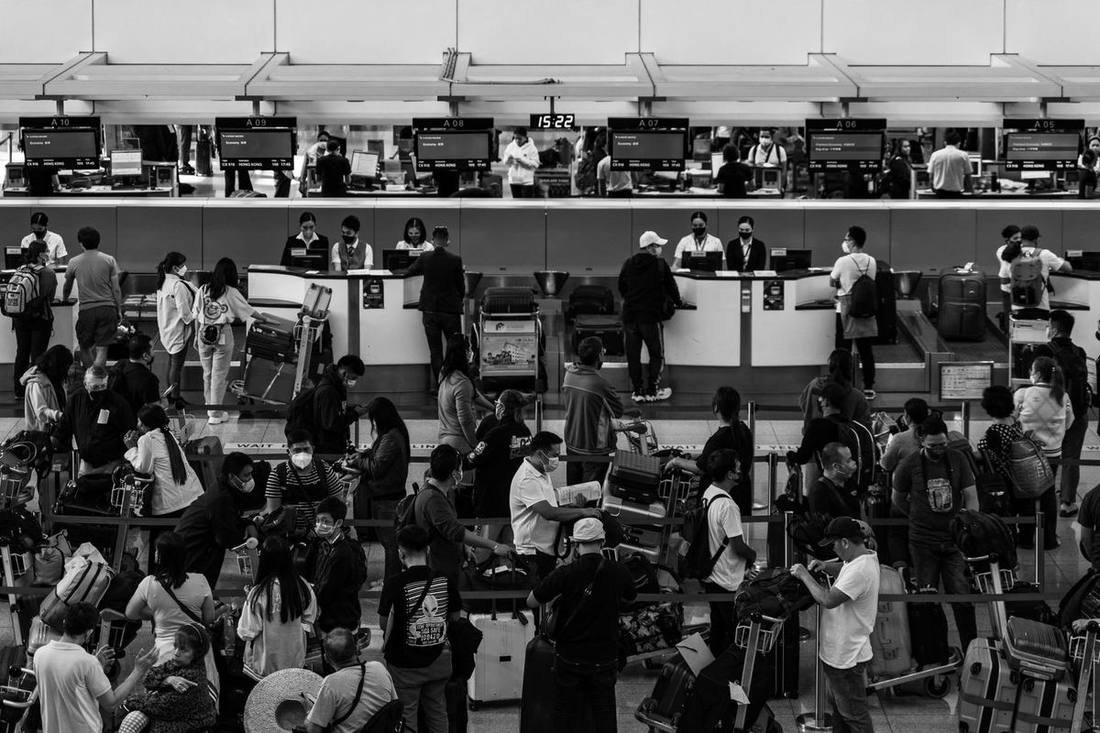
Ordinary days: the same-day reality
On roughly 300 days a year, Pearson runs are bookable the same day. A sedan or SUV from downtown to Terminal 1 at 3 p.m. on an October Tuesday, booked at noon, is assigned within minutes and confirmed with a chauffeur's name by 1 p.m. The 4 to 6 a.m. departures are the tightest hours of an ordinary day — the fleet's early shift is finite and the sun flights, the transatlantic morning bank and the Bay Street commuters compete for it — and for those we recommend booking by the previous afternoon so the chauffeur is assigned and confirms from your driveway. The last-minute booking article covers what happens when a request arrives with an hour's notice: usually a car, occasionally a different class than you asked for, never a higher fare.
The peaks: when the fleet is committed days ahead
The December holidays (roughly December 18 to January 4) are the year's longest peak: outbound families in the week before Christmas, inbound relatives the same week, the exodus to the sun on Boxing Day, the return on January 2 and 3. Pearson handles its busiest days of the year in this window and every vehicle class is committed by the week before. Book two weeks ahead; book Sprinters three.
March break (Ontario's public school break, the second full week of March, with the private schools spread over the two weeks around it) is the year's most concentrated family peak — the Friday and Saturday departures and the Sunday returns a week later — and the SUV and Sprinter classes sell out first because families travel with luggage and children. Book by the end of February.
PDAC (the Prospectors and Developers Association of Canada convention, early March, 25,000 delegates at the Metro Toronto Convention Centre) overlaps March break's edge and fills the corporate sedan class for four days; the PDAC article covers it.
TIFF (the Toronto International Film Festival, the first two weeks of September) commits the premium sedan and SUV classes downtown — the studios, the talent, the sponsors — and its airport runs are booked by the festival's transportation offices weeks ahead; the TIFF guide covers the pattern and the private traveller's workaround.
The long weekends — Family Day, Easter, Victoria Day, Canada Day, the Civic holiday, Labour Day, Thanksgiving — each produce a Thursday-and-Friday outbound peak and a Monday inbound one, and the long weekends article has the pattern; book a week ahead.
The Caribbean Carnival weekend (the Civic holiday weekend in early August) combines a long weekend with the festival's own arrivals and the Carnival guide's road closures; book ten days ahead.
Convocation season (early to mid-June for the universities) and the September move-in fill the SUV class with families and luggage on specific days the convocation article lists.
Which vehicles sell out first
The fleet is not one pool. Sedans are the most numerous and the last to sell out; SUVs are next; Sprinters — of which any Toronto operator has a handful — sell out first on any family peak, because a family of six with luggage needs one and there is no substitute except two SUVs; stretch limousines are committed weeks ahead on prom nights (May and June) and wedding Saturdays (May to October) and are rarely wanted for the airport anyway. The fleet page shows the classes and the luggage capacity article explains why the family peak is a Sprinter peak.

Hours of the day that fill first
Independent of season, three windows fill before the rest of the day: 4 to 6 a.m. (the sun flights, the transatlantic morning departures and the first US business flights), 3 to 5 p.m. (the transatlantic arrivals bank and the afternoon US departures) and 10 p.m. to midnight (the sun returns and the West Coast arrivals). A booking in one of these windows on a peak day is the one to make first; a booking at 11 a.m. on the same day can wait.
What a late booking costs you (and what it does not)
Our fares are fixed by distance and vehicle class and do not rise with demand — the fares page and the what drives the fare article explain the structure, and the engine shows the same number at 2 a.m. on Boxing Day as at noon in October. What a late booking costs is choice: the vehicle class you wanted may be committed and the alternative is a step up (an SUV for a sedan's passengers, at the SUV's fare) or, rarely, a partner operator's car under our dispatch. It may also cost the 4 a.m. slot, with the alternative a 3:45 pickup that gives the chauffeur the buffer. What it never costs is a surge multiplier, because there isn't one.
Booking early: what you gain
An early booking is assigned to a chauffeur the evening before, which is when the confirmation text with the chauffeur's name and plate arrives; the chauffeur reviews the route, the terminal and the flight; the flight tracking starts; child seats are fitted; a language request is matched; and the booking sits in the day's plan rather than being squeezed into it. For a family peak it means the Sprinter is yours; for a corporate account it means the executive's preferred chauffeur is on the run. The booking mistakes article lists the things that go wrong when bookings are late, and most of them are avoidable with a day's notice.
Regular travellers: the standing order and the account
For people who fly every week, the timing question disappears into a standing order — the Monday 6 a.m. to Terminal 1 and the Thursday 7 p.m. return, booked once and adjusted by text — or a corporate account that holds the traveller's preferences and lets an assistant book in one line. The account's bookings are in the plan before the peaks fill, because they are in the plan every week.
Booking from abroad and across time zones
A traveller in London or Hong Kong booking a Pearson pickup for next Tuesday is on the same footing as a local: the engine takes the flight number and returns the fare in Canadian dollars, the confirmation arrives by email, and the chauffeur's text arrives the evening before Toronto time. Meet and greet is the right add-on for a first visit and the meet and greet article explains it; the visitor guide covers what to book for the first two days.
Cancellations and changes: booking early does not lock you in
An early booking can be changed or cancelled without charge up to the cutoff the cancellation policies article describes — for airport transfers, several hours before pickup — so booking early costs nothing if plans change. Flight changes are handled by the flight tracking: a rebooked flight number in a text to dispatch moves the pickup.
The calendar at a glance
| Period | Book ahead | Tightest classes |
|---|---|---|
| Ordinary weekday | Same day to 24 h | 4–6 a.m. sedans |
| Ordinary weekend | 24–48 h | SUVs (families) |
| Long weekends (7 per year) | 5–7 days | SUVs, Sprinters |
| March break | 2 weeks | Sprinters, SUVs |
| December 18 – January 4 | 2–3 weeks | Everything |
| TIFF (early September) | 1–2 weeks | Premium sedans, SUVs downtown |
| PDAC (early March) | 1 week | Corporate sedans |
| Caribbean Carnival weekend | 10 days | SUVs, Sprinters |
| Convocation / move-in days | 1 week | SUVs |
| Prom nights (May–June Fridays/Saturdays) | 3–4 weeks | Stretch limousines |
Corporate travel managers and the block booking
A company that moves twenty executives through Pearson in the week of a board meeting or a conference books them as a block — a list of names, flights and hotels sent to dispatch a week or two ahead — and the block is assigned to a small team of chauffeurs who cover the arrivals bank and the departures bank as they come. The executive assistants' guide and the conference transportation article describe the pattern, and its timing rule is simple: the block goes in when the flights are booked, and individual changes are texts. A block booked a week ahead during PDAC has its vehicles; a block requested the day before does not.
Weddings, proms and the days the stretch fleet is spoken for
The stretch limousines and stretch SUVs are a small fleet with their own calendar — every Saturday from May to October is a wedding day, and the Friday and Saturday nights of May and June are prom nights — and a family that wants a stretch for an airport arrival on a June Saturday (a homecoming, a surprise) competes with the weddings. The wedding limo guide and the prom guide explain how far ahead those bookings are made; for the airport, an SUV or a Sprinter is available on the days a stretch is not, and the stretch limousine guide explains why a stretch is rarely the right airport vehicle anyway.
Students, September and the two weeks nobody expects
The September move-in for Toronto's universities and colleges — the first two weeks of the month, overlapping TIFF — is a peak that surprises people who do not have a student in the house: tens of thousands of international students land at Pearson within a fortnight, a large share of them met by a booked car because a parent abroad arranged it, and the SUV class fills with duffel bags and a first-year's anxiety. The unaccompanied minors guide covers the handover a parent books from overseas, and the timing rule is the family rule: book when the flight is booked, and request the chauffeur's language at the same time.
Weather days: the bookings that move
A forecast snowstorm or an ice-storm warning changes the calendar in a way no other peak does, because it moves everyone's plans at once: passengers rebook onto earlier flights to beat the storm, the airlines cancel and consolidate, and the day before a storm becomes an unplanned peak. Our rule for weather days — the winter driving article and the winter storm plan describe it — is that existing bookings move free of charge with the rebooked flights, new bookings are taken as capacity allows, and the fleet runs with the buffers the weather demands. A traveller who sees a storm in the five-day forecast and books the earlier flight should text dispatch the same hour.
If it is one car on an ordinary day, book it when you know the flight. If it is a family, a group or a peak, book it when you book the flight. The engine takes both.






