Your flight is late. Your car is not.
A pre-booked black car for a Pearson arrival is scheduled against the flight, not the clock. Dispatch tracks the flight number from departure; when the arrival time moves, the pickup moves with it, automatically and without a call. After the flight's actual arrival, the fare includes 60 minutes of waiting for international flights and 30 minutes for domestic, which covers customs, baggage and the walk to Door A. Waiting beyond the included time is charged in 15-minute increments at the vehicle class's waiting rate, shown in the confirmation. A cancelled flight is a free cancellation of the car; a rebooked flight is a text with the new flight number.
Pearson's on-time performance is respectable by North American standards — roughly three flights in four arrive within fifteen minutes of schedule — which still means several hundred late arrivals a day, and in a winter storm or a summer thunderstorm afternoon it can be most of them. A passenger stepping off a flight that landed ninety minutes late wants two things: a car at the curb, and no argument about the ninety minutes. This article explains how flight tracking makes the first happen and how the wait policy makes the second unnecessary — what is tracked, what moves, what is included, what is charged, and what to do in the cases (diversions, cancellations, missed connections, a long customs hold) that tracking alone cannot solve.
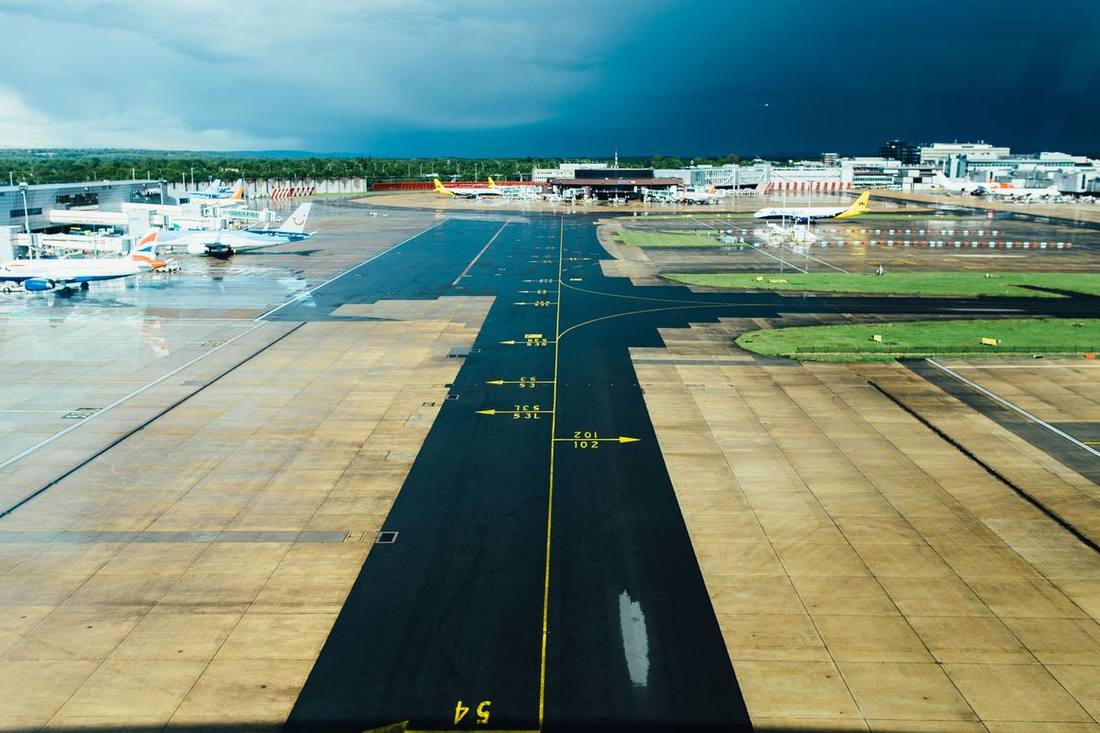
How flight tracking works
Every airport booking carries a flight number, and from the moment the booking is made dispatch subscribes to that flight's status through the airline and airport data feeds — the same information the arrivals boards show, delivered continuously. The feed reports scheduled and estimated departure, actual departure, estimated and actual arrival, gate and, for Pearson, terminal. The chauffeur's assignment is pegged to the estimated arrival plus the average baggage delivery time for the flight's type (25 minutes for domestic, 45 for international, as a starting point) and adjusts as the estimate changes. A flight that leaves Heathrow an hour late shows an arrival an hour late before it has crossed Ireland, and the chauffeur's start time moves an hour later — no call from the passenger, no wasted hour at the airport, no fee for it.
The tracking continues to touchdown. A flight that makes up time in the air, or lands early on a tailwind, moves the chauffeur earlier, and a flight that circles in a holding pattern over Lake Ontario because of thunderstorms moves the chauffeur later. What tracking does not see is what happens after touchdown — the taxi to the gate, the jetbridge, customs, the baggage belt — which is why the included wait starts at the actual arrival and is generous.
The included wait: 60 minutes international, 30 domestic
After the flight's actual arrival time as reported by the airport, the fare includes 60 minutes of waiting for an international or transborder flight and 30 minutes for a domestic one. Those numbers are set from experience: an international passenger at Pearson clears customs and collects bags in 30 to 50 minutes on an average afternoon, and the 60-minute allowance covers the average and most of the bad days; a domestic passenger is at Door A in 15 to 25 minutes, and 30 covers it. The allowance is not a countdown the chauffeur watches; it is the window in which nobody thinks about time at all. Most passengers use half of it.
For city pickups — a hotel, an office, a home — the included wait is 15 minutes from the scheduled pickup, because there is no customs hall to account for; the what is included article has the full list.
When the wait runs over: what is charged and why
If customs takes ninety minutes, or a bag is lost and the passenger is at the airline's baggage desk for an hour (the lost luggage article covers that case), the wait passes the included allowance and waiting time is charged in 15-minute increments at the vehicle class's waiting rate — a rate shown on the confirmation and derived from the hourly rate for the class (roughly a quarter of the hourly rate per 15 minutes). The charge exists because the chauffeur and the vehicle are committed to you and not to the next booking; it is applied to the card on file after the trip and itemised on the receipt. It is not a penalty and the chauffeur will never mention it at the curb. A passenger who texts "held at customs, another 30 minutes" gets a chauffeur who replies "no problem, I'm at Door A when you're ready."
The text that fixes everything
Tracking handles the flight; a text handles everything after it. From the baggage hall: "bags in hand, walking out" brings the car to Door A. From the customs queue: "long line at customs, maybe 40 minutes" tells the chauffeur to wait in the cell lot rather than cycle the curb. From the aircraft on the tarmac: "landed, still waiting for a gate" is information the tracking already has, but it tells the chauffeur you are awake and reachable. From the baggage desk: "bag didn't arrive, filing a report" starts the lost-luggage procedure. The chauffeur's number is on the confirmation; the reply comes in a minute.
Diversions: when the flight lands somewhere else
A handful of times a year — a snowstorm that closes Pearson's runways, a fog that drops visibility below minimums, a medical emergency — flights bound for Toronto divert to Hamilton, Ottawa, Montreal, Buffalo or Detroit, and the passengers either continue to Pearson hours later when the airport reopens or are bused. Tracking shows the diversion as it happens. Dispatch's response is a text to the passenger: do you want the car to wait for your eventual Pearson arrival, meet you at the diversion airport (Hamilton is 60 minutes from Toronto and we serve it — see the Hamilton airport page; Buffalo is two hours plus the border — see the Buffalo page), or cancel without charge? The winter storm article has the full plan for the days when this happens to hundreds of flights at once.
Cancellations and rebookings
A cancelled flight cancels the car at no charge; dispatch sees the cancellation in the feed and texts the passenger to confirm before releasing the chauffeur. A passenger rebooked onto a later flight — the same day or the next — texts or emails the new flight number and the booking moves to it, with the same chauffeur where possible. A passenger rebooked onto a different airline may change terminals (the Terminal 1 vs Terminal 3 article explains why it matters), and the new flight number carries the new terminal.
Early arrivals
Flights land early too — a tailwind across the Atlantic, a short taxi — and tracking moves the chauffeur earlier. A flight that lands 40 minutes early has a chauffeur who left 40 minutes earlier, because the estimate moved while the flight was over the ocean. There is no charge for an early arrival and no wait for the passenger.
Connections and missed connections
A passenger connecting through another airport — Montreal, Chicago, Frankfurt — who misses the connection and arrives on a later flight has a car that moves with the new flight number, once dispatch has it. Tracking follows the flight number on the booking, so a passenger who is rebooked onto a different flight must tell us; the connecting flights article covers connections at Pearson itself.
Departures: the other direction
For departures the delay logic reverses. A delayed outbound flight does not change the pickup — the airline still wants you at the airport at the original time until it says otherwise — unless the passenger asks to move it, which a text does. A cancelled outbound flight cancels the car at no charge if we hear before the chauffeur leaves, and at the short-notice cancellation rate the cancellation article describes if the chauffeur is already at the door. Weather advisories that cancel flights en masse (a Pearson snow day) are handled as the winter storm article describes: we cancel and rebook without charge.
A worked example: Heathrow to Yorkville, two hours late
Air Canada from Heathrow, scheduled 15:10 arrival at Terminal 1. The flight leaves Heathrow 95 minutes late; tracking shows 16:45 arrival by 10 a.m. Toronto time, and the chauffeur's start moves from 14:30 to 16:05. The flight makes up 15 minutes; tracking shows 16:30; the chauffeur is in the cell lot at 16:20. Actual arrival 16:32; the included wait runs to 17:32. Customs is slow — the passenger texts at 17:05: "long queue, maybe 20 more." At 17:25 she texts "bags in hand"; the chauffeur is at Door A at 17:29; she is in the car at 17:33. One minute over the included wait; no charge, because we round to the quarter hour and one minute is not a quarter hour. On the DVP by 17:50, at the Four Seasons by 18:35. Nobody made a phone call.
Wait policy quick reference
| Situation | What happens | Charge |
|---|---|---|
| Flight delayed | Pickup moves automatically with tracking | None |
| Flight early | Pickup moves earlier automatically | None |
| Customs/baggage within 60 min (intl) or 30 min (dom) of actual arrival | Chauffeur waits | None |
| Waiting beyond the included allowance | Chauffeur waits | 15-min increments at class waiting rate |
| Flight cancelled | Car cancelled after confirming with you | None |
| Rebooked on a later flight | Text the new flight number; booking moves | None |
| Diverted to another airport | Dispatch texts options: wait, meet there, or cancel | None to cancel; new fare to meet elsewhere |
| City pickup (hotel/office/home) | 15 min included from scheduled time | Then 15-min increments |
The chauffeur's side of a delay
A delay is not free for the chauffeur, and understanding why explains the wait policy. A chauffeur assigned a 15:10 arrival has planned the day around it — a drop downtown at 13:30, the airport at 14:30, the pickup, a 17:00 run from Yorkville. When the arrival moves to 16:45, dispatch either reassigns the 17:00 run or reassigns the arrival, and does so as soon as tracking shows the change, which is why the tracking matters more than the passenger's call — by the time a passenger lands and can phone, the decision was made hours earlier. The included wait is the part of the delay we absorb; the charged wait beyond it is the part where the chauffeur's next booking has already been given away. The dispatch article describes the day from the dispatcher's desk and the day in the life from the driver's seat.
What the airline owes you, and what we do
Canada's Air Passenger Protection Regulations set out what airlines owe passengers for delays and cancellations within the airline's control — meals after two hours, accommodation overnight, compensation from three hours — and the Canadian Transportation Agency's summary is linked below. None of it touches the ground transportation, which is a separate contract with us, and our policy is designed so that the airline's failure costs you nothing on our side: the car moves with the flight, the cancellation is free, the rebooking is a text. Passengers claiming airline compensation sometimes ask for our receipt showing the wait charge as part of the claim; the receipt itemises it and the expense reports article explains what is on it.
Late-night arrivals and the last car
A flight that was due at 22:00 and lands at 00:45 arrives at an airport whose taxi queue has thinned, whose UP Express has stopped for the night (the last train leaves Terminal 1 around 1 a.m.) and whose rideshare zone is at surge pricing; the pre-booked car is the one option whose price and presence did not change. Our overnight dispatch is staffed, the chauffeur tracked the flight to the runway, and the fixed fare is the fare that was quoted at noon. The red-eye article covers the overnight pattern from both directions.
What to do
Put the flight number on the booking. Text when you have your bags. That is all. The Pearson page has the fares and the engine has the flight number field.






