Pearson airport limo: what you are booking
A Pearson airport limo is a pre-arranged, fixed-fare black sedan or SUV timed to your flight. On arrival the chauffeur meets you at Door A on the Arrivals level of Terminal 1 or Terminal 3 — the GTAA's designated pre-arranged limousine pickup — and waits free for 60 minutes after an international landing or 30 after a domestic one. On departure the car collects you at home or the hotel and drops you at the correct terminal's departures curb. There is no meter and no surge.
Toronto Pearson International Airport (YYZ) sits in Mississauga, about 27 kilometres northwest of Union Station, and handles more than 45 million passengers a year through two terminals. It is where the GTA's limousine trade lives: the 5 a.m. departures wave, the afternoon transatlantic arrivals, the Friday evening rush that turns the 401 into a parking lot. We have run Pearson pickups for more than a decade and this page is everything we know that a passenger can use — the terminals and which airlines use them, the exact pickup doors, how customs time affects the car, what the fare is built from, and the dozen small decisions that separate a good transfer from a great one.
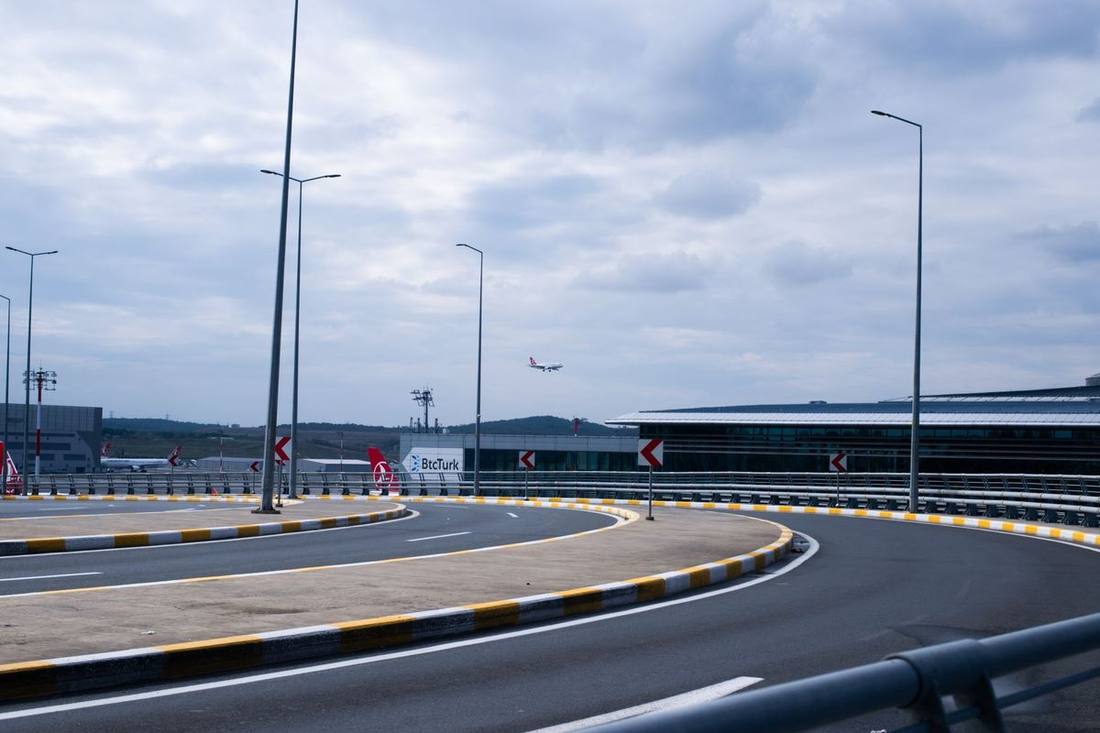
Terminal 1 or Terminal 3?
Pearson has two terminals two kilometres apart, and getting this right is the first job of every booking. Terminal 1 is Air Canada (including Rouge and Express), the Star Alliance carriers — United, Lufthansa, Swiss, Austrian, Turkish, Air India, ANA, Air New Zealand and others — plus Emirates, Etihad, Air France-KLM's partner flights and a rotating set of international airlines. Terminal 3 is WestJet and most of the remaining carriers: American, Delta, British Airways, Cathay Pacific, Qatar, Aer Lingus, Icelandair, Air Transat, Sunwing, Porter's Pearson flights and the ultra-low-cost operators. Airlines do move, so we confirm the terminal against the airline's current assignment the evening before every trip and print it on your confirmation; if you are unsure, the terminal guide lists carriers and the GTAA's own site is authoritative.
The two terminals are linked by the free, automated Terminal Link train, which runs every four to eight minutes between T1, T3 and the Viscount station where the long-term parking and off-airport shuttles are. If a car is waiting at the wrong terminal it is a five-minute train ride or a ten-minute drive around the airport road system to fix; we would rather confirm the terminal than test either.
Where your chauffeur meets you
Both terminals exit arriving passengers onto the Arrivals level, and the GTAA's designated pickup for pre-arranged taxis and limousines is Door A — at Terminal 1 and at Terminal 3. Follow the overhead Ground Transportation signage after you clear customs and baggage, head toward the A end of the hall, and step out: the car is at the curb or the chauffeur is at the door. This is not the rideshare pickup (Uber, Lyft and Hopp use their own zones at the terminal doors by bay assignment) and it is not the taxi stand; a friend's advice about where they met their app car will lead you away from us. The door-by-door guide has the walking routes from each customs hall.
With meet and greet, the chauffeur is inside the arrivals hall before you exit customs, holding a name board, and takes your luggage from the carousel to the car. It is an add-on priced at booking, and it is the right choice for first-time visitors to Toronto, older relatives, unaccompanied minors and anyone landing after a long-haul flight who does not want to think. See meet and greet explained.
Timing: how the flight, customs and wait time work together
The booking carries your flight number. From the evening before, the chauffeur's departure is calculated from the aircraft's real progress, not the schedule — a late gate departure in Heathrow moves the Toronto pickup automatically, and an early landing does the same. When the aircraft reaches the gate, the car is at Door A.
The free wait then begins from the published arrival time: 60 minutes for international arrivals, 30 for domestic. This covers passport control, baggage and the walk for the vast majority of flights; Pearson's international customs halls are large and its baggage delivery is generally quick, but a full A380 arriving alongside two other widebodies at 3 p.m. can push clearance past an hour. When that happens the chauffeur waits, and dispatch tells you before any waiting charge applies. Waiting beyond the allowance is billed in fifteen-minute blocks at the hourly rate for the vehicle. The customs timing guide has the hours and days we see the longest halls.
If your flight is cancelled, the pickup is cancelled free. If it diverts — Hamilton and Buffalo are the usual alternates — dispatch reroutes the chauffeur and calls you with the new fixed fare before the car moves. If you miss a connection and arrive on a later flight, tell us and the pickup follows.
Departures: getting to Pearson on time
For a departure the question is simply when to leave, and Pearson's answer changes by day and season. Our working rules: for a domestic flight, be at the terminal 90 minutes before departure, two hours with checked bags; for the United States, where you clear US customs at Pearson before boarding, two and a half hours; for other international flights, three. Then add the drive: 30 to 40 minutes from downtown at most hours, 50 to 70 at the weekday peaks (07:00–09:30 and 15:30–18:30), and more on the days the Gardiner or 427 is closed. The chauffeur is at your door with the buffer already built in; the how early to book guide has our tables by month and by GTA region, including the March Break, Christmas and Thanksgiving peaks when we add a further 20 minutes as standard.
The car drops you at the departures curb of the correct terminal, where Ontario's curb rules allow a stop for unloading only; if you need help to the check-in counter, book meet and greet for departures and the chauffeur parks and walks you in.
What a Pearson limo costs, and what is included
Pearson fares are fixed at booking and built from five components: the distance and expected time between your address and the terminal; the vehicle class; the 407 ETR toll if you chose it; gratuity if you added it; and 13% HST. There is no surge at any hour. The fare from downtown or midtown Toronto in an executive sedan sits close to the City-regulated flat taxi fare on most routes and below the surge fare rideshare apps show during the morning and evening peaks. Fares from the 905 are usually below a metered taxi because the distance is priced once rather than on a running meter in traffic.
Included in every fare: the pre-arranged Door A pickup, flight tracking, the free wait allowance, luggage handling, water and chargers, and the drop-off at the terminal curb. Not included unless chosen: meet and greet, the 407, gratuity, and child seats — which are free but must be requested. The fares explained page and the flat-rate guide walk through the components; the UP Express vs taxi vs black car comparison covers the alternatives.
Choosing the car
The executive sedan takes three passengers with two large checked bags and a carry-on, and is right for one or two travellers. The premium sedan — Mercedes S-Class or BMW 7 Series — is the same capacity when the arrival matters or you want to sleep. The luxury SUV (Cadillac Escalade, Lincoln Navigator) takes six passengers and six bags and is what most families and most winter travellers should book. The executive Sprinter carries eleven with a suitcase each and replaces three sedans for a group. Child seats — rear-facing, forward-facing and booster — are carried and installed free when requested at booking; Ontario law requires them and our chauffeurs will not depart without one. The fleet page has capacity in detail; the family transfers guide covers strollers, six suitcases and the right vehicle.
Pearson to everywhere: routes and times
Pearson sits at the hub of the GTA's highway system, which is why it is the natural departure point for the whole region.
| Destination | Typical route | Off-peak drive | Peak drive |
|---|---|---|---|
| Downtown / Financial District | 427 → Gardiner | 25–35 min | 45–70 min |
| Yorkville / Midtown | 401 → Allen or 427 → Gardiner | 30–40 | 50–75 |
| North York | 401 east | 20–30 | 40–60 |
| Scarborough / Pickering | 401 east | 35–50 | 60–90 |
| Mississauga (Square One) | 401/403 | 10–20 | 20–35 |
| Markham / Richmond Hill | 407 (tolled) or 401 | 30–40 | 45–75 |
| Vaughan | 427 → 407 or 400 | 20–30 | 35–55 |
| Oakville / Burlington | 427 → QEW | 30–45 | 50–80 |
| Hamilton | QEW / 403 | 55–70 | 75–100 |
| Niagara Falls | QEW | 85–100 | 110–140 |
Each of these has its own guide: downtown hotels, Mississauga, North York, Markham and Richmond Hill, Scarborough and Durham, Oakville, Burlington and Hamilton and Niagara Falls. Longer runs — Kitchener-Waterloo, London, Barrie, Kingston, Ottawa, Montreal, Buffalo — are priced as fixed-fare long-distance transfers.
Private aviation at Pearson
Pearson's general aviation side — the FBOs operated by Skyservice and Signature on the north and south fields — has its own access roads and its own pickup arrangements, and a car meeting a private aircraft is a different booking from a terminal pickup: the tail number rather than a flight number, planeside or FBO-lounge pickup where the operator permits, and a chauffeur briefed on the FBO's gate procedure. The private aviation page and the Pearson FBO guide explain how it works.
Pearson for groups, crews and events
Conference delegations, sports teams, wedding parties flying in together and film crews are met with Sprinters and, above eleven passengers, limo buses. Group pickups at Pearson work best with a single coordinator on the passenger side and meet and greet on ours, so that the party is collected from the carousel as a unit rather than trickling to Door A. The group transfer guide and the conference transport article cover the logistics; large events are quoted by enquiry with a vehicle plan.
The Pearson checklist
- Book with the flight number; the car follows the aircraft.
- Check the terminal on your confirmation against the airline.
- After customs, follow Ground Transportation signs to Door A — not the rideshare zone.
- Keep your phone on; the chauffeur texts when in position.
- Add meet and greet for first-timers, elders and long-hauls.
- Request child seats at booking.
- For departures, use our timing tables, not a rule of thumb.
- If the flight is cancelled or diverts, tell us; the car adjusts free.
- Book the return with the outbound.
- Ask for a standing order if you fly weekly.
Pearson's busiest hours, and what they mean for your car
The airport has two daily waves and a seasonal one. The morning departure wave runs from about 5:00 to 9:00, when the transcontinental and US business flights leave; the terminal roads and the 427 approach are heaviest between 6:00 and 7:30, and the check-in halls at both terminals are at their fullest. The afternoon arrival wave runs from roughly 13:00 to 17:00, when the transatlantic flights land in a cluster; this is when the international customs halls are longest and when Door A is busiest with pre-arranged cars. The evening brings a second, smaller departure wave for Europe (17:00–21:00) and the late arrivals from the west coast and Asia. Seasonally, the week before Christmas, the first Saturday of March Break and the Thursday before every long weekend are the days the whole GTA travels at once.
Our dispatch plans against these. Morning-wave cars are assigned the evening before and confirmed by text at 4 a.m. Afternoon international pickups are staffed with the free-wait allowance in mind and a chauffeur who knows that a 15:10 arrival from London may not reach Door A until 16:15. On the peak days we add buffer to every departure recommendation and decline same-day bookings we cannot honour rather than send a car late. The seasonal peaks guide lists the specific dates.
The alternatives, fairly
The UP Express train runs from Pearson Terminal 1 to Union Station in 25 minutes and is the right choice for one person with one bag whose destination is within a short walk of Union. A taxi from the airport stand charges a City-regulated flat fare by zone and is fine if the queue is short and the destination is simple. Rideshare works at off-peak hours and is unreliable at exactly the moments you need it — the surge after 10 p.m., the cancellations in a snowstorm, the pickup zone confusion. A black car costs about what the taxi does from downtown, more than the train, and less than the surge; what you buy is the certainty. The full comparison puts the numbers side by side.






