From wheels-down to Door A
International passengers at Pearson clear Canada Border Services in the customs hall above the arrivals level — the primary inspection kiosks (or the ArriveCAN advance declaration's express lane), then a CBSA officer if referred — collect baggage in the international hall, and exit onto the arrivals level. On an average afternoon this takes 30 to 50 minutes from touchdown; at the transatlantic bank (2 to 5 p.m.) and the Asia bank (early afternoon and late evening) it can take 60 to 90; overnight and mid-morning it is often 20 to 30. A booked black car's fare includes 60 minutes of waiting after the actual arrival for international flights, which covers the average and most of the peaks; beyond it, waiting is charged in 15-minute increments. The chauffeur tracks the flight to touchdown and waits for your text from the carousel.
Pearson processes more than 30 million international and transborder passengers a year through two customs halls — one at each terminal — and the time each passenger spends in them is the least predictable part of any arrival. It depends on the hour (the banks of long-haul arrivals that land within an hour of each other), the season (August and December are the worst), the flight (a widebody from Delhi disgorges 350 passengers, a narrowbody from Chicago 150), the passenger's status (Canadians and permanent residents with the kiosks, NEXUS holders with their lane, visitors who need a visa check), and the random draw of secondary inspection. This article explains the procedure step by step, gives the timings by hour and season from our chauffeurs' daily experience, explains what makes a slow day, covers the ArriveCAN, NEXUS and Global Entry shortcuts, and describes how our wait policy and the text procedure are built around the uncertainty so that a long customs hall costs the passenger nothing but time.
Step one: the walk from the gate
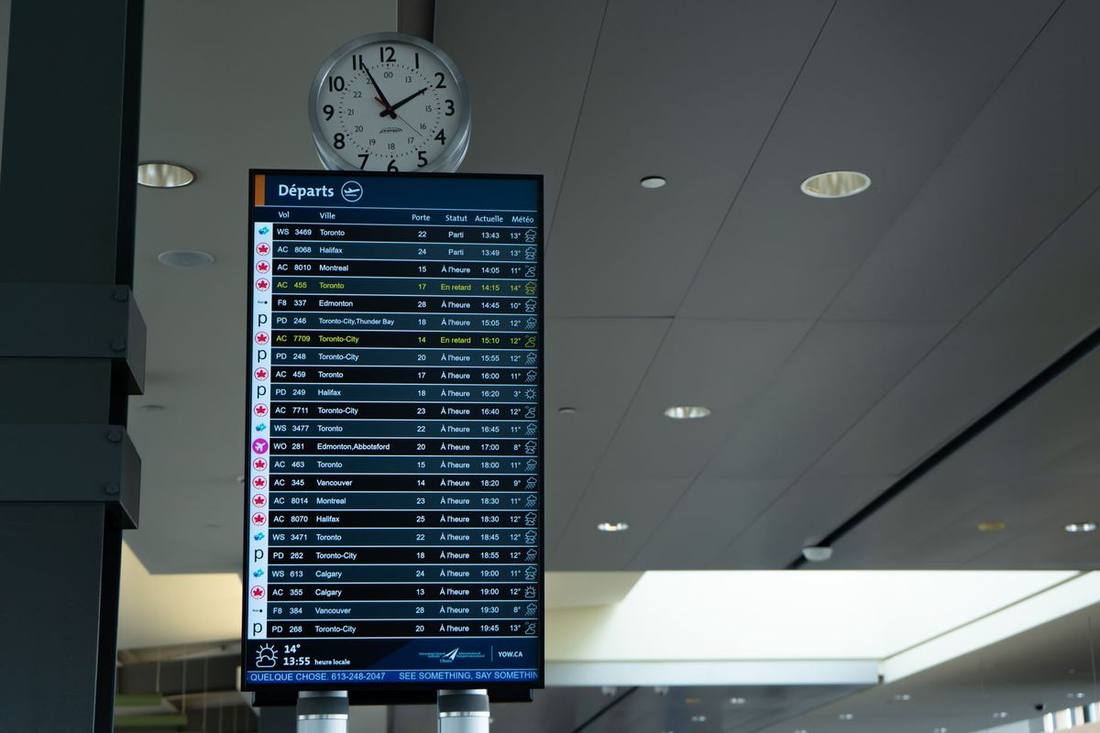
A widebody at Terminal 1's Pier F or Terminal 3's satellite gates is a long way from the customs hall — five to twelve minutes of corridors and moving walkways — and the first factor in the total time is simply where the aircraft parked. Passengers at the front of the aircraft and moving briskly reach the customs hall while the back of the plane is still deplaning; the hall's queue, when there is one, forms behind them. The airport's signage funnels everyone to the same hall, where the primary inspection kiosks stand in rows.
Step two: primary inspection — kiosks, ArriveCAN and NEXUS
Since 2017 Pearson's primary inspection is by kiosk: passengers scan their passport, answer the declaration questions on screen, take a photo and receive a printed receipt, then present the receipt to a CBSA officer at a booth who either waves them through or refers them to secondary. Passengers who completed the ArriveCAN advance declaration (up to 72 hours before arrival, on the app or website) use express kiosks and skip the on-screen questions, which saves several minutes and a place in the longer queue; the CBSA says advance-declaration passengers clear primary in roughly half the time. NEXUS members use dedicated kiosks with a shorter queue. Visitors who need a visa or eTA check, first-time permanent residents and travellers with complex declarations are directed to an officer's booth. On a quiet morning the whole primary step takes five minutes; at the transatlantic bank the kiosk queue alone can be twenty to forty.
Step three: secondary inspection
A minority of passengers — referred by the kiosk's algorithm, the officer's judgment, a declaration that needs a duty assessment, or at random — are directed to secondary inspection, where they collect their bags and take them to an inspection area for a conversation and possibly a search. Secondary takes fifteen to forty minutes for most; longer for a duty payment or an immigration matter. It is the wildcard in the timing and the reason the included wait is an hour rather than forty-five minutes; a passenger in secondary who texts "referred to secondary, maybe 30 minutes" has a chauffeur who waits.
Step four: baggage
The international baggage halls at both terminals receive bags from the aircraft's hold after the ground crew unloads — 20 to 40 minutes after touchdown for a widebody, less for a narrowbody — and the passenger who cleared primary in five minutes often waits at the carousel for the bags to appear. Baggage delivery is the airline's and the ground handler's business, not the CBSA's, and it is the slowest on the days the airlines are short-staffed (the summer of 2022 was the extreme). Passengers with carry-on only skip the step and are at Door A twenty minutes after touchdown on a good day.
Step five: the arrivals level and Door A
From the international baggage hall the passenger exits through the arrivals doors onto the arrivals level — the arrivals doors article walks it — and turns west toward Door A and the pre-arranged limousine zone, a three-to-five-minute walk with bags at Terminal 1 and two to four at Terminal 3. The text from the carousel ("bags in hand, walking out") brings the chauffeur from the cell lot to the curb in the time the walk takes.
Timing by hour of day
Midnight to 6 a.m.: quiet — the late Asia arrivals have cleared and the morning banks have not landed; 20 to 30 minutes from touchdown to Door A. 6 to 9 a.m.: the overnight transatlantic and Middle East arrivals (London, Frankfurt, Dubai, Doha, Istanbul) land together; 35 to 55 minutes. 9 a.m. to noon: moderate; 25 to 40. Noon to 2 p.m.: the first Asia bank (Tokyo, Seoul, Hong Kong, Beijing) and the US midday arrivals; 35 to 55. 2 to 5 p.m.: the transatlantic afternoon bank — the day's heaviest, with a dozen widebodies from Europe landing within two hours — and the customs hall's longest queues; 45 to 90 minutes. 5 to 8 p.m.: still heavy with the late Europe arrivals and the US evening bank; 40 to 60. 8 p.m. to midnight: the second Asia bank and the India flights; 40 to 70. The engine cannot predict which flight will be slow, but the chauffeur knows the hour and dispatch knows the bank.
Timing by season
July and August are the heaviest months — the summer travel peak, families, the airlines' fullest widebodies — and the afternoon bank's queues are at their longest; December's two weeks around Christmas are the second peak; March break brings the US sun flights' returns, which are transborder and clear in the same hall. January, February (outside March break), and the autumn are the quietest. The CBSA staffs for the peaks and has added kiosks each year, and the hall is measurably faster than it was a decade ago; it is still the airport's bottleneck at 3 p.m. in August.
US arrivals: transborder and the pre-clearance illusion
Passengers arriving from the US clear Canadian customs at Pearson like any international arrival — US pre-clearance works in the other direction (Canadians clear US customs in Toronto before flying south), and arriving from Chicago means the same kiosk and hall as arriving from Frankfurt. The transborder flights are narrowbodies and their loads clear faster; a US arrival at a quiet hour is at Door A in 20 minutes.
What the chauffeur knows and does
The chauffeur sees the flight's touchdown time from tracking and knows the hour's bank; dispatch's rule is that the chauffeur is in the cell lot at touchdown and moves to Door A on the passenger's text, and if no text comes, at the hour's typical clearance time (30 minutes for a quiet hour, 50 for the afternoon bank) to wait at the curb. The 60 minutes of included wait runs from the actual arrival, and the flight delays article explains what happens beyond it — 15-minute increments at the class's waiting rate, itemised, never mentioned at the curb. Passengers with meet and greet are met at the exit from the international hall by a chauffeur with a name board, which for a first-time visitor after a long flight is worth every dollar of the add-on.
Shortening the hall: the passenger's options
ArriveCAN advance declaration, submitted on the aircraft's Wi-Fi or before departure, is the single biggest time-saver available to everyone and costs nothing. NEXUS (for Canadian and US citizens and permanent residents, with an application and interview) gives the dedicated lane and pays for itself in a year of regular travel. Carry-on only skips the baggage wait entirely. Sitting near the front of the aircraft gets you to the hall before the queue forms. A passenger who does all four is at Door A twenty minutes after touchdown on the worst afternoon of August.
Connections, onward domestic flights and the customs hall
Passengers connecting at Pearson from an international arrival to a domestic departure clear customs at Pearson and re-check their bags at the connections desk in the international hall; the connecting flights article covers the layovers. Passengers connecting to a US departure from an international arrival clear Canadian customs, then US pre-clearance — two halls — and the airlines' minimum connection times reflect it.
A worked example: Delhi to Brampton, 8 p.m. in August
Air India from Delhi lands at Terminal 1 at 20:05 on a Saturday in August — a full widebody in the evening India bank. The passenger, a grandmother visiting her son's family, has meet and greet with a Punjabi-speaking chauffeur, who is inside the arrivals hall at the international exit with a name board at 20:35. Primary inspection with the kiosks takes her 35 minutes (the queue is long and she has not used ArriveCAN); no secondary; the bags — three of them — appear at 21:05; she is through the doors at 21:12, sixty-seven minutes after touchdown. The chauffeur takes the bags, walks her to the car at Door A, and they are on the 427 by 21:25 and in Brampton by 21:50. Seven minutes over the included wait — rounded to the quarter hour, no charge. Her son booked it from Brampton with the flight number three weeks before and knew the fare the same day.
Customs timing quick reference
| Hour | Typical touchdown to Door A | Why |
|---|---|---|
| 00:00–06:00 | 20–30 min | Quiet |
| 06:00–09:00 | 35–55 | Overnight Europe & Middle East arrivals |
| 09:00–12:00 | 25–40 | Moderate |
| 12:00–14:00 | 35–55 | First Asia bank, US midday |
| 14:00–17:00 | 45–90 | Transatlantic afternoon bank — heaviest |
| 17:00–20:00 | 40–60 | Late Europe, US evening |
| 20:00–24:00 | 40–70 | Second Asia bank, India flights |
| Included wait (international) | 60 min after actual arrival | Then 15-min increments |
What to do
Submit the ArriveCAN advance declaration. Put the flight number on the booking. Text from the carousel. The Pearson page has the fares and the engine the fields.
The airlines' part: baggage handling and the summer of 2022
The customs hall's timing is half CBSA and half the airlines and their ground handlers, and the summer of 2022 — when Pearson's baggage systems and short-staffed handlers left bags on the tarmac for hours and the arrivals halls filled with waiting passengers — made the distinction visible to everyone. The airport has since invested in baggage systems and the handlers have staffed up, and a normal afternoon's baggage delivery is 20 to 40 minutes after touchdown; but a passenger whose bags do not appear should go to the airline's baggage desk in the hall, file the report there, and text the chauffeur, and the lost luggage article covers what happens next.
Families, older passengers and the hall
A family with two children and a stroller, or a passenger in their eighties after a fourteen-hour flight, moves through the hall more slowly than the averages above, and the kiosks — which require a passport scan and a photo for each traveller — take a family of four eight to ten minutes rather than three. Meet and greet exists for these passengers: the chauffeur is inside at the exit, takes the bags, and the family does not read a sign. The families with luggage article and the seniors' guide cover the arrangements, and a chauffeur who speaks the family's language is assigned when asked.
Why the included wait is an hour, not two
Sixty minutes after the actual arrival covers roughly nine in ten international arrivals at Pearson, from our own records; the tenth is the August afternoon bank, a secondary referral or a baggage failure. A two-hour allowance would cover more of them and would be paid for by every passenger on every quiet morning, in a higher fare; the hour is the balance we have chosen, and the waiting rate beyond it is a quarter of the vehicle's hourly rate per fifteen minutes — modest, itemised, and never a surprise. The what is included article has the full list of what the fare covers.






