The assistant's system, in one paragraph
An executive assistant books cars efficiently by (1) setting up the traveller's profile on the corporate account once — preferences, addresses, the preferred chauffeur, the vehicle class, the 407 and gratuity policies; (2) putting the flight number and airline in every airport booking so the terminal and the tracking are automatic; (3) sending an itinerary email for an hourly day (meetings, addresses, contacts, the flight) the evening before; (4) booking client pickups with meet and greet and the firm's name on the board; (5) making changes by text to dispatch's number, never by rebooking; (6) setting up a standing order for the weekly flight; (7) knowing the peaks calendar and booking those days when the flight is booked; (8) letting the statement carry the cost centre so no receipt is chased; and (9) having dispatch's number and the chauffeur's on speed dial. The fifteen things dispatch wishes every assistant knew are below.
The relationship between a dispatcher and an executive assistant is one of the trade's quiet partnerships: the assistant knows the executive, the dispatcher knows the fleet, and between them a hundred trips a year happen without the executive noticing any of them. The good assistants have a system and this article describes it — the account setup that turns every booking into a line, the traveller profile that carries the preferences, the flight number that makes the airport automatic, the itinerary email that briefs a chauffeur for a day of meetings, the client pickup's details, the change-by-text rule, the standing order, the peaks calendar, the statement, the numbers to have on speed dial, and, at the end, the fifteen things dispatchers say they wish every assistant knew on the first day.

The account and the traveller profile
The first hour of the relationship is the corporate account setup: the assistant as a booker, the executive as a traveller, and the profile — home and office addresses with their doors (the tower's lay-by, the house's gate code), the vehicle class (the S-Class, the Escalade), the preferences (the front seat or the rear right, quiet or conversation, the Globe or the FT on the seat, the temperature, still or sparkling water), a preferred chauffeur once one is found, the 407 policy (approved for the Markham client), the gratuity (set at 15 per cent), and the cost centre. Once the profile exists, a booking is the date, the time, the destination and, for the airport, the flight number; the corporate account billing article shows where it lands.
The flight number, every time
An airport booking without a flight number is a booking for a fixed time at a guessed terminal; with it, dispatch knows the terminal (Air Canada is Terminal 1, WestJet Terminal 3 — the Terminal 1 vs Terminal 3 article), tracks the flight, moves the pickup with delays, and gives the international wait allowance. The assistant's habit is to paste the flight number from the itinerary into the booking as a reflex, and the flight delays article explains why the executive whose flight was two hours late never had to call anyone.
The itinerary email for an hourly day
For a day of meetings — a visiting executive from head office, a roadshow, a client's day — the assistant sends dispatch an itinerary email the evening before: the pickup time and place, each meeting's time, address and contact name, the lunch, the flight, and any notes ("the 11 a.m. is at the pension fund's side entrance on Bay"); dispatch adds the lay-bys and briefs the chauffeur, and the chauffeur has the assistant's mobile for the day. The roadshow article and the visiting clients itinerary article show the pattern; the executive car service article has the towers' doors.
The client pickup
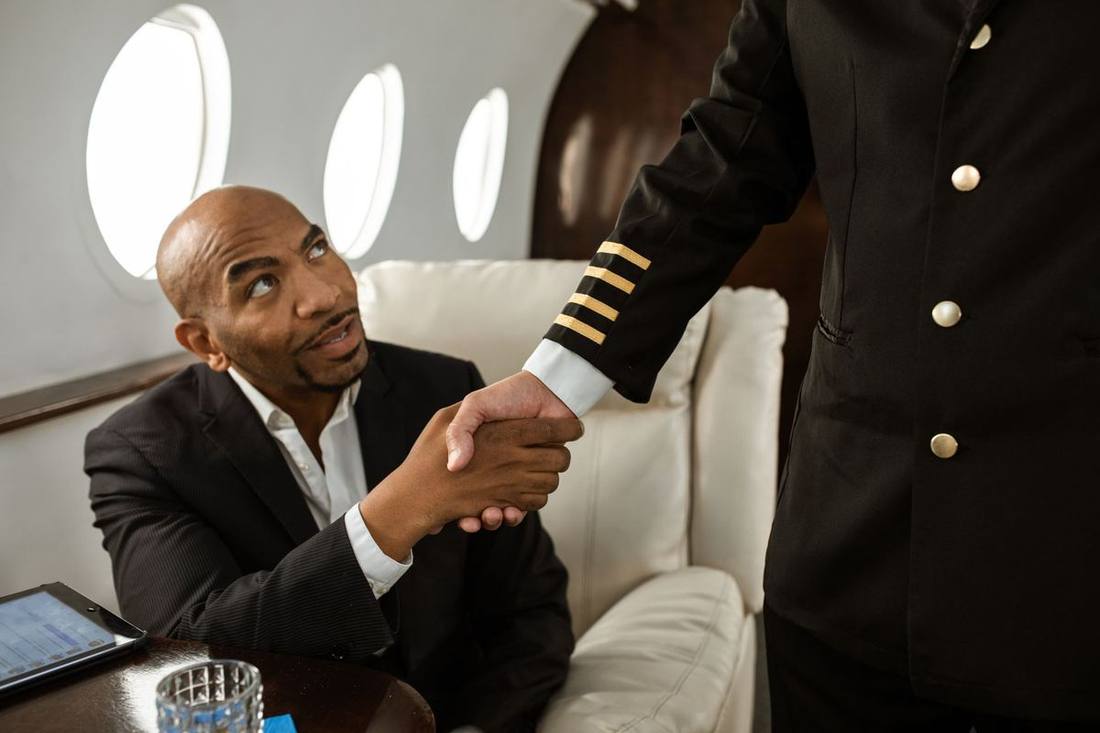
A client, a candidate or a board member arriving at Pearson is booked with meet and greet, the firm's name (or the guest's) on the board, the premium sedan or the SUV, the guest's mobile if known, the hotel's full name (the Pearson to downtown hotels article explains why "the Marriott" is not enough), and a note about anything the chauffeur should know — a language, a wheelchair, a dietary restriction the hotel should hear about. The assistant receives the chauffeur's "guest collected" and "guest at hotel" texts, and the guest's first impression of the firm was a name board.
Changes by text, never by rebooking
The meeting moves; the flight changes; the executive wants the car at 5:30 instead of 6. The assistant texts dispatch's number — "Thursday's 6 p.m. is now 5:30," "AC 117 is now AC 121" — and the booking moves with the same chauffeur; the how to book online article covers the mechanics. Cancelling and rebooking loses the chauffeur and, on a peak day, the car; the booking mistakes article lists the cancelled-flight-cancelled-twice error that assistants make under pressure and dispatch sees every storm day.
The standing order for the weekly flight
An executive who flies to Calgary every Monday and returns every Thursday has a standing order: the Monday 6 a.m. from the house, the Thursday arrival met at Door A, the same chauffeur, the flight numbers texted on Sunday, a pause for the holidays with one email; the assistant stops booking and starts confirming, and the consulting firms article describes the pattern across a whole firm.
The peaks calendar
The assistant's calendar has the fleet's peaks on it: the December holidays, March break, the long weekends, TIFF, PDAC, the Caribbean Carnival weekend, the day after a snowstorm — and the rule that a car on those days is booked when the flight is; the how early to book article has the calendar and the holiday peaks article the December detail. An assistant who books a December 22 car on December 21 is an assistant dispatch cannot help.
The statement and the cost centre
The monthly statement carries every trip with the traveller, the route, the fare, the HST, the 407, the gratuity and the cost centre the assistant put on the booking; the finance department imports it and no receipt is chased. The corporate account billing article shows the columns and the expense reports article the individual receipt for the rare trip off the account; an assistant who codes the booking correctly at the start has finished the expense report.
The numbers on speed dial
Dispatch's number, answered by a person at any hour; the assigned chauffeur's mobile, on every confirmation; the account manager's, for the schedule and the statement. An assistant with the three numbers has never needed a fourth, and the how dispatch works article describes the desk at the other end.
Two cities, one executive
An executive whose week is Toronto, Montreal and New York needs cars in three cities, and the assistant books them through one account: our fleet in Toronto and the network's affiliated operators in the others, with dispatch coordinating the handovers so the Montreal chauffeur is tracking the flight our Toronto chauffeur dropped. The affiliate's name is on the confirmation and the trips are on one statement where the affiliate's systems allow.
The fifteen things dispatch wishes every assistant knew
- The flight number, always. 2. The airline decides the terminal; say it. 3. Full hotel names. 4. The tower's name is enough — we know the lay-by. 5. Text changes; don't rebook. 6. Never cancel for a delayed flight; text the new number. 7. Approve the 407 on the profile for anything north of the 401. 8. Set the gratuity on the account and stop thinking about it. 9. Book the peaks with the flight. 10. Send the itinerary the evening before, not at 7 a.m. 11. Give the guest's mobile for a meet and greet. 12. Say "premium sedan" if the executive expects the S-Class; the profile can hold it. 13. Tell us the executive's preferences once; we keep them. 14. Read the confirmation when it arrives. 15. Call dispatch, not the chauffeur, for anything more than "where are you" — the chauffeur is driving.
A worked week for one assistant
Sunday evening: texts Monday's and Thursday's flight numbers for the standing order. Monday: an itinerary email for Wednesday's visiting director — five meetings, lunch at the National Club, Billy Bishop at 5. Tuesday: a client's Thursday arrival booked — Terminal 1, meet and greet, the firm's name on the board, the premium sedan, the Four Seasons, the client's mobile. Wednesday: a text at 2:40 — "director's 3 p.m. moved to 3:30, same address." Thursday: the client's chauffeur texts "collected" at 4:12 and "at the Four Seasons" at 5:05; the executive's Thursday return lands late and the assistant does nothing because the tracking did. Friday: the account manager's email with the month's statement, coded, imported by finance in four minutes. Nobody called anyone.
Assistant's quick reference
| Task | The system |
|---|---|
| First booking | Set up the account and the traveller profile (preferences, addresses, class, chauffeur, 407, gratuity, cost centre) |
| Airport booking | Flight number + airline; the rest is on the profile |
| Hourly day | Itinerary email the evening before: meetings, addresses, contacts, lunch, flight |
| Client pickup | Meet and greet; name on the board; premium sedan; full hotel name; guest's mobile |
| Change | Text dispatch; same chauffeur; never rebook |
| Delayed / cancelled flight | Text the new number; never cancel |
| Weekly flight | Standing order; flight numbers texted Sunday |
| Peaks | Book with the flight |
| Expenses | The statement with cost centres; no receipts |
| Second city | Network affiliate on the same account |
Setting it up
The corporate car service page opens the account; the profile takes an hour; the corporate travel policy article gives the policy the assistant will be asked to follow and the duty of care article the reason.
The visiting executive's week
An executive from head office in London or New York in Toronto for a week is the assistant's largest booking: the airport with meet and greet on Sunday, an hourly each weekday with an itinerary email each evening, dinners on the hourly or as separate fares, a Saturday hourly for the city if they stay, and the airport on Sunday; the visiting clients itinerary article works the week, the Toronto luxury hotels guide the hotel, and the same chauffeur for the five days is requested on the first booking and honoured when the roster allows.
When the executive books for themselves
Executives who book their own cars from a phone at a gate use the same account and the same profile — the engine knows them — and the assistant sees the booking on the account and the statement; the how to book online article is the ninety-second version, and dispatch's number is the same for both.
Booking notes for assistants
Three small things. Put the flight number in before anything else. Keep the profile current — a new address, a new preference, a new chauffeur — because the profile is what makes the booking a line. And when something goes wrong, call dispatch first; the log will show what happened and the desk will fix it before the executive knows.
Cancelling, and the cutoffs an assistant should know
Three hours for a transfer, 24 for an hourly, seven days for a stretch or a bus — the cancellation policies article has the schedule — and the assistant's habit is to cancel the moment the meeting moves rather than the morning of, because a transfer cancelled the evening before costs nothing and one cancelled at 5 a.m. costs half. A cancelled flight is never cancelled by the assistant; it is a text with the new number.
A note on discretion
Assistants handle information — the executive's whereabouts, the client's name, the deal's timing — and so do the dispatchers and chauffeurs who receive it; the privacy and discretion article sets the standard on our side and an assistant can hold us to it. The itinerary email is seen by dispatch and the chauffeur and no one else, and the account's data is protected as the corporate account billing article describes.
The last word from the desk
Dispatchers say the best assistants they work with share one trait: they treat the chauffeur as a colleague rather than a service, and the chauffeur — who knows the executive's habits better than most of the office — treats the assistant the same way. It shows in the texts, and it shows in the trips.






