The service, in one paragraph
For seniors in Toronto a black car provides a chauffeur who comes to the door (and inside, if asked), offers an arm to the car, stows a walker or wheelchair, drives at a gentle pace, waits at the destination or returns at the agreed time, and carries the bags to the kitchen; the same chauffeur on a standing weekly order for the appointments, the pharmacy, the grocery, the hairdresser and the Sunday visit; hospital entrances on the chauffeur's map and the walk to the clinic's door; a family member who books and pays from anywhere and receives a text at each end; wheelchair-accessible vehicles with notice; and the fixed fare for every trip. It is booked by the passenger or, more often, by a son or daughter, and the medical appointments article covers the clinical version.
A share of our regular passengers are in their seventies, eighties and nineties — people who drove for sixty years and stopped, whose children live in Calgary or London, whose week is a set of appointments and errands that the transit system serves poorly and a taxi serves indifferently. For them the black car's virtues are not the leather and the water; they are the chauffeur who is the same person every Tuesday, who knows the side door and the step that is loose, who carries the groceries in, who does not hurry, and who texts the daughter when her mother is home. This article describes the service as seniors and their families actually use it: the assistance at the door and the car, the pace, the standing weekly order and what it records, the medical appointments and the hospitals, the errands, the social run, the family member who books from afar and the text at each end, the accessible vehicle and the notice it needs, the dignity question, the fare and who pays, and the things a family should tell dispatch when setting it up.

At the door
The chauffeur texts from the curb and then comes to the door — knocks, rings, or lets themselves in if the family has arranged it and the passenger prefers — and waits while the passenger gets ready; the 15-minute allowance at a city pickup is never counted for a standing-order senior, because the chauffeur knows that getting a coat on takes what it takes. The chauffeur offers an arm down the steps, carries the bag, opens the door, helps with the seat and the belt, and stows the walker, the cane or the folded wheelchair in the trunk. At the destination the same in reverse, and at a hospital or clinic the chauffeur walks the passenger to the department's door, not the building's.
The pace
Chauffeurs drive gently for every passenger and more gently for these: no hard braking, no fast corners, the heat on in winter before the passenger is in the car, the radio off unless asked, the route the passenger knows rather than the shortcut that alarms them. A passenger who wants to talk has a companion for the drive; one who wants quiet has quiet. The chauffeur vs driver article describes what training produces and this is where it shows.
The standing weekly order
Most seniors' bookings are standing orders: Tuesday 9:30 to the cardiologist at Sunnybrook and home; Thursday 10 to the pharmacy, the grocery and home; Friday 1 to the hairdresser and the bank; Sunday 11 to the daughter's in Oakville and home at 4. The order records the doors, the bags-to-the-kitchen instruction, the mobility aids, the passenger's mobile and the family contact's, the payer's card, and the chauffeur who has driven it for two years; a change — "no hairdresser this week" — is a text from the passenger or the daughter, and the weekly confirmation email goes to both.
Medical appointments and the hospitals
The clinical version of the service is the medical appointments article: the hospital's entrance loop on the chauffeur's map (Sunnybrook's, Toronto General's on University, Mount Sinai's, St. Michael's, the Scarborough Health Network's, Trillium's, Mackenzie Health's — the hospital row article covers University Avenue), the walk to the clinic's door, the wait or the return at the agreed time (an hourly booking for a two-hour appointment; two fares for a four-hour one), the pharmacy on the way home, and the family's text. Dialysis three mornings a week and chemotherapy on a cycle are standing orders that dispatch protects above almost everything else in the roster.
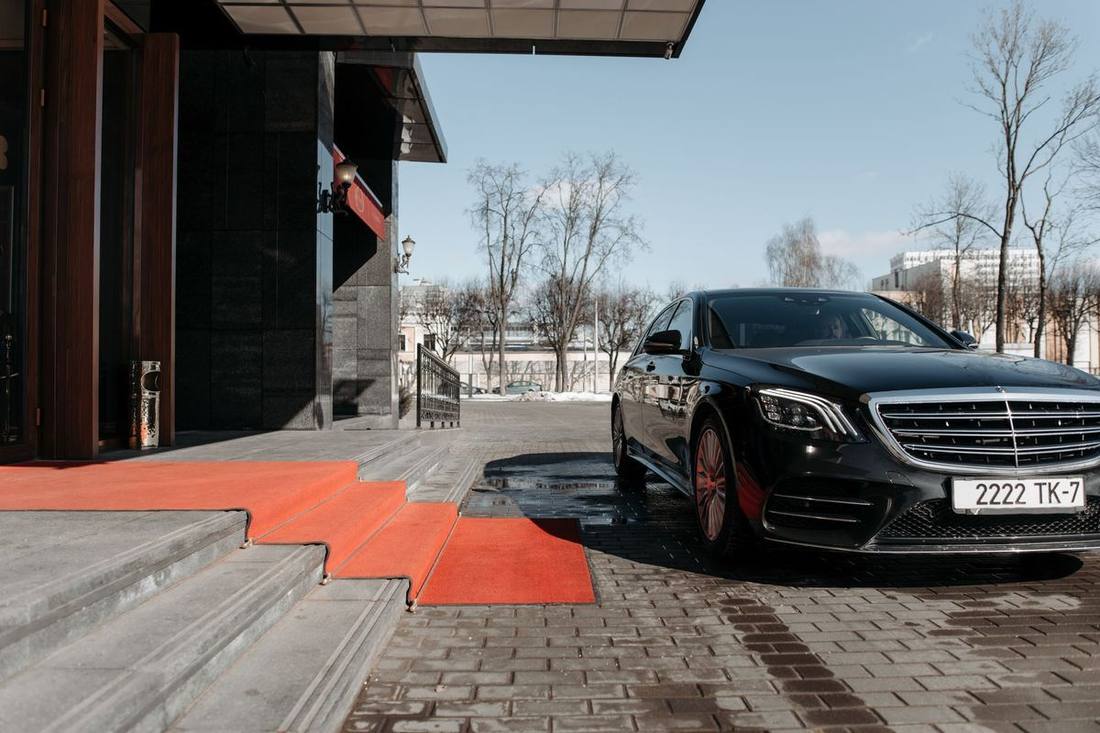
The errands
The pharmacy, the grocery (the chauffeur waits in the lot, or comes in with the cart if asked, and carries the bags to the kitchen), the bank (the chauffeur waits), the post office, the optician, the hairdresser (the chauffeur returns in ninety minutes), the cemetery on the anniversary — an hourly booking of two or three hours covers a morning of errands with the chauffeur at the door of each, and the hourly page has the structure. The fare is the same fixed fare or hourly rate as anyone's; the service is the same chauffeur who knows that Mrs. Rosen likes the pharmacy first.
The social run
Sunday lunch at the daughter's, the synagogue or the church, the bridge club, the concert at Roy Thomson Hall, the grandson's hockey game in Vaughan, the friend's funeral (the funeral transport article covers the day), the summer afternoon at the Beaches — the social run keeps a life going after the licence is gone, and the chauffeur who drives it knows the daughter's driveway and the hall's side door. The Vaughan guide describes the Thornhill community's Saturday pattern and the North York guide the Bathurst corridor's.
The family member who books from afar
Most of these orders are set up by a son or daughter in another city — a call to dispatch, the mother's address and doors, the appointments' pattern, the mobility aids, the mother's mobile and the daughter's, the daughter's card — and the daughter receives a text when the chauffeur collects her mother and a text when her mother is home, every trip, without asking. The deposits and payment article covers the third-party payer and the privacy article the standard of a chauffeur who is in a passenger's home weekly and tells no one anything.
Accessible vehicles
A passenger who uses a wheelchair and cannot transfer to a car seat needs a wheelchair-accessible vehicle — a van with a ramp or a lift and tie-downs — and the accessible service article describes what we provide with notice (a day or two), what we cannot, and where Toronto's accessible taxi programme is the better call for a same-day need. A passenger who uses a wheelchair and can transfer rides in any of our vehicles with the chair folded in the trunk; a walker or a scooter that folds is the same.
The pace of the day, and the wait
An older passenger's appointment runs long, the pharmacy has a queue, the lunch at the daughter's stretches; the chauffeur's time is the hourly rate or the waiting rate beyond the allowance, and the family who sets up the order chooses the structure — an hourly block for the appointment mornings, two fares for the Sunday visit with a four-hour gap — with dispatch's advice; the hourly vs point-to-point article works the arithmetic and nobody at our end hurries a passenger out of a doctor's office.
Dignity
The service is built so that an older passenger is a passenger — greeted by name, offered an arm and not seized by one, asked rather than told, driven where they want by the route they know, left at their door with the bags inside and the light on. The chauffeur does not talk over them to the daughter, does not discuss their health with anyone, and does not treat a slow walk as a delay. Families tell us this is why they book; the women travelling alone article describes the same standard from another angle.
The fare and who pays
Every trip is the fixed fare or the hourly rate that anyone pays — there is no seniors' surcharge and no seniors' discount, though a household with a heavy weekly order may earn a schedule — charged to the card on file, usually the family member's, with the receipt to their email; the how much does a black car cost article has the structure. Against the alternatives — a car the passenger should not be driving, a taxi that honks from the curb, a transit trip with two transfers — the fare buys the week.
What to tell dispatch when setting it up
The passenger's name and how they like to be addressed; the address and its doors, steps and quirks; the mobility aids; the appointments' pattern and each hospital's department; the pharmacy; whether the chauffeur should come inside, wait, or return; the passenger's mobile and the family contact's; the payer's card; any language the passenger prefers (a chauffeur who speaks Italian, Portuguese, Cantonese, Punjabi, Russian, Polish or Greek is assigned when asked — the seniors who ask are often the ones for whom English came second); any medical condition the chauffeur should know about (a passenger who may become confused, one who should not be left alone at a door); and the pace. Dispatch enters it all on the account and the chauffeur reads it before the first trip.
A worked week: Mrs. Rosen, 84, North York
Tuesday 9:15: the chauffeur (the same for two years) texts, comes to the side door, helps with the coat, stows the walker, drives to Sunnybrook's M-wing entrance, walks her to the cardiology clinic's desk, waits ninety minutes on the hourly, drives her to the Shoppers on Bathurst and waits, carries the bags to the kitchen, texts her son in Calgary: "Mom's home, 11:50." Thursday 10:00: the grocery and the bank, the same. Sunday 11:00: to her daughter's in Thornhill, and home at 4 with a container of soup the chauffeur carries in. Three days, one account, the son's card, three texts to Calgary, and a woman who has not driven since 2021 and has not missed a thing.
Seniors' service quick reference
| Need | What the chauffeur does | Booking structure |
|---|---|---|
| At the door | Comes to the door, offers an arm, stows walker/wheelchair, carries bags | Any |
| Medical appointment | Hospital entrance on the map; walks to the clinic's door; waits or returns | Hourly for short; two fares for long |
| Errands morning | Pharmacy, grocery, bank; waits at each; bags to the kitchen | Hourly, 2–3 h |
| Social run | Daughter's, place of worship, club, concert | Two fares or hourly |
| Family booking from afar | Text at pickup and at home, every trip | Standing order on the family's card |
| Wheelchair, non-transferring | Accessible van with ramp/lift | With a day or two's notice |
| Language | Chauffeur who speaks it | Recorded on the account |
| Fare | The same fixed fare or hourly rate as anyone's | Card on file |
Setting it up
A call to dispatch (the contact page) with the list above sets up the account and the first standing order the same day; the medical appointments article and the accessible service article cover the clinical and the accessible versions.
Companions, caregivers and the second seat
A passenger who travels with a caregiver or a companion has a second seat at no extra fare — the fare is for the car, not the head — and a caregiver who meets the passenger at the hospital rather than the house is a stated stop or simply a second passenger; the chauffeur takes instructions from the passenger first and the caregiver second, unless the account says otherwise. For a passenger with dementia or confusion the account records it, the chauffeur does not leave them at a door alone, and the family's text is the reassurance; the unaccompanied minors guide's handover rules apply in spirit at the other end of life.
Winter, and the walk from the door
For an older passenger the dangerous part of a winter trip is the ten metres from the door to the car, and the chauffeur's job is that ten metres: the path checked, the arm offered, salt in the trunk for a slick step, the car brought as close as the driveway allows and warmed before the passenger is in it. The winter driving article covers the roads; the standing order's chauffeur covers the step.






