Toronto's cruise port, in one paragraph
The Port of Toronto's cruise terminal is at the foot of Cherry Street in the Port Lands, on the harbour's eastern side, and it hosts Great Lakes cruise ships — Viking, Pearl Seas, Ponant, American Queen Voyages and others — from May to October, with Toronto as an embarkation, disembarkation or port-of-call stop on itineraries linking Montreal, Kingston, the Thousand Islands, Niagara, Cleveland, Detroit, Chicago and Duluth. From Pearson the pier is 35 to 50 minutes off-peak and 55 to 90 at the peaks via the 427, the Gardiner and Lake Shore Boulevard East; from Billy Bishop 15 to 25 minutes along Queens Quay and Lake Shore. Embarkation windows are typically early afternoon; disembarkation is early morning. A booked black car meets the flight, carries a week's luggage in an SUV or Sprinter, and delivers to the terminal's drop-off; the fare is fixed.
Great Lakes cruising has grown from a curiosity to a real season — a dozen ships, tens of thousands of passengers a year through the lakes' ports — and Toronto is one of its anchor ports, with a terminal that was rebuilt for the purpose and a downtown that passengers arrive early to see. The cruise passenger's transfer is a distinct kind of airport booking: a boarding window rather than a hotel check-in, luggage for a week rather than a weekend, an older passenger profile than the average, a terminal that most Toronto chauffeurs have never been asked to find, and a pre- or post-cruise day that the passengers want to spend well. This article covers the terminal and its location, the transfers from Pearson and Billy Bishop with timing by hour, the embarkation and disembarkation routines, the luggage and the vehicle, the hotels the lines use and the pre- and post-cruise days, the passengers who join the ship elsewhere (Montreal, Kingston) and need a long-distance run, the accessibility that a cruise clientele often needs, and the fixed fare that covers it.
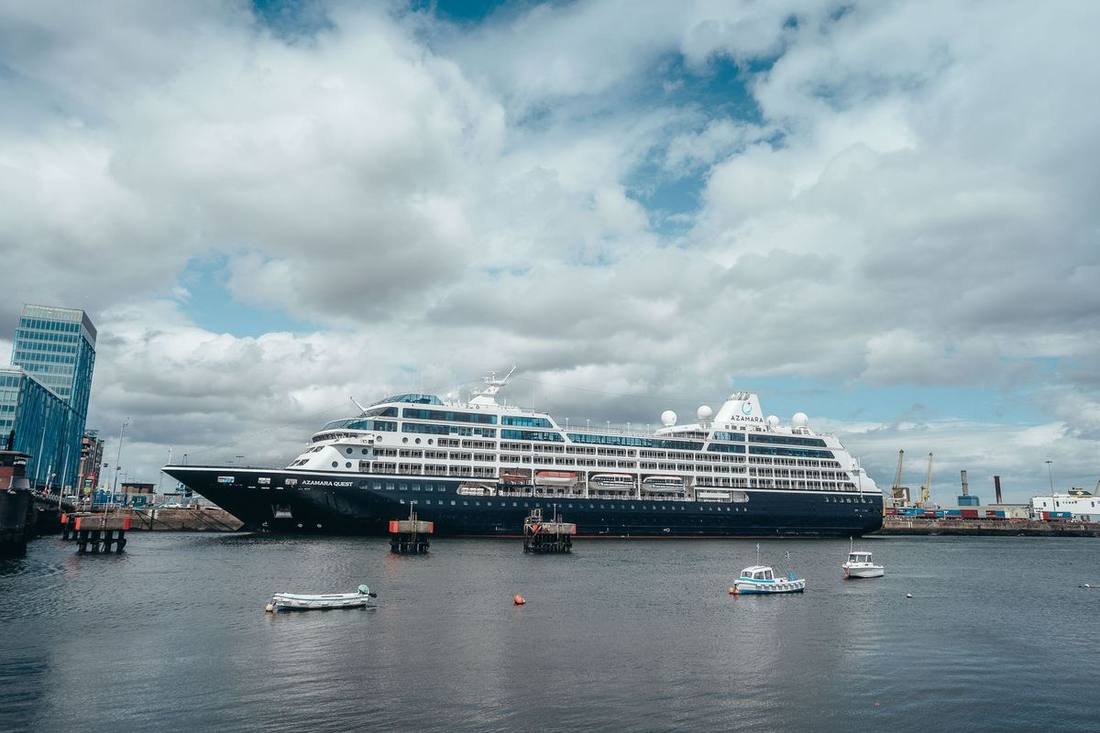
The terminal: where it is and how to reach it
The Port of Toronto's cruise terminal is on the Cherry Street peninsula in the Port Lands — south of the Gardiner and east of the Distillery District, past the Cherry Street lift bridge over the Keating Channel, at the harbour's edge with the skyline across the water. It is reached from the Gardiner's Cherry Street or Lake Shore Boulevard exits, south on Cherry across the bridge, and it has a drop-off area at the terminal building where the ships' shore staff receive luggage. The Port Lands are under reconstruction — the new Don River mouth, the Villiers Island parks, the roads realigned — and Cherry Street's alignment and the bridge's schedule change year by year; dispatch reads Waterfront Toronto's notices, the chauffeur's route is current, and the Distillery guide covers the neighbourhood immediately west. Passengers should not try to give a taxi driver directions to it; most have never been.
From Pearson: timing and route
From Door A at either terminal the route is the 427 south, the Gardiner east through downtown to the DVP interchange and the Lake Shore Boulevard East exit, Lake Shore east to Cherry Street and south — 33 kilometres. Off-peak (10 a.m. to 3 p.m., which is when most embarkation transfers run) it is 35 to 50 minutes; in the morning peak 55 to 80; in the afternoon peak 60 to 90. A cruise line's embarkation window of 1 to 4 p.m. sits comfortably in the off-peak, and a passenger landing at 10:30 a.m. is at the pier by 1. The flight tracking that moves the pickup with the flight matters more here than for a hotel transfer, because the ship does not wait; the Pearson page has the procedure at Door A.
From Billy Bishop: the short one
Porter's passengers from Ottawa, Montreal, Boston, Newark and Chicago — a real share of a Great Lakes cruise's Canadian and American passengers — land at Billy Bishop, walk the tunnel to Eireann Quay, and are 15 to 25 minutes from the pier along Queens Quay and Lake Shore Boulevard East; the Billy Bishop guide covers the pickup and the Toronto Islands article sorts out the harbour's ferries, which are not the cruise terminal.
Embarkation day: the window and the routine
Cruise lines publish an embarkation window — typically early afternoon, with the ship sailing in the evening — and ask passengers to arrive within it; the shore staff at the terminal take the checked luggage at the drop-off (tagged with the cabin number), and passengers carry only a day bag through check-in and security aboard. Our chauffeur unloads to the shore staff's carts, confirms the passengers are inside, and leaves; there is no wait. A passenger arriving early — a morning flight for an afternoon window — has a few hours in the city, and the visitor guide's half-day version (the Distillery next door, the St. Lawrence Market, the waterfront) fills it; an hourly booking with the luggage in the trunk is the structure.
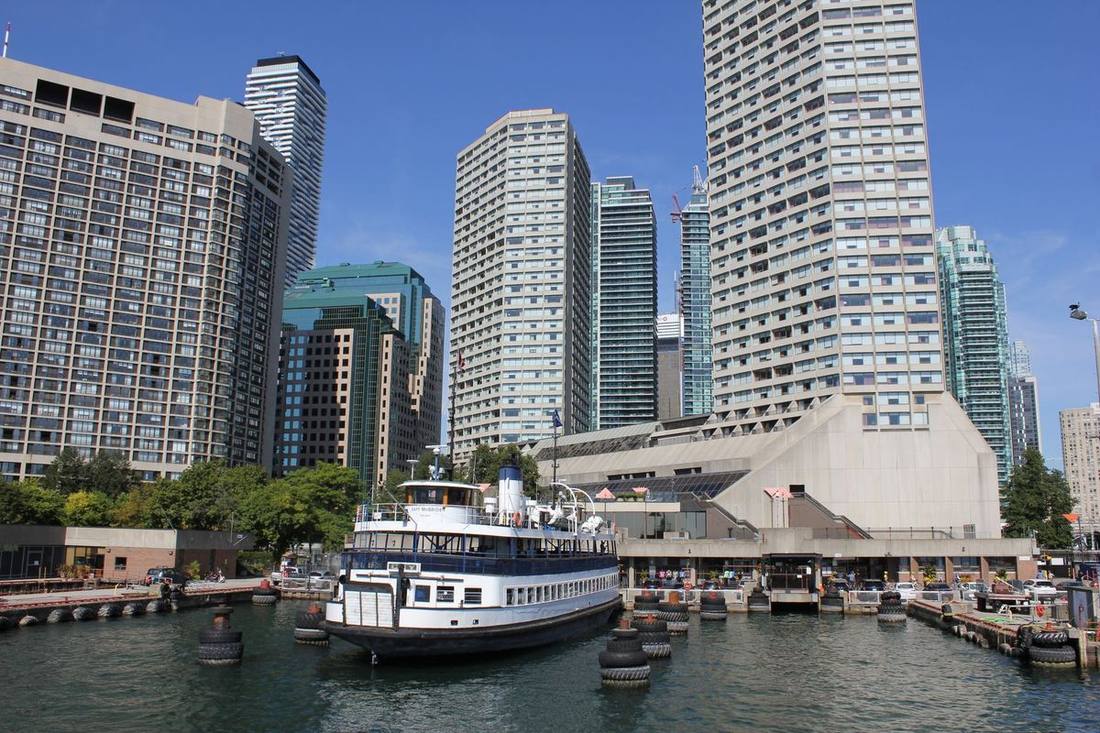
Disembarkation day: early, and with everything
Ships disembark early — passengers off by 8 or 9 a.m., luggage set out the night before and collected in the terminal — and the transfer to Pearson for a midday or afternoon flight runs in the tail of the morning peak: 55 to 80 minutes at 8:30, 40 to 50 by 10. A passenger with a late flight has a post-cruise day in Toronto, and the hourly booking with the luggage aboard is again the structure; a passenger with an early flight (before 11) should tell the line and disembark in the first group. The chauffeur is at the terminal's pickup area at the agreed time with the plate on the confirmation, and the Pearson page has the departures procedure.
Luggage and the vehicle
A week's cruise luggage is two large checked bags per person plus carry-ons and, for the Great Lakes' cooler evenings, a coat bag; a couple is an SUV, not a sedan, and two couples travelling together are a Sprinter. The luggage capacity article has the numbers, and the group transfers article covers the six-to-twelve-passenger group that a cruise line's escorted party often is.
The hotels the lines use, and the pre-cruise night
Cruise lines and their passengers favour the waterfront and Financial District hotels — the Westin Harbour Castle (ten minutes from the pier), the Fairmont Royal York, the Delta, the Omni King Edward, the hotels near the Distillery — and a passenger who flies in the day before stays at one and is collected for the pier the next afternoon; the Pearson to downtown hotels article covers the porte-cochères and the Toronto luxury hotels guide the choice. The pre-cruise night's dinner — the Distillery's restaurants, the St. Lawrence Market's neighbourhood, King East — is a short hop, and the Distillery limo guide covers it.
The pre- and post-cruise day in Toronto
A day in Toronto before or after a Great Lakes cruise is usually the passengers' only look at the city, and the visitor guide suggests it: the CN Tower and the waterfront, the Distillery, Kensington Market and the Art Gallery, Yorkville and the ROM, a drive through the Beaches — an hourly booking of four to six hours with a chauffeur who knows the city and the CN Tower article's three-hour version for the short day. Older passengers appreciate a car that waits at each stop; the seniors' guide covers the assistance.
Joining the ship elsewhere: Montreal, Kingston, Niagara
Some Great Lakes itineraries begin in Montreal or Kingston and call at Toronto mid-voyage, and a passenger who flies into Pearson because the fares were better may need the long-distance run to the embarkation port: Kingston is three hours east on the 401 (the Kingston and Thousand Islands article), Montreal five and a half (the Toronto to Montreal article), and a Niagara call is ninety minutes west (the Pearson to Niagara article). The long distance vs flying article works the arithmetic, and a fixed fare covers the run.
Accessibility and the cruise clientele
Great Lakes cruise passengers skew older, and a share travel with a wheelchair, a walker or a need for assistance; the accessible service article covers the vehicles we can provide with notice and the assistance every chauffeur gives, and meet and greet at the airport — the chauffeur inside with a name board and luggage carts — is the right add-on for the arrival. The cruise terminal itself is step-free from the drop-off to the gangway.
Weather, the season and the ships' schedules
The Great Lakes season runs from May to October; the ships' Toronto calls are on the Port of Toronto's schedule (linked below), and a ship delayed by weather on the lake — fog, a storm on Lake Ontario — can move its arrival by hours, which moves the disembarkation transfer; dispatch confirms the ship's arrival with the line's shore agent the evening before and the chauffeur's pickup time is set from it. The long weekends article has the summer traffic pattern that the Gardiner and Lake Shore share.
A worked example: Chicago to the Viking ship, embarkation day
United from Chicago lands at Terminal 3 at 10:50 on a Tuesday in July. A couple in their seventies with meet and greet is met at the domestic carousel at 11:10 (a US arrival clears Canadian customs like any international flight — forty minutes at this hour); through at 11:50 with four large bags on the chauffeur's carts. Door A at 11:55; the Gardiner is clear; Lake Shore East and Cherry Street, the Port Lands' current alignment, the terminal's drop-off at 12:35. The shore staff take the tagged bags; the couple's window opened at 1 and they are aboard by 1:30 with a day bag each. Forty minutes from Door A; the ship sails at 6. The fixed fare and the meet and greet were quoted in March.
Cruise transfer quick reference
| Leg | Route | Off-peak | Peak |
|---|---|---|---|
| Pearson → cruise terminal | 427 → Gardiner → Lake Shore E → Cherry St | 35–50 min | 55–90 |
| Billy Bishop → cruise terminal | Queens Quay → Lake Shore E → Cherry St | 15–25 | 25–35 |
| Westin Harbour Castle → terminal | Queens Quay → Lake Shore E → Cherry St | 10–15 | 15–25 |
| Cruise terminal → Pearson, 8:30 a.m. | Cherry St → Gardiner → 427 | — | 55–80 |
| Cruise terminal → Pearson, 10 a.m. | same | 40–50 | — |
| Pearson → Kingston (embark there) | 401 east | 3 h | 3.5–4 h |
| Embarkation window (typical) | — | Early afternoon | Ship sails evening |
| Disembarkation (typical) | — | 8–9 a.m. | — |
Booking the cruise transfer
The engine takes the airport and "Port of Toronto cruise terminal" as the destination and returns the fixed fare for the vehicle class the luggage needs; add meet and greet for the arrival and the flight number for the tracking. The notes field takes the ship's name and the embarkation window.
The lines' own transfers, and why passengers book separately
Most Great Lakes cruise lines sell an airport transfer — a coach that meets the line's block of flights and waits for the last — and many passengers take it; the ones who book a private car do so for the reasons a black car is booked anywhere: a flight outside the line's block, a pre-cruise day in the city, a couple who do not want to wait on a coach for stragglers, an older passenger who wants the door-to-door, or a party of six who have done the arithmetic on a Sprinter. The line's shore agent is happy to take a private car's luggage at the terminal; the group transfers article covers the party of six.
Booking notes for cruise passengers
Three small things. Fly in the day before embarkation if you can; the ship does not wait for a delayed flight or a lost bag, and the lost luggage article explains what happens when the bag arrives after the ship has sailed. Give the ship's name and the embarkation window in the notes. And for disembarkation, tell dispatch the ship's scheduled arrival the evening before so the pickup is set from the shore agent's confirmed time.






