The cross-border run, in one paragraph
Buffalo Niagara International Airport (BUF) in Cheektowaga, New York, is about 160 kilometres from downtown Toronto. By black car the run is two to two and a half hours off-peak including a normal border crossing, and three to four at the peaks or with a long border queue: the I-90 and I-190 north through Buffalo to the Peace Bridge (Fort Erie) or the I-190 and I-290 to the Lewiston–Queenston Bridge, Canada Border Services inspection, then the QEW through Niagara, Hamilton, Burlington, Oakville and Mississauga to the Gardiner. Passengers need a passport (or NEXUS card, or enhanced driver's licence for Canadians and Americans by land); the chauffeur carries a passport and the vehicle's papers. The fare is fixed and includes the border wait up to a stated allowance; a wait beyond it is charged at the waiting rate.
Buffalo's airport exists, for Toronto purposes, because US domestic fares are cheaper than Canadian ones and because Buffalo is the closest US airport with a full domestic network — Southwest, JetBlue, Delta, American and United fly from it to every hub and to Florida, and a Toronto family of four can save a thousand dollars on a March break flight by driving to it. The saving is real and so is the cost: a two-hour drive each way, a border crossing whose wait ranges from five minutes to two hours, and the documents and rules that go with an international trip. This article walks the run step by step — the terminal and pickup, the two bridges and when to use each, the border procedure for passengers and chauffeur, the QEW home, the timing by hour and season, the fare structure with the border wait, the documents, and the cases where Buffalo is worth it and where it is not.
The terminal and the pickup
Buffalo's terminal is one building with a single arrivals level, a baggage claim hall and an arrivals curb outside; our chauffeur waits at the commercial vehicle pickup area at the arrivals curb (the airport's ground transportation staff direct limousines to it) or in the short-term lot across the road, with the plate on your confirmation, and is at the doors on your text. There is no customs at Buffalo for arriving domestic passengers — the border is on the road, not at the airport — so from aircraft to car is ten to twenty minutes. Meet and greet here means the chauffeur is at the baggage claim with a name board, and for a family with a lot of luggage after a Florida flight it is worth it.
Buffalo to the border: the I-190 and the two bridges
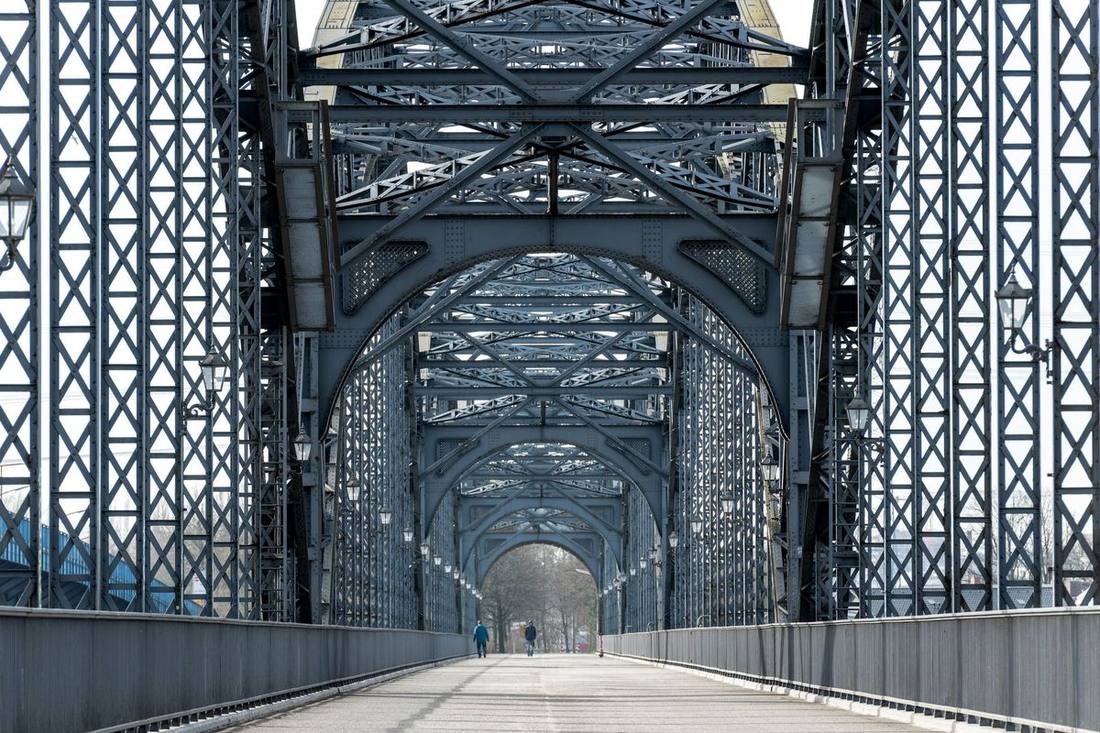
From the airport the car takes the I-90 west and the I-190 north along the Niagara River. The Peace Bridge at Fort Erie is the closer crossing — 30 to 35 minutes from the airport — and connects to the QEW directly at its Canadian end; it carries the heaviest traffic and has the longest queues at the peaks. The Lewiston–Queenston Bridge, 45 to 50 minutes from the airport via the I-190 and I-290 or the Robert Moses Parkway, is farther north and connects to the QEW and Highway 405 at Queenston; its queues are usually shorter and it is the crossing our chauffeurs use when the Peace Bridge's posted wait exceeds thirty minutes. (The Rainbow Bridge at Niagara Falls is a tourist crossing that does not take commercial vehicles efficiently and the Whirlpool Bridge is NEXUS-only.) The CBSA and CBP publish live wait times for every crossing, and dispatch checks them as the car leaves the airport; the choice of bridge is the chauffeur's and it is made on the day.
The border: what happens at the booth
At the Canadian end of the bridge the car joins the passenger vehicle queue (NEXUS lanes if every passenger and the chauffeur hold NEXUS cards; otherwise the regular lanes) and reaches a Canada Border Services Agency officer's booth. The chauffeur hands over every occupant's document — passports, or NEXUS cards, or Canadian or US enhanced driver's licences (the Western Hemisphere Travel Initiative allows those for land crossings by Canadian and US citizens; children under 16 need a birth certificate or passport) — and the officer asks the standard questions: citizenship, where you live, how long you were away, what you are bringing back, whether you have anything to declare. Passengers answer for themselves. The chauffeur declares the vehicle (a Canadian-plated commercial vehicle returning to Canada) and answers for their own trip. Most crossings take two to four minutes at the booth after the queue; a minority are referred to secondary inspection, which takes fifteen to forty minutes and involves the passengers taking their luggage into the inspection hall. Our chauffeurs cross the border several times a week and know the procedure; a passenger's job is to have the documents in hand, answer the questions plainly, and declare purchases honestly — the personal exemption after 48 hours away is CAD 800, and alcohol and tobacco have their own limits (the CBSA's page is linked below).
Border wait times: by hour and season
Border waits are the run's wildcard. On a weekday morning or a weekday evening they are five to twenty minutes; on a Friday afternoon or a Sunday evening in summer, forty to ninety minutes at the Peace Bridge and twenty to forty at Queenston; on the Sunday of a long weekend or the last day of March break, two hours at the Peace Bridge is not unusual. The CBSA's published waits are the guide; the chauffeur's choice of bridge is the mitigation; and the fare structure — below — is built so that a long wait does not become an argument. The Canada Day, Civic and Labour Day weekends and US Thanksgiving weekend are the worst; the long weekends article covers them.
The QEW home: Niagara to the Gardiner
From either bridge the car is on the QEW — from the Peace Bridge, 130 kilometres to downtown Toronto through the Niagara Peninsula's fruit belt, past St. Catharines, over the Burlington Skyway, through Burlington, Oakville and Mississauga to the Gardiner; from Queenston, Highway 405 to the QEW at St. Catharines and the same road. Off-peak it is 80 to 95 minutes from the bridge to Bay Street; at the afternoon peak through Oakville and Mississauga, 110 to 140. Passengers bound for the 905 leave the QEW earlier — Hamilton via the 403, Burlington and Oakville directly, Mississauga at Hurontario, Pearson via the 427 — and the Buffalo airport page has the fares to each.
Total timing: airport to downtown Toronto
Off-peak with a short border: two hours to two hours fifteen. Weekday peak with a normal border: two and a half to three. Summer Sunday with a long border: three to four. Our confirmation gives a range rather than a number for this route, and the flight tracking that pegs the chauffeur to the flight's arrival covers the airport end; the border end is managed on the day.
The fare: what is included and what is not
The Buffalo fare is fixed by vehicle class and includes the distance, the bridge toll, the chauffeur's own crossing and a border wait allowance stated on the confirmation (45 minutes is our standard); a wait at the border beyond the allowance is charged in 15-minute increments at the class's waiting rate, itemised on the receipt. Secondary inspection time counts as border wait. HST applies to the Canadian portion; the what is included article has the general rules and the long distance vs flying article the arithmetic of long runs. The fare from Buffalo is roughly four to five times the Pearson-to-downtown fare, which is the number to set against the flight saving.
Is Buffalo worth it?
For one passenger on a $150 flight saving: no — the car fare and four hours of driving eat it. For a family of four saving $800 to $1,200 on a March break flight to Florida, sharing one SUV: yes, comfortably, and the family sleeps on the QEW. For a Toronto business traveller with a US domestic itinerary that Pearson does not serve non-stop: sometimes, if the time is available. For a Niagara or Hamilton passenger: yes more often, because the border is close and Toronto's traffic is not in the way. The Buffalo day trip article covers the non-airport version of the run, and the Niagara Falls airport page the small Canadian field across the river.
Documents and the things people forget
Passports for everyone (or NEXUS, or an enhanced licence for adults by land); a birth certificate or passport for children under 16; for a child travelling with one parent, a consent letter from the other is strongly recommended by the CBSA; permanent residents need their PR card; non-Canadian, non-US citizens need whatever visa or eTA their status requires for Canada and, on the outbound trip, for the US. Duty-free purchases and the receipts for them. The chauffeur carries a passport, the vehicle's registration and insurance, and the commercial documents the CBSA expects. A passenger who arrives at Buffalo without a passport is not crossing that day; the airline may have let them fly domestically, but the border will not let them home, and we have driven passengers to the US consulate's nearest office more than once.
The outbound direction: Toronto to Buffalo
The morning of the flight the run reverses: the car from Toronto down the QEW to the Peace Bridge or Queenston, US Customs and Border Protection at the American end (the same documents, the same questions, a US officer), the I-190 to the airport, and the drop at the departures curb with the airline's recommended two hours before a US domestic flight. Add the border allowance to the timing — for a 10 a.m. flight from downtown Toronto, a 5:30 pickup is right, and the Toronto to Buffalo article works the outbound in detail. Passengers with NEXUS shorten both directions.
A worked example: Southwest from Orlando, Sunday in March
Southwest lands at Buffalo at 15:20 on the last Sunday of March break. A family of four texts from the carousel at 15:40; the chauffeur, in an SUV at the commercial curb, has the bags loaded by 15:50. Dispatch has checked the waits: Peace Bridge 75 minutes, Queenston 30. The I-190 and I-290 to Queenston, in the queue by 16:40, at the booth at 17:08 — 28 minutes, inside the allowance. Two minutes at the booth, no secondary. Highway 405 and the QEW; the Skyway at 17:55, Oakville at 18:15, the Gardiner at 18:50, home in Leaside at 19:20. Four hours from touchdown, most of it asleep in the back, and the family saved $1,100 on the flights against a fixed car fare they knew in February.
Buffalo run quick reference
| Leg | Off-peak | Peak / busy |
|---|---|---|
| Airport to Peace Bridge (Fort Erie) | 30–35 min | 40–50 |
| Airport to Lewiston–Queenston Bridge | 45–50 min | 55–65 |
| Border wait (CBSA) | 5–20 min | 40–120 |
| Bridge to downtown Toronto (QEW → Gardiner) | 80–95 min | 110–140 |
| Total, airport to Bay Street | 2 h – 2 h 15 | 3 – 4 h |
| Border wait included in fare | 45 min | then 15-min increments |
Booking the Buffalo run
The Buffalo airport page has the fares to Toronto and the GTA; the engine takes the flight number and the passenger count and returns the fixed fare with the border allowance stated. Bring the passports.
Duty-free, the exemption and what to say at the booth
The Peace Bridge and Queenston crossings both have duty-free shops on the US side, and passengers returning after a week in Florida often stop; the personal exemption after 48 hours away is CAD 800 per person including a limited quantity of alcohol and tobacco, and purchases above it are dutiable. The officer's question — "anything to declare?" — deserves a plain answer with the receipts to hand. A passenger who has been away less than 48 hours has a smaller exemption (CAD 200 after 24 hours, none under 24), and a family driving to Buffalo for a same-day flight and back the same week should know which applies. The chauffeur does not declare for passengers and does not speak for them; the booth is a conversation between each traveller and the officer.
NEXUS and the fast lane
NEXUS members — the joint Canada–US trusted traveller programme — use dedicated lanes at both bridges, and when every occupant of the car including the chauffeur holds a card the crossing is minutes rather than an hour on a busy Sunday. Several of our chauffeurs who run the Buffalo route regularly hold NEXUS, and a passenger who holds it can request a NEXUS chauffeur at booking; if one passenger in the car does not hold a card, the car uses the regular lanes. The programme's application takes months and an interview, and for a Toronto family that flies from Buffalo twice a year it pays for itself on the first March break Sunday.
When the border goes wrong
Secondary inspection, a passenger without documents, an agricultural question about the fruit in a bag, a random vehicle search — a small share of crossings take longer than the booth, and the chauffeur's job in those cases is to pull into the inspection area, wait with the vehicle, and let the passengers deal with the officers. The wait counts against the fare's allowance and beyond it at the waiting rate, and the chauffeur will not hurry anyone. A passenger refused entry (rare, and always for a documents or admissibility reason the passenger knew about) is a situation dispatch has handled — the car waits while the passenger and the CBSA resolve it, or returns the passenger to the US side — and the fare for the extra driving is agreed by text before it happens.






