Car seats, the law and the car
Ontario's Highway Traffic Act requires children to ride in a rear-facing seat until at least 9 kg (20 lb), a forward-facing seat with a harness until at least 18 kg (40 lb), and a booster seat until 36 kg (80 lb), 145 cm (4 ft 9 in) or age 8 — in every vehicle including taxis and limousines, with the driver responsible. Our fleet carries infant, convertible and booster seats and installs them before pickup at no charge when the booking requests them with the child's age and weight; a request at the curb cannot be met. Airport bookings with children should state the seats needed, the stroller and the luggage so the vehicle class fits.
Every week a family arrives at Pearson from somewhere the rules are different — or from somewhere the rules are the same and they forgot — and discovers at the taxi stand that a two-year-old in a lap is not an option in Ontario and that the taxi does not have a seat. The booked black car is the answer to that problem, and it is an answer only if the booking asked the question. This article covers Ontario's car seat law as it applies to hired vehicles, the seats our fleet carries and how they are chosen for the child, the installation procedure, the vehicle classes that take two or three seats plus luggage, the airport's rules for strollers and gate-checked seats, the family's own seat (bringing it, using it, checking it), what happens with taxis and rideshares, and the mistakes that leave families at the curb.
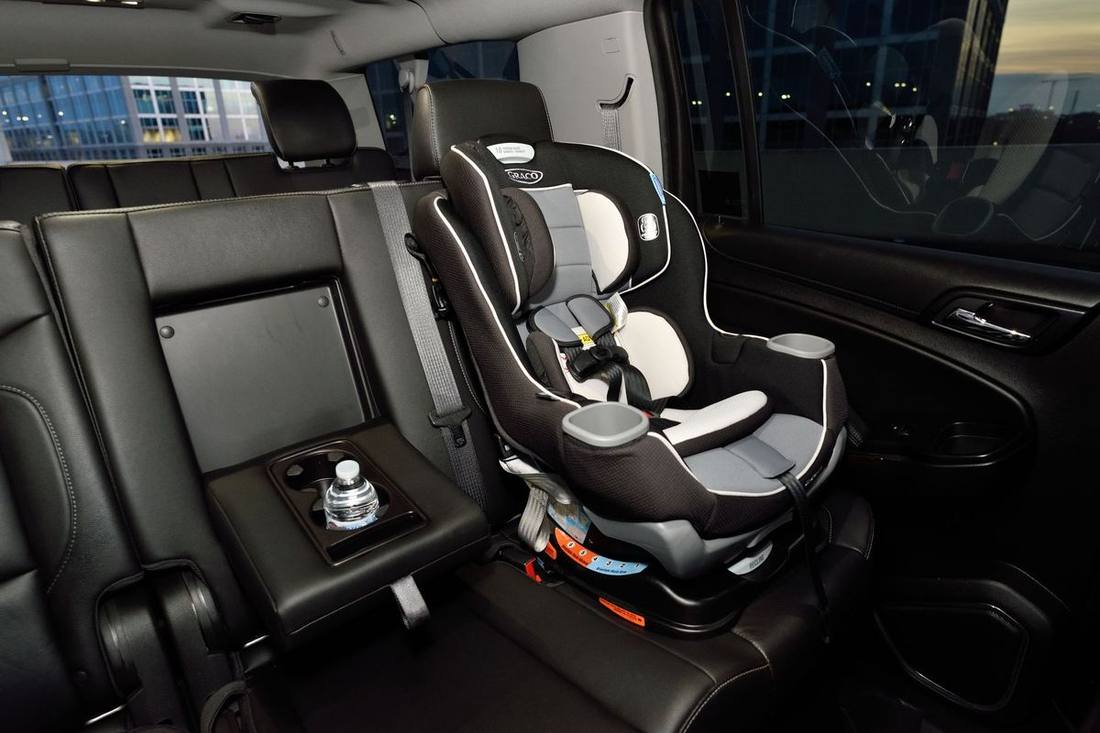
Ontario's rules, in detail
Ontario's Highway Traffic Act and its regulation on child seating and restraint systems set three stages. Rear-facing infant seats for babies until they weigh at least 9 kg — and the manufacturers and Transport Canada recommend rear-facing as long as the seat allows, often to two years or more. Forward-facing seats with a five-point harness for children from 9 kg until at least 18 kg; a convertible seat serves both stages. Booster seats for children from 18 kg until they reach 36 kg, 145 cm in height, or eight years of age, whichever comes first; the booster positions the vehicle's lap-and-shoulder belt correctly. After that, the vehicle's seatbelt. The law applies to every driver of every vehicle in which a child under 16 is a passenger — private cars, taxis, limousines, rideshares — and the driver, not the parent, is the one fined for a child without a proper seat. The one exemption is for taxis carrying children under 16 who are not the driver's own, which historically exempted taxis from providing seats (and is why the taxi queue has none); it does not apply to limousines and does not make the child safe.
What our fleet carries
Each of our SUVs and Sprinters, and most sedans, carry or can be fitted before pickup with a Transport Canada-certified rear-facing infant seat (with a base), a convertible forward-facing seat with a five-point harness, and a high-back or backless booster. The seats are chosen to the child's age, weight and height from the booking, installed by the chauffeur before leaving the yard — with the LATCH anchors or the seatbelt as the seat requires, and checked for tightness — and cleaned between uses. A booking for an infant, a three-year-old and a six-year-old is a three-seat booking, and it is an SUV or a Sprinter, because three seats across a sedan's rear bench do not fit with anyone else. The child seats and boosters fleet article covers the seats and the vehicle classes in detail.
The request that has to be on the booking
The single rule: the seats must be requested at booking, with each child's age and approximate weight. The engine has a field for it; a phone booking's dispatcher asks. The chauffeur installs the seats before pickup, and a chauffeur arriving at a Rosedale driveway or at Pearson's Door A without seats for a family that did not mention children cannot legally take them — a hard conversation at 5 a.m. or after a fourteen-hour flight, and one we have had, and one the field exists to prevent. There is no charge for the seats; the charge is the vehicle class the seats and the luggage require.
Vehicle class: seats, luggage and the arithmetic
One child seat fits in a sedan with two adults and their luggage; two child seats fit in a sedan only if the luggage is light, and comfortably in an SUV; three seats need an SUV with a third row or a Sprinter; a family of six with three seats, a stroller and eight bags is a Sprinter. The luggage capacity article has the numbers by class and the families with luggage article works the whole family transfer; the engine's vehicle selection follows the passenger and luggage counts, and a booking that says "two adults, three children (1, 4, 7), stroller, six bags" gets the Sprinter it needs.
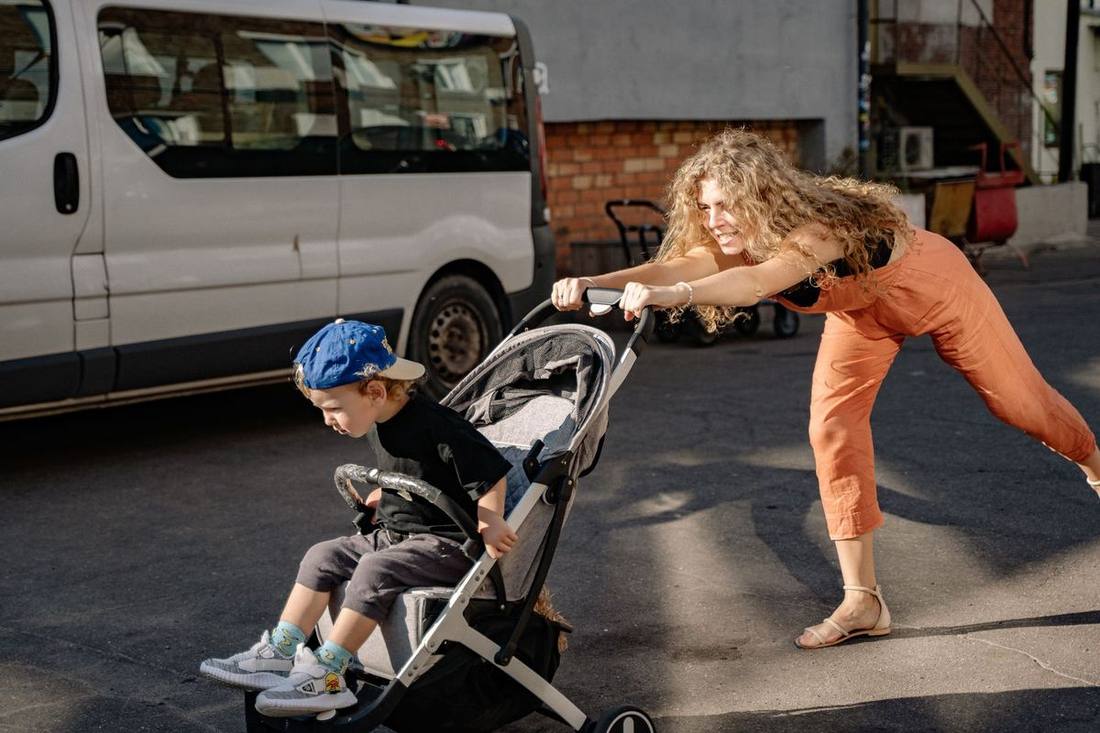
Bringing your own seat
Families who travel with their own seat — an infant carrier that clicks into a base, a lightweight convertible for the trip — can use it in our vehicles, and the chauffeur will help install it if the parent prefers; the airlines allow one car seat and one stroller per child to be checked free or gate-checked, and Transport Canada-approved seats are marked with the National Safety Mark. A seat bought abroad without the Canadian mark is not legal for use in Ontario even if it is safe, and a family arriving from the US or Europe with their own seat should know that our seat is there as the backup. The what is included article lists the seats among the things the fare covers.
Strollers, gate-checks and the arrivals hall
A stroller gate-checked at departure appears at the aircraft door or at the baggage carousel on arrival, depending on the airline and airport; a car seat checked as luggage appears at the carousel. The family's walk from the international hall to Door A with a stroller, a seat and the bags is the case for meet and greet — the chauffeur inside with a name board, taking the bags and the seat, walking the family to the car where our seats are already installed. The arrivals doors article covers the walk.
Infants: the rear-facing seat and the long flight
An infant arriving from a long-haul flight goes into a rear-facing seat in the rear row, facing the seatback, with the base installed by the chauffeur; the parent sits beside. The airlines' bassinet rows and lap-infant tickets have nothing to do with the car — an infant who flew in a lap rides in a seat. For a newborn leaving the hospital (a booking we take from Mount Sinai and Sunnybrook weekly), the same seat and the medical appointments article's gentleness apply.
The booster years
Children of five to eight — past the harness, short of the seatbelt — ride in boosters, and it is the stage families most often skip because the child objects. Ontario's rule is 36 kg, 145 cm or age 8, whichever first, and the chauffeur applies it. A booster is small; the chauffeur carries two; a school-run standing order for a six-year-old (recurring rides) has the booster in the car every morning.
Taxis, rideshares and why the queue has no seats
Ontario's exemption for taxis means the taxi at the stand has no seat and no obligation to provide one, and a family with a toddler at Pearson's taxi queue is told, correctly, that the child may ride unrestrained in a taxi — legal, and the least safe thing a two-year-old can do in a car. Rideshare drivers are private vehicles under the same law as everyone else, have no seats, and will decline the ride or take it illegally; the apps' "car seat" options exist in some cities and not reliably in Toronto. The limo vs taxi comparison and the black car vs Uber Black article both count this as the deciding difference for families.
Corporate travellers with families, and the relocation
A relocating executive arriving with a family — the corporate account's most complex airport booking — states the children's ages on the account, and the seats are in the car for the airport pickup, the house-hunting days and the school run that follows; the corporate account holds the details and the visiting clients itinerary article covers the multi-day pattern.
Mistakes that leave families at the curb
Not mentioning the children. Mentioning the children but not their ages (a "child" could need any of three seats). Booking a sedan for two adults, two seats and five bags. Assuming the taxi will have a seat. Assuming a seat bought in Germany is legal here. Assuming an eight-year-old who "looks big enough" is out of the booster (the rule is weight, height or age, whichever first). Each is avoided by one line in the booking's notes.
Child seat quick reference
| Stage | Ontario requirement | Our seat | Vehicle note |
|---|---|---|---|
| Rear-facing | Until at least 9 kg (20 lb); longer recommended | Infant seat with base, or convertible rear-facing | Any class |
| Forward-facing harness | 9–18 kg (20–40 lb) | Convertible with 5-point harness | Any class; two seats → SUV |
| Booster | 18 kg to 36 kg, 145 cm or age 8 | High-back or backless booster | Any class |
| Three seats + luggage | — | Three seats installed | SUV with third row or Sprinter |
| Own seat | Must carry Canada's National Safety Mark | Chauffeur assists installation | Ours as backup |
Booking with children
The engine takes the passenger count, the children's ages and the luggage, and returns the right class and the fixed fare; the seats are installed before the chauffeur leaves. The Pearson page has the airport procedure.
The school run and the seats that live in the car
For families who use a standing order — the school run, the weekly swim, the grandparents' Sunday — the seats are not installed for each trip; they live in the car assigned to the order, and the same chauffeur checks them each morning. The recurring rides article describes the arrangement, and the household account records each child's stage so the booster replaces the harness when the child grows into it without a conversation.
Newborns, hospitals and the first ride home
The first car ride of a newborn's life is from the hospital — Mount Sinai, Sunnybrook, St. Michael's, Trillium, Mackenzie Health, the Scarborough and Brampton maternity wards — and Ontario's hospitals will not discharge an infant to a vehicle without a rear-facing seat; a booked car with an infant seat and base installed, a chauffeur who drives as though the roads were made of glass, and a text to the new grandparents at the door is a booking we make from the maternity wards every week. The medical appointments article covers the hospitals' entrances and the seniors' guide the gentleness that applies at both ends of life.
Twins, triplets and the third row
Two infants in two rear-facing seats fill an SUV's second row and leave the third row for the parents; three infants — it happens — fill the Sprinter's first bench and the parents sit behind, and the chauffeur has installed three bases before leaving the yard. A twin stroller is a full-size stroller twice, and it fits the SUV's cargo area alone or the Sprinter's with everything else. The count on the booking decides the vehicle, and the engine's class selection follows it.
Booking notes for children
Three small things. Give each child's age and approximate weight — "child" is three different seats. Count the stroller as luggage. And if you are bringing your own seat, say so; the chauffeur will have ours in the car regardless, and installs whichever the parent prefers.
Winter coats, harnesses and the thing parents get wrong
A child in a puffy winter coat cannot be harnessed safely — the coat compresses in a collision and the harness that felt tight is loose — and Transport Canada's guidance is to buckle the child in without the coat and lay it over them; our chauffeurs will say so, gently, at a January pickup, and the cabin is warm enough that nobody minds. It is the most common installation error in the winter and the easiest to fix at the curb.






