The district, in one paragraph
The Financial District — Bay Street from Front to Queen, King and Adelaide from University to Yonge — is Canada's densest concentration of head offices, and its black car service is built around the towers' lay-bys and side-street pickups (First Canadian Place on Adelaide or York, the TD Centre on Wellington, Brookfield Place on Front or Bay, Scotia Plaza on Adelaide, Commerce Court on King or Bay, the RBC Centre on Wellington, the Bay Adelaide towers on Temperance and Richmond, CIBC Square on Bay at the rail corridor), the PATH underground that lets a passenger surface at the right door, the one-way grid (Adelaide and Richmond eastbound and westbound, the King streetcar lanes where cars may not stop), the 7 a.m. arrivals and 6 p.m. departures that fill the lay-bys, and the airport — Pearson 30 to 40 minutes off-peak and 50 to 90 at the peaks, Billy Bishop 8 to 15. The hourly day of meetings and the corporate account are the district's standard bookings.
The Financial District is where Toronto's black car trade began and where most of its corporate accounts still live: the banks' head offices, the law firms' floors, the investment dealers, the accounting and consulting firms, the pension funds and the exchange, in a dozen towers connected underground by the PATH and above ground by streets that were laid out for horses. For a chauffeur it is a district of learned pickups — every tower has a lay-by or a side-street door that works and a front entrance that does not — and a daily rhythm of arrivals at 7 and departures at 6 that fills those lay-bys with the fleets of every operator in the city. This article covers the towers and their pickups one by one, the PATH and how a passenger uses it to surface at the right door, the one-way grid and the streetcar lanes, the morning and evening rhythm, the airport from the core by hour and by airport, the hourly day of meetings, the client pickup, the corporate account and the district's calendar (PDAC, the bank AGMs, the conference season), and a worked day.
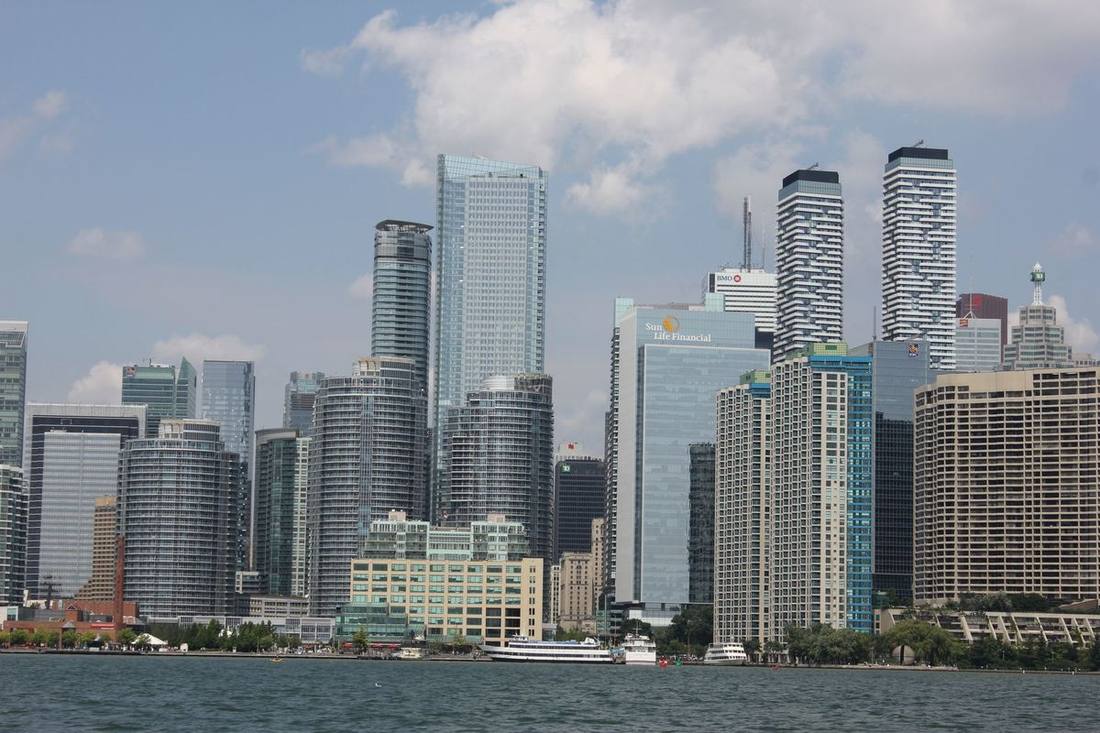
The towers and their pickups
First Canadian Place (King at Bay): the lay-by is on Adelaide Street's south side or at the York Street entrance; King Street's front is a streetcar lane. The TD Centre (King at Bay, south side): the Wellington Street entrances between Bay and York, with a lay-by on Wellington. Brookfield Place (Bay at Front): the Front Street entrance at Bay, or the Bay Street side; the Hockey Hall of Fame corner is a taxi stand. Scotia Plaza (King at Bay, north-east): the Adelaide Street entrance, with a lay-by. Commerce Court (King at Bay, south-east): the Bay Street entrance between King and Wellington, or the King Street side (streetcar lane — quick stops only). The RBC Centre (Wellington at Simcoe): the Wellington entrance, with a lay-by shared with the Ritz-Carlton next door. The Bay Adelaide Centre (Bay at Adelaide): the Temperance Street entrance for the East and Centre towers, Richmond Street for the West. CIBC Square (Bay at the rail corridor, south of Front): the Bay Street entrance beside Union Station's bus terminal, and the Lake Shore side. The Exchange Tower (King at York): York Street. Royal Bank Plaza (Bay at Front): the Front Street entrance opposite the Royal York. The Financial District guide has the neighbourhood and the Financial District hotels article the hotels among the towers.
The PATH: surfacing at the right door
The PATH — thirty kilometres of underground walkway connecting the towers, Union Station, the hotels and the Eaton Centre — means a passenger in any tower can walk underground to the door nearest the chauffeur's lay-by rather than the reverse: a passenger at Commerce Court whose car is on Adelaide at Scotia Plaza walks two minutes underground and surfaces beside it. Chauffeurs know the PATH's exits and name them in the text — "I'm on Adelaide at the Scotia Plaza exit" — and the Union Station pickup article covers the PATH's busiest node.
The grid: one-ways and streetcar lanes
Adelaide runs eastbound and Richmond westbound (one-way pairs north of King); Wellington runs westbound west of Yonge; King is two-way with the King Street transit priority corridor, where cars may not stop between Bathurst and Jarvis and through-traffic is restricted — a chauffeur on King is making a quick drop at a cross street, not waiting. Bay and York are two-way and busy; University is the broad boulevard with lay-bys at the hotels. Front Street is the Royal York's and Union's scrum. A chauffeur who has driven the district knows which lay-by is on which side of a one-way and approaches from the right direction; a passenger who gives the tower's name gets the right door.
The 7 a.m. arrival and the 6 p.m. departure
The district's rhythm is the towers': arrivals from 7 to 9, departures from 5 to 7, and in those windows every lay-by has three black cars, two taxis and a courier van in it. Our chauffeurs arrive five minutes early, text the exact position ("Adelaide, east of the Scotia Plaza door, black Escalade"), and move if a building's security asks; passengers who come down when the text arrives are in the car in a minute, and passengers who come down ten minutes later find the chauffeur has circled the block once and is back. The rush hour article has the hours.
The airport from the core
Pearson from the Financial District is the Gardiner west to the 427 — 30 to 40 minutes off-peak, 50 to 90 in the morning inbound and afternoon outbound peaks — or the Lake Shore when the Gardiner is closed; the Pearson to downtown hotels article has the timings by hour and the Gardiner and DVP closures article the weekends. Billy Bishop is 8 to 15 minutes via Queens Quay or Lake Shore and the Pearson vs Billy Bishop comparison says which airport a Bay Street traveller should fly from for Ottawa, Montreal, Boston, Chicago and Newark: the island. A 7 a.m. Ottawa flight is a 6 a.m. car from a Bay Street condominium; a 6 p.m. return lands two kilometres from the desk.
The hourly day of meetings
A visiting executive's day — 9 at First Canadian Place, 11 at the RBC Centre, 1 at a Yorkville lunch, 3 at Brookfield Place, the airport at 5 — is an hourly booking with one chauffeur who knows each lay-by, the bags in the trunk, the car outside each door when the meeting ends, and the visiting clients itinerary article's plan in the chauffeur's hands; the hourly vs point-to-point article shows why it beats four separate cars in cost and by a mile in convenience.
The client pickup
A firm meeting a client at Pearson books meet and greet with the firm's name on the board, an S-Class or an Escalade, and a chauffeur briefed on the client's name and the tower's lay-by; the client's first Toronto minute is a name board rather than an arrivals road, and the black car service for law firms article and the roadshow article describe the district's two heaviest users of the pattern.
The corporate account
The district's bookings live on corporate accounts: the firm's travellers and their preferences, the tower's lay-by as the default pickup, the 407 approved for the 905 client sites, the gratuity set, meet and greet standard for clients, monthly invoicing with cost centres and matter codes; the corporate account billing article shows the statement and the executive assistants' guide the bookers' day. A firm's assistant books a partner's Pearson run in one line because the account knows the rest.
The district's calendar
PDAC in early March fills the district's hotels and lay-bys with 25,000 mining delegates (the PDAC article); the banks' AGMs in the spring bring directors and shareholders (the board meeting and AGM article); the conference season at the Metro Toronto Convention Centre two blocks west runs from spring to fall (the conference transportation article); the Leafs and Raptors at Scotiabank Arena at Bay and Lake Shore fill the district's south end forty nights a winter (the Scotiabank Arena guide); and the Toronto Marathon and the Waterfront Marathon close Bay and Front on their Sunday mornings. Dispatch has the dates and the chauffeur has the alternate lay-by.
Discretion in a small district
The Financial District is a village of ten blocks where everyone knows everyone's car, and a chauffeur who drives its executives learns to be invisible: the same black sedan at the same lay-by is not news, the passenger's meetings are not discussed, and the privacy and discretion article sets the standard that a deal's counterparties do not learn of each other from a chauffeur. The film production article notes that the district's towers double for Manhattan on screen and that a film shoot's closures appear on dispatch's notices.
A worked day: a visiting partner from London
7:50 a.m.: collected from the Royal York's Front Street porte-cochère; 8:00: the TD Centre's Wellington lay-by; a text at 9:45 — "coming down, York Street side"; 10:00: Brookfield Place's Bay entrance; 12:15: lunch at a King West restaurant, the car on Portland; 2:00: the Bay Adelaide Centre's Temperance Street door; 4:10: a text — "done early, airport"; the Gardiner is amber; Terminal 1's departures curb at 4:55 for a 7 p.m. flight, the bags that were in the trunk since 7:50 on a cart. Eight hours on the firm's account, one chauffeur, five lay-bys, and a partner who did not once wonder where the car was.
Financial District quick reference
| Tower | Pickup | Note |
|---|---|---|
| First Canadian Place | Adelaide (south side) or York St entrance | King front is a streetcar lane |
| TD Centre | Wellington St, between Bay and York | Lay-by on Wellington |
| Brookfield Place | Front St at Bay, or Bay St side | HHOF corner is a taxi stand |
| Scotia Plaza | Adelaide St entrance | Lay-by; PATH exit |
| Commerce Court | Bay St, between King and Wellington | King side: quick stops only |
| RBC Centre | Wellington St at Simcoe | Lay-by shared with the Ritz-Carlton |
| Bay Adelaide Centre | Temperance St (East/Centre); Richmond St (West) | Richmond is one-way westbound |
| CIBC Square | Bay St beside Union bus terminal | Lake Shore side alternative |
| Royal Bank Plaza | Front St, opposite the Royal York | Front is the district's scrum |
| Pearson from the core | Gardiner → 427 | 30–40 off-peak; 50–90 peak |
| Billy Bishop from the core | Queens Quay / Lake Shore | 8–15 min |
Booking in the district
The engine takes a tower's name as the pickup and the chauffeur uses the right door; the corporate car service page opens the account that makes every Bay Street booking a line; the Financial District guide has the neighbourhood.
The condominiums of the core
Bay Street's executives increasingly live in the district — the towers of Bay and Harbour, the Well at Front and Spadina, the condominiums along Wellington and the Esplanade — and the morning pickup is often a porte-cochère three blocks from the office rather than a house in Rosedale: a five-minute run that is booked because it is 6 a.m. and the airport is next, or because the day is an hourly that begins at the door. The condominiums' porte-cochères and their concierges are on the chauffeur's map, and the Harbourfront guide covers the towers south of the Gardiner.
Booking notes for the district
Three small things. Name the tower, not the street — "First Canadian Place" gets the Adelaide door; "King and Bay" gets a chauffeur guessing among four. Come down when the text arrives; the lay-bys do not allow a wait. And for a day of meetings, send the itinerary the evening before, so the chauffeur has each door in mind before the first one.
Union Station: the district's other door
Union Station at Front and Bay is the district's rail door — GO trains from the 905, VIA from Montreal and Ottawa, the UP Express from Pearson — and a black car pickup at Union is its own procedure, on York Street's west side or Front Street's south, that the Union Station pickup article walks through; an executive arriving from Montreal on VIA at 6 p.m. is met at the York Street door and at a Yorkville dinner in fifteen minutes.






