Waterloo airport transfers in one paragraph
Region of Waterloo International Airport (YKF) is in Breslau, between Kitchener and Guelph, about 100 kilometres west of downtown Toronto — 70 to 90 minutes on the 401. It serves low-cost and seasonal carriers from a compact terminal and is the natural airport for Kitchener-Waterloo, Cambridge and Guelph; a pre-arranged black car meets you at the terminal, waits free after landing and runs to any address in the corridor or the GTA at a fixed fare.
Waterloo is the smallest of the airports Toronto travellers use and the one most often used in the other direction: Toronto-based chauffeurs delivering tech-corridor travellers, University of Waterloo visitors and Kitchener families to a flight that leaves from their own doorstep rather than Pearson's. It is also, increasingly, where Toronto's cost-conscious travellers go for the low-cost carriers' routes to Canadian cities and to sun destinations in winter. This page covers the airport and its flights, the pickup at a terminal you can cross in a minute, the 401 in all its moods, the fares to Toronto and the corridor, and the corridor itself — Waterloo, Kitchener, Cambridge, Guelph — which is a service area of ours in its own right.
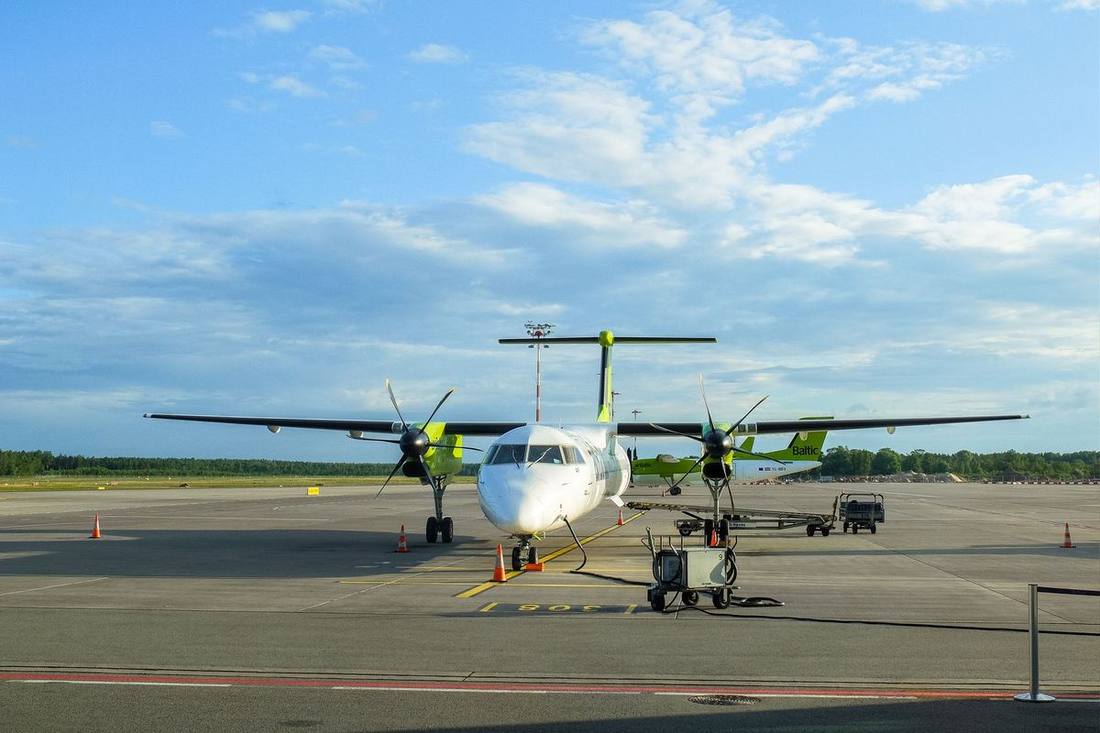
The airport and who flies from it
YKF's scheduled service is led by Flair Airlines, with routes to Canadian cities and seasonal US and sun destinations, plus seasonal charters and, in some years, additional low-cost operators; the network changes annually and the airport's own site is the authority. The terminal is single-storey with one security checkpoint, a handful of gates and a car park you can see from the check-in desk; a passenger with a carry-on can be at the gate fifteen minutes after leaving the car. The field is also busy with general aviation, flight training and business aircraft, and its FBO handles a steady flow of corporate jets serving the Waterloo tech companies and the region's manufacturers.
The pickup
Arriving passengers walk from the aircraft (or a short jet bridge) into a single hall with baggage claim and doors to the curb. Our chauffeur is inside with a name board — standard at Waterloo, as at Hamilton and Buffalo — and the car is at the curb or in the short-term lot fifty metres away. Flights are tracked from the evening before; the 60-minute free wait after an international arrival and 30 after domestic applies, though Waterloo's customs hall clears a sun-flight 737 in well under half an hour and most passengers are in the car within fifteen minutes of the door opening. Late arrivals are met by a chauffeur who has been at the terminal since before block-in.
Departures and the 401
Waterloo's advice is ninety minutes before an international departure and an hour before domestic, and the terminal's size makes even that generous. The drive is the variable. From downtown Toronto, the 401 west is 70 to 80 minutes off-peak, 95 to 120 in the afternoon peak when the Mississauga-to-Milton stretch turns solid; from Mississauga and Etobicoke, 50 to 70; from Oakville and Burlington via the 407 and 401 or Highway 6, 55 to 75; from Kitchener, Waterloo and Cambridge, 15 to 25; from Guelph, 20 minutes. Winter on the 401 west of Milton — open farmland, drifting snow, the notorious Cambridge stretch — is a different road from the 401 in the city, and our chauffeurs add buffer and drive it in SUVs from November through April. The 401 corridor guide explains the road in detail.
Drive times from Waterloo airport
| Destination | Route | Off-peak | Peak |
|---|---|---|---|
| Downtown Toronto | 401 east → 427 → Gardiner or 401 → Allen | 70–80 min | 95–120 |
| Mississauga / Pearson | 401 east | 50–65 | 70–90 |
| Oakville / Burlington | 401 → 407 → QEW or Highway 6 | 55–75 | 70–95 |
| Vaughan / Markham | 401 → 407 (tolled) | 65–85 | 80–105 |
| Kitchener / Waterloo | Regional roads | 15–25 | 20–35 |
| Cambridge | Highway 8 / 401 | 15–25 | 20–30 |
| Guelph | Highway 7 | 15–25 | 20–30 |
| London, Ontario | 401 west | 75–90 | 85–105 |
Fares to Toronto and the corridor
Fixed fares, built the usual way — distance and time, vehicle class, tolls if the 407 is used from the eastern end, optional gratuity, HST. Waterloo to downtown Toronto is a long-distance transfer priced like the Hamilton run; Waterloo to Kitchener, Cambridge or Guelph is a short local transfer and among the cheapest airport trips we run. For corridor residents the arithmetic strongly favours YKF over Pearson when the flight exists: fifteen minutes to the airport instead of ninety, and a fare that is a fraction of the Pearson run. For Toronto residents the comparison is total cost, and it works for families on a low-cost sun fare and for groups; the fares page explains the components.
Waterloo, Kitchener, Cambridge and Guelph as a service area
The corridor is home to the University of Waterloo, Wilfrid Laurier University, the University of Guelph, Conestoga College, the Perimeter Institute, the tech companies clustered around Waterloo's David Johnston Research + Technology Park and the Kitchener innovation district, Toyota's Cambridge plant and a manufacturing base that brings executives from Toronto and abroad weekly. We serve all of it: Pearson to a Waterloo campus, a Kitchener head office to a Toronto board meeting, Guelph to Billy Bishop, the Stratford Festival from a Waterloo hotel. Corridor bookings are priced as fixed fares from the engine, and the Kitchener-Waterloo guide and the university routes article cover the campuses and the tech park logistics. Corporate accounts with offices in both Toronto and Waterloo book the corridor as a standing route.
Private aviation at Waterloo
YKF's FBO is a regular destination for business aircraft serving the tech sector and the region's manufacturers, and for Toronto-based principals who find a 20-minute flight from Pearson's FBO and a 15-minute car to a Waterloo campus faster than the 401 on a Friday. Planeside pickup with the FBO's escort is straightforward; see private aviation.
Booking a Waterloo airport car
Enter the flight and your address in the reservation engine; the fare appears by class and meet and greet inside the terminal is standard. For corridor-to-Toronto business travel, a corporate account puts the recurring runs on one invoice with the same chauffeur.
A Waterloo trip, worked through
Two colleagues from a Waterloo software company flying to Halifax on a Thursday-morning Flair departure at 7:15. The engine prices an executive sedan from a Waterloo address; the chauffeur — one of the drivers who lives in the corridor and takes the Waterloo work — texts at 5:35 from the office car park where one colleague has left a car, collects the second at a home in Kitchener, and drops both at the terminal at 6:05, seventy minutes ahead, which at YKF is time for a coffee. The return lands Sunday at 9:20 p.m.; the chauffeur is inside at 9:15; the two are home by 10. On a corporate account the runs land on the company's monthly invoice coded to the travellers, and the same chauffeur does the next one. That is the corridor routine, and it is the reason Waterloo companies with Toronto travel book both airports from one dispatch.
Waterloo versus Pearson for a corridor traveller
For someone in Waterloo, Kitchener, Cambridge or Guelph, the comparison is stark whenever YKF has the flight: fifteen to twenty-five minutes to the terminal against seventy to a hundred to Pearson, a terminal with no queues against one of the busiest in North America, and a fare for the car that is a fraction of the Pearson run. The limitation is the network — YKF's scheduled routes are a short list that changes seasonally — and for most business travel, and for any long-haul flight, Pearson remains the airport. Our corridor clients use both: Waterloo when the route exists, Pearson when it does not, and a chauffeur who knows the 401 for the second. The corridor guide covers the Pearson run from the corridor, including the reverse-commute advantage — a 6 a.m. departure from Waterloo to Pearson runs against the flow and is often faster than the same drive from Scarborough.
The tech corridor and its visitors
Waterloo's tech economy brings a steady traffic of visitors that mirrors Toronto's Financial District on a smaller scale: investors and partners flying in from San Francisco and New York via Pearson, engineers relocating, executives from the multinationals with Waterloo operations, conference delegates for the Communitech and university events. They arrive at Pearson (or YKF when the route serves), stay in the Kitchener and Waterloo hotels, and move between the research park, the innovation district and the campuses. We run these movements as Toronto bookings extended west — a Pearson pickup with meet and greet and a fixed fare to a Waterloo hotel, an hourly day between the campuses, a return to Pearson timed to the flight — and the corridor's companies book them on account. The tech corridor article covers the King West–Waterloo axis from the Toronto end.
Students, families and the universities
Three universities and a large college bring a different traffic: move-in weekends in early September, convocation in June, parents' weekends, international students arriving at Pearson with two suitcases and no idea where Waterloo is. We run Pearson-to-campus transfers with meet and greet for arriving students (the most-requested version is a parent booking from abroad for a child landing alone), family cars for convocation, and the reverse for the flights home in December. The graduation and convocation and unaccompanied minors articles describe the patterns; child seats and the meet-and-greet handover apply.
Weather on the 401 west
The stretch of the 401 between Milton and Cambridge is open farmland with no windbreaks, and in winter it produces the conditions that close highways: drifting snow across the lanes, whiteouts in a squall, black ice on the Cambridge hill. The Ontario Provincial Police close the 401 in this stretch a few times each winter, and when they do, Highway 7 through Guelph and Regional Road 24 are the alternatives. Our chauffeurs watch Ontario 511 and the weather before every corridor run in winter, drive the SUVs from November through April, and add thirty minutes to departure recommendations on squall days. The winter driving guide explains the buffers.
London and points west
Waterloo is also the pivot for trips that continue west on the 401: London, Ontario (75 to 90 minutes from YKF, home to Western University and a large hospital network), Stratford (40 minutes, for the Festival), St. Marys, Woodstock and the manufacturing towns along the highway. A Toronto traveller flying into YKF for a London meeting is met at the terminal and delivered downtown in ninety minutes; a Stratford theatre-goer flying in from Ottawa on a Flair route is at the Festival Theatre in forty. The London, Ontario guide and the Stratford guide cover both destinations from the Toronto end, and the fares from YKF are priced in the engine like any other trip.
The Waterloo airport checklist
- Check the airport's current route list before assuming a flight exists; the network changes each season.
- Book with the flight number; the chauffeur meets you inside the terminal.
- Corridor addresses: fifteen to twenty-five minutes; allow the airline's hour.
- Toronto addresses: seventy to a hundred and twenty minutes depending on the hour; the 401 in the afternoon peak is the variable.
- Winter: SUVs, extra buffer, and an eye on the 401 between Milton and Cambridge.
- Corporate travellers: an account puts the corridor's recurring runs on one invoice with the same chauffeur.
- Students arriving alone: book meet and greet and a handover contact.
What the corridor's hotels and venues need from a car
Kitchener's downtown hotels, Waterloo's university-district hotels and the conference facilities at the universities and the Tannery district each have their own arrival logistics — a valet lane on King Street, a drop-off loop at a campus hotel, a loading zone at a research park building — and our corridor chauffeurs know them the way our Toronto chauffeurs know Bay Street. Conference delegates arriving from Pearson in groups are handled with Sprinters and a single coordinator; the conference transportation article describes the pattern for Toronto's convention centre and the same method applies in Waterloo at smaller scale.






