The short answers
Tipping: a gratuity of 15 to 20 per cent of the fare is customary for a Toronto airport limo and is added on the card or handed to the chauffeur; some corporate accounts include a set gratuity so the passenger need not; it is never solicited at the curb and never required. The door: the chauffeur opens it; you may open it yourself. Luggage: the chauffeur loads and unloads; let them. The front seat: sit wherever you like — the rear is conventional, the front is fine if you ask. Conversation: as much or as little as you want; the chauffeur follows your lead. Phone calls: normal. Food and drink: water is provided; a coffee is fine; a meal is not. Running late: text. The chauffeur's name: it is on your confirmation; using it is a kindness.
A black car is a service, not a ceremony, and most of what passes for etiquette in it is ordinary consideration between two people sharing a small space for forty minutes. Passengers new to the service ask the same handful of questions — the tip above all — and long-time passengers have habits that make the trip easier without knowing they are habits. This article answers the questions plainly: the gratuity and how it works on a card or an account, the door and the luggage, where to sit, conversation and quiet, phone calls and video calls, eating and drinking, children and pets, the temperature and the music, running late and changing plans, complaints and compliments, and what the chauffeur's own etiquette is — because it runs both ways.
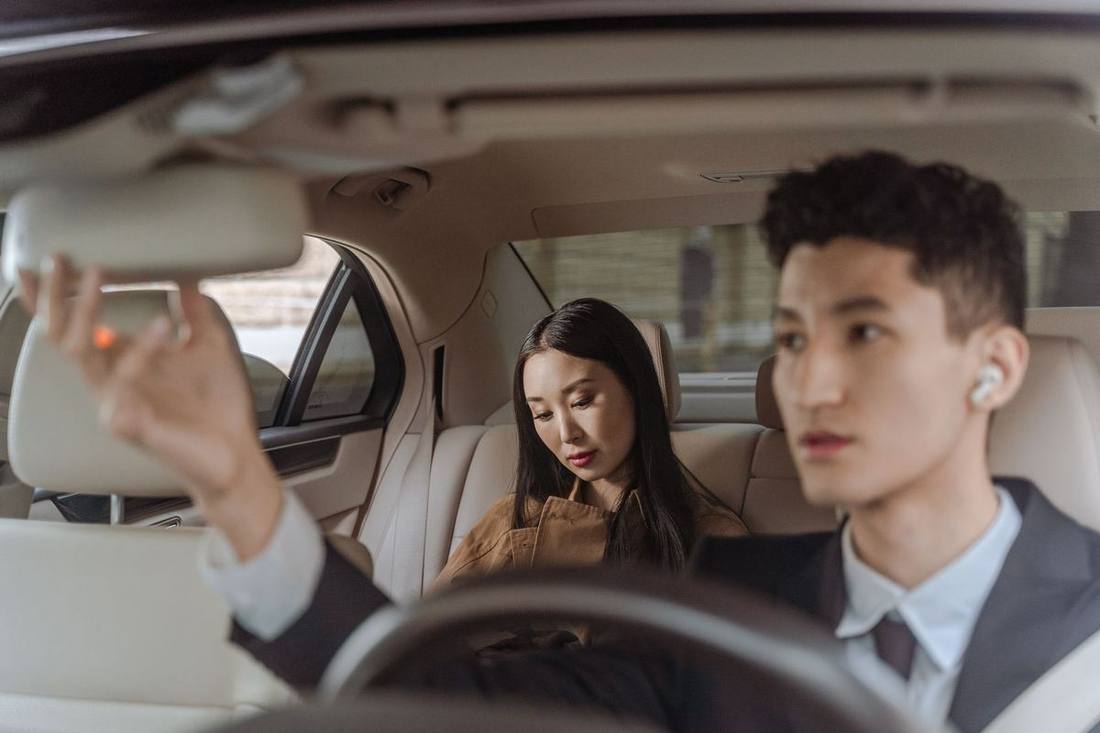
Tipping: how much, how, and when not to
In Toronto, a gratuity of 15 to 20 per cent of the fare is the custom for chauffeured service, as it is for taxis and restaurants; 15 is standard, 20 is generous, and a round number is fine. It is added in one of three ways: on the card at booking or after the trip (the engine offers a gratuity line; the receipt itemises it), in cash to the chauffeur, or as a set percentage written into a corporate account's terms so that every trip carries it and the passenger does nothing. Our chauffeurs never ask for a tip, never mention one, and never look disappointed; a passenger who does not tip has done nothing wrong, and a passenger who tips for exceptional service — a chauffeur who waited through a two-hour customs hall without a word, or carried a grandmother's bags up a flight of stairs — has done something kind. The gratuity guide has the full treatment, including the group and the multi-day cases.
The door
The chauffeur opens the rear door for you at pickup and at drop-off — it is the oldest habit in the trade — and closes it after you are seated. You may open it yourself; nobody minds. At an airport curb with the marshals moving vehicles along, the chauffeur may open the trunk first and the door second, and a passenger who gets in while the bags are loading is helping. At a hotel the doorman may reach the door first; the chauffeur and the doorman have an understanding.
The luggage
The chauffeur loads and unloads the luggage; it is part of the fare and part of the job, and a passenger who insists on lifting their own bag into the trunk is being polite in a way that slows things down. Say what is fragile. At a hotel the doorman takes the bags from the chauffeur at the car door; at a house the chauffeur carries them to the door (and up the steps, and inside if asked); at the airport's departures curb the chauffeur puts them on a luggage cart. The what is included article lists the luggage help among the fare's inclusions.
Where to sit
The rear seat is conventional — the rear right in a sedan, behind the front passenger seat, is the traditional principal's seat, and the chauffeur opens that door first — but the front seat is fine if you prefer it, and passengers who like to talk, or who get carsick in the back, sit there; say so and the chauffeur moves the bag. In an SUV the second row is the principal's; in a Sprinter the executive seats face each other and passengers choose. A single passenger is never asked to sit in the back.
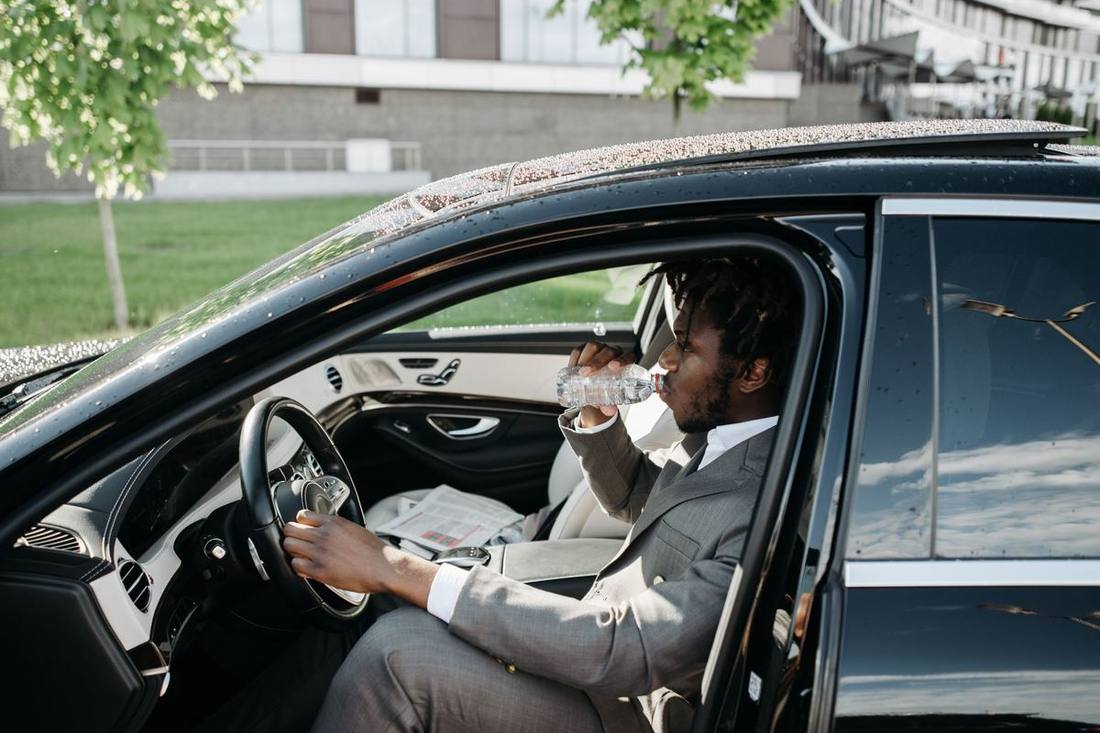
Conversation and quiet
The chauffeur follows your lead. A passenger who wants to talk — about the city, the traffic, the Leafs — has a chauffeur who knows all three; a passenger who opens a laptop or closes their eyes has a chauffeur who says nothing until the destination. Our chauffeurs are trained to read the first minute: a greeting, a confirmation of the destination, and then silence unless invited. A passenger who wants quiet can say "I'm going to work" or "I'm going to sleep" and it will be honoured; the what to expect on a first ride article describes the rhythm.
Phone and video calls
Phone calls are normal and the chauffeur hears nothing — professionally, and by the privacy and discretion standard that governs the whole trade. Video calls are fine too, and the cabin's lighting and the tinted windows work for them; the Sprinter's rear compartment has a table. Speakerphone is a courtesy question — the chauffeur does not mind, but a passenger's colleagues on the call may prefer not to be overheard by anyone. The privacy article covers what a chauffeur does with what they inevitably hear: nothing.
Food and drink
Bottled water is in the door and is yours. A coffee from the terminal is fine; the cupholders are for it. A sandwich is fine on a long run — Niagara, Kingston — and less fine on a twenty-minute airport hop, mostly for the passenger's sake; a full meal from a takeout bag is the one thing the chauffeur will quietly hope you save for the hotel, because the car's next passenger is an hour away and the smell is not. Alcohol is permitted for passengers in a chauffeured vehicle under Ontario's rules for limousines with a partition or a separate compartment (a stretch or a Sprinter) and is not permitted in an ordinary sedan or SUV; the stretch limousine guide explains the distinction and the in-car amenities article what is stocked.
Children and pets
Children ride in the seats Ontario's law requires and the child seats article describes, installed before pickup when the booking asks; a child who is loud is a child, and the chauffeur has driven a thousand of them. Pets in carriers are welcome with notice; a dog on the seat is a conversation with dispatch at booking (some vehicles, some chauffeurs — the in-car amenities article mentions the policy); service animals ride always and anywhere.
Temperature, music and the windows
Say what you want. The cabin is set to a moderate temperature and the chauffeur adjusts it on request; the music is off or low unless you ask for something (the car has satellite radio and your phone can connect); the windows are up on the highway and open if you ask. A passenger who is too warm and says nothing has a chauffeur who cannot read minds; the in-car amenities article lists what can be set.
Running late, changing plans and the chauffeur's schedule
If you are running late to the pickup, text — the chauffeur's number is on the confirmation and the included wait is 15 minutes at a city pickup; the flight delays article explains what happens beyond it. If you want to change the destination or add a stop, say so early — a re-quote by text takes a minute and the flat rate article explains how the fare adjusts. If you are going to be an hour, say so; the chauffeur has a next booking and dispatch may reassign, which costs you nothing and saves someone else's evening.
Complaints and compliments
If something is wrong — the car is late, the route is odd, the chauffeur is not the one on the confirmation — text dispatch during the trip, not after; most problems are fixable in the moment. If something is right, a word to the chauffeur, a note to dispatch or a review names the chauffeur and matters more than the tip; the reading limo reviews article explains what reviews do for the trade.
The chauffeur's etiquette
It runs both ways. The chauffeur is on time (five minutes early, texting from the curb), dressed in a suit or the fleet's uniform, addresses you as you introduced yourself, confirms the destination once, does not smoke or eat in the vehicle, does not take calls except from dispatch, does not play their own music, does not discuss other passengers, drives smoothly and within the law, handles the luggage without being asked, knows the route and the alternatives, and says goodbye at the door. The chauffeur vs driver article is about exactly this, and the how chauffeurs are vetted article about how we find people who do it.
Etiquette quick reference
| Question | Answer |
|---|---|
| Tip? | 15–20% is customary; on the card, in cash, or built into a corporate account; never solicited |
| The door? | The chauffeur opens it; open it yourself if you like |
| Luggage? | The chauffeur loads and unloads; say what is fragile |
| Front seat? | Fine — ask |
| Talk or quiet? | Your choice; the chauffeur follows your lead |
| Phone calls? | Normal; the chauffeur hears nothing |
| Food? | Water provided; coffee fine; save the meal for the hotel |
| Alcohol? | Only in a stretch or Sprinter with a separate compartment |
| Running late? | Text; 15 minutes included at a city pickup |
| Change of plan? | Say so early; a re-quote by text |
Booking with the gratuity settled
The engine offers a gratuity line at booking so the question is answered before the trip; the Pearson page has the procedure and the gratuity guide the full treatment.
Corporate passengers and the account's rules
A passenger on a company's account has fewer questions: the gratuity is usually written into the account's terms at a set percentage and appears on the statement, so nothing is expected at the curb; the receipt goes to the account, not the passenger; and the chauffeur knows the passenger's preferences from the account's notes — the front seat, the quiet, the Globe on the seat. The corporate account billing article explains the statement and the executive assistants' guide the preferences an assistant records once.
International visitors and Toronto's customs
Visitors from countries where tipping is not customary — Japan, much of Europe, Australia — ask most often, and the honest answer is that Toronto tips and 15 per cent is the norm, but that nobody in the trade will think less of a visitor who did not know; visitors from the US tip as they do at home and are on the generous side of the range. A visitor who wants the question settled in advance adds the gratuity in the engine at booking and thinks no more about it.
A note on the chauffeur's name
Your confirmation carries the chauffeur's first name, and using it — "Thanks, Daniel" — is the courtesy chauffeurs mention most often when asked what passengers do that makes the day better. It costs nothing, and it is the difference between a service and a person.
What to do with the chauffeur's card
Many chauffeurs offer a business card at the end of a trip, and passengers wonder whether taking it is a commitment. It is not; it is how the chauffeur hopes to be requested by name next time — a preference the engine's notes field or the corporate account records — and requesting a chauffeur you liked is the best compliment the trade has. The how dispatch works article explains how the request is honoured when the roster allows.
Booking notes on etiquette
Two small things. If you have a preference — the front seat, silence, a particular temperature — put it in the notes once and it is in every booking after. And if you want the gratuity settled, add it in the engine; the chauffeur will never raise it.






