What a black car is, in one paragraph
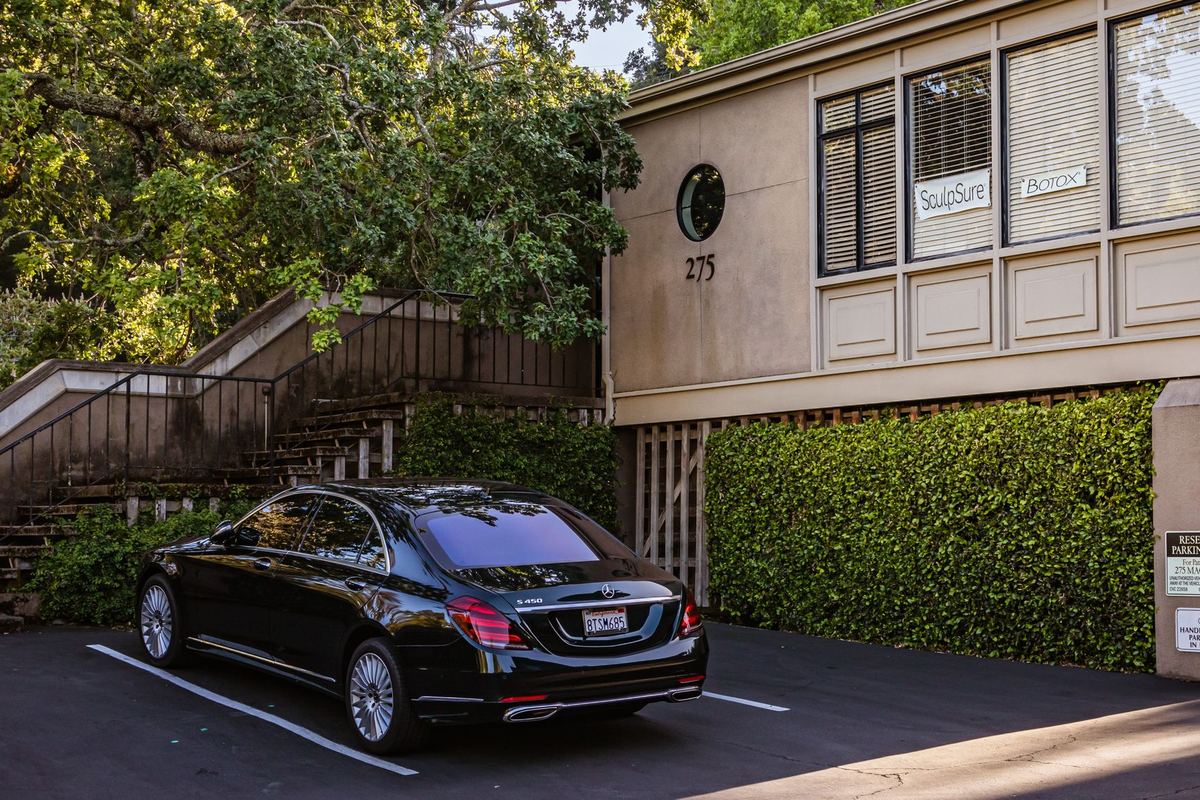
A black car is a pre-arranged, chauffeur-driven, full-size luxury sedan or SUV — black, under five years old, detailed between every trip, licensed as a limousine by the City (Toronto's limousine owner and driver licences — the Toronto limousine licensing article), permitted at the airport (the GTAA permit), commercially insured (the limo insurance article), booked ahead at a quoted fare (never hailed, never surged — the black car vs Uber Black article), and driven by a vetted, uniformed chauffeur (the chauffeur vs driver article, the how chauffeurs are vetted article) with the water, the chargers, the Wi-Fi and the silence (the in-car amenities article). The term comes from New York's 1980s black car industry — the pre-booked sedan against the hailed yellow cab — and in Toronto it means the S-Class, the 7 Series, the Escalade, the Navigator and their peers; a Sprinter is a black car when it meets the standard, a stretch is a limousine (a related but different thing — the stretch limousine guide), and a black Camry with a rideshare sticker is neither. The fleet page shows the fleet's.
The term is precise because it was born of a legal distinction: in New York in the 1980s the Taxi and Limousine Commission separated the yellow cabs (hailed on the street, metered) from the "black cars" (booked by phone through a base, a flat or a zone fare, corporate accounts, a sedan that was — by the base owners' choice — black), and the black car industry became the corporate ground transportation of Manhattan and, by the 1990s, of every North American city with a financial district. Toronto's trade adopted the term and the standards behind it, and a Toronto black car today is a defined thing. This guide covers the origin, the colour, the class, the age, the condition, the licence, the pre-arrangement, the chauffeur, the amenities, the difference from a taxi and a rideshare, what a black car is not, the four questions at the curb, and a worked example of a car that is and a car that is not.
The origin
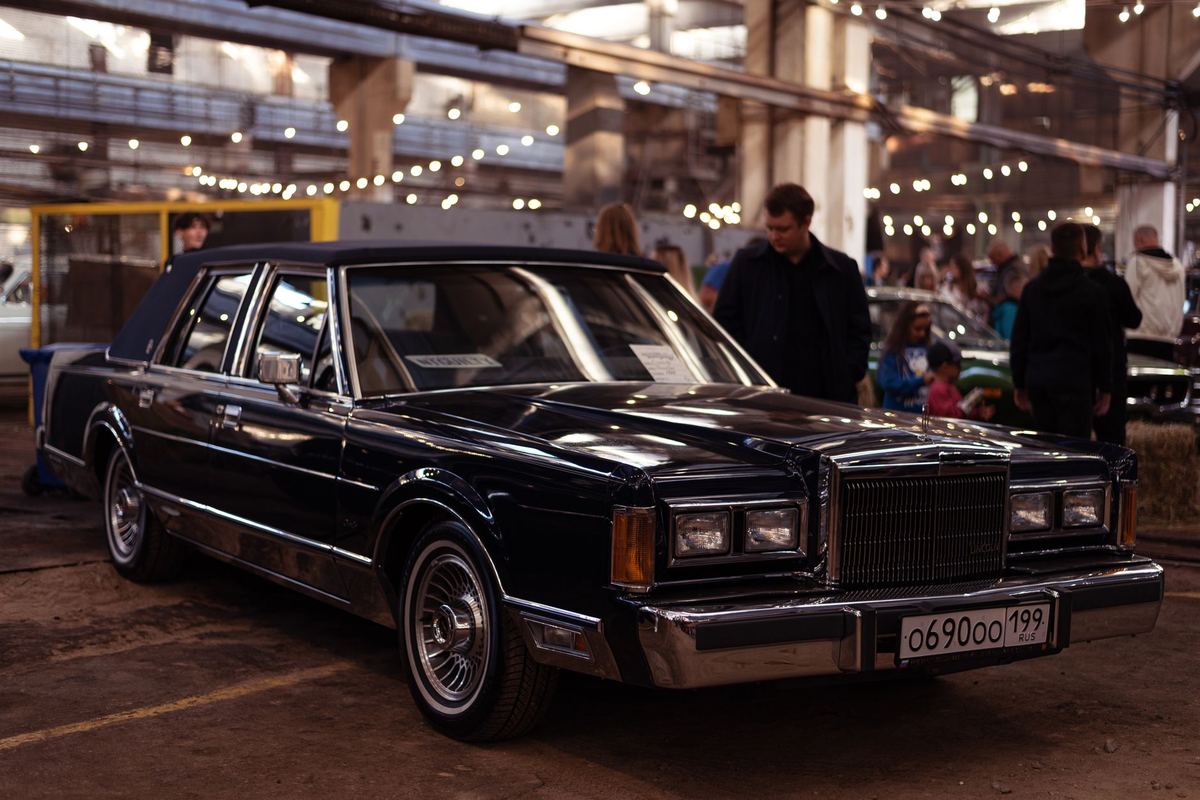
New York, 1982 to 1987: the Taxi and Limousine Commission's rules created a class of "black car" bases — for-hire vehicle services whose cars were dispatched by radio (later by computer) from a central base, never hailed, paid by voucher or account rather than a meter, and used overwhelmingly by the banks, the law firms and the agencies of Midtown and Wall Street for their executives' rides and their staff's late-night trips home; the cars were Lincoln Town Cars, mostly, and black, mostly, and the name stuck. The industry grew to hundreds of bases and tens of thousands of cars, and the term travelled — to Boston, Chicago, Los Angeles, Toronto — as the corporate travel departments that used black cars in New York asked for the same in every city. The corporate car service page is the Toronto descendant, and the black car vs Uber Black article covers the rideshare that borrowed the name.
The colour
Black, because a fleet of black cars looks like a fleet (the uniformity a corporate client wants at a conference's curb — the conference transportation article), because black reads as formal at a hotel's porte-cochère and a funeral's procession (the funeral article), because black resells (the fleet's five-year cycle), and because the trade's clients expect it; the exceptions are the white stretch for weddings and quinceañeras (the stretch limousine guide) and the occasional dark grey or navy sedan a fleet takes when the black is not available from the dealer — and a fleet that runs silver or white sedans is not running black cars, whatever it calls them. Tinted rear glass, no dealer badges, no fleet branding on the doors (the privacy and discretion article — a black car is anonymous), a small permit decal on the windshield.
The class
Full-size luxury sedans — the Mercedes S-Class, the BMW 7 Series, the Lexus LS, the Genesis G90, the Cadillac CT6 while it lasted, the Lincoln Continental and MKT while they lasted, and the Mercedes E-Class, the BMW 5 Series, the Lexus ES and the Cadillac XTS and CT5 as the "executive sedan" tier — and full-size luxury SUVs — the Escalade, the Navigator, the Suburban and the Yukon XL, the Mercedes GLS, the BMW X7 — and the Sprinter in its executive configuration; not a compact (a black Corolla is a black Corolla), not a minivan (the Sienna hybrid some fleets run is the trade's grey area — a clean, licensed, chauffeured Sienna is a fleet vehicle but not what a client means by "send a black car"), not a black Camry with a rideshare's "Black" tier sticker (the black car vs Uber Black article). The sedan vs SUV article sorts the class by the trip.
The age
Under five years, in a professional fleet — the fleet maintenance article's rule, because a fleet vehicle runs 60,000 to 80,000 kilometres a year and a five-year-old fleet car has 300,000 to 400,000 on it, past the point at which its suspension, its leather and its electronics are a flagship's; the City's bylaw allows older (the Toronto limousine licensing article has the model-year limit for a limousine licence), the corporate travel departments' RFPs ask for five or less (the duty of care article), and a passenger who asks the year gets it.
The condition
Detailed between every trip — the vehicle cleaning article's standard: the exterior washed daily and wiped at every stop, the interior vacuumed and the leather wiped between passengers, the glass clean inside and out, no smell (no air freshener either — the in-car amenities article says a black car smells of leather and nothing), no dents, no curb rash on the wheels, no cracked glass, no warning lights, the tires the winter tires article's in season, the water and the chargers stocked, the tissues and the mints in the console, the umbrella in the trunk, and the chauffeur's own standard (the a day in the life article's pre-trip inspection). A black car that arrives with a coffee cup in the door pocket is not one.
The licence
Toronto's Vehicle-for-Hire bylaw licenses limousines (the class includes black cars) with a limousine owner's licence for the vehicle (the annual inspection, the model-year limit, the insurance filing) and a limousine driver's licence for the chauffeur (the record check, the training), a Private Transportation Company licence being the rideshare's different thing; the 905 municipalities license their own (the Mississauga page, the Vaughan page and the rest); the GTAA's permit is required to pick up at Pearson's curbs; the limo insurance article's commercial policy ($2 million minimum in Toronto, $5 million for the corporate accounts) is filed with the licence; and the Ontario HTA rules article covers the province's. A black car has all of them, and a passenger who asks sees them.
The pre-arrangement
Booked ahead — by the engine, by phone, by the corporate account, by the executive assistant's system — never hailed on the street (the bylaw forbids a limousine from accepting a street hail; that is the taxi's right), the fare quoted at booking (the what is included article, the how fares are calculated article) and never surged (the black car vs Uber Black article), the chauffeur's name and the vehicle's plate sent by text before the pickup, the wait time policy stated, and the cancellation policy published. A car that pulls up because you waved is a taxi; a car that pulls up because an app matched you is a rideshare; a car that pulls up because you booked it yesterday and the fare is on your confirmation is a black car.
The chauffeur
A chauffeur, not a driver — the chauffeur vs driver article's distinction: vetted (the how chauffeurs are vetted article's criminal record check, driving abstract, licence, medical and interview), uniformed (the dark suit, the tie, the polished shoes), trained (the defensive driving article, the passenger safety article, the privacy article's conduct), who holds the door, loads the bags, knows the porte-cochères and the curbs (the Financial District hotels guide, the King Street corridor), speaks when spoken to, and is the same person for the corporate account's regular passenger; a rideshare's driver is a contractor with a phone, and the women travelling alone article and the unaccompanied minors article say why the difference matters.
The amenities
Water, chargers (USB-A, USB-C, a 110-volt outlet), Wi-Fi, the rear climate zone, the tissues, the mints, the umbrella, the newspaper on request, the phone's music on the vehicle's system, the silence by default — the in-car amenities article's list, included in the fare (the what is included article), and the child seats article's seats on request.
The difference from a taxi and a rideshare
A taxi: hailed or dispatched, metered, a licensed taxi plate, a standard sedan or a minivan, any colour with the company's livery, a driver with a taxi licence, no pre-arranged fare, the airport's taxi rank — a different, older, honourable trade. A rideshare: matched by an app, surge-priced, a Private Transportation Company licence, the driver's own car (any make, any age within the PTC's limit), the driver a contractor, no fixed chauffeur, the black car vs Uber Black article's "Black" tier a black-painted car of a listed class with no fleet standard, no vetting beyond the PTC's, and a price that moves. A black car: the above. The Pearson limo vs UP Express vs taxi article puts the three side by side for the airport.
What a black car is not
Not a stretch limousine (a limousine — coachbuilt, a lounge, a four-hour minimum — the stretch limousine guide; a black stretch is a black limousine, not a black car); not a limo bus or a coach (the limo bus vs Sprinter article); not a black-painted rideshare; not a taxi; not a hotel's courtesy shuttle; not a car service that runs five-year-old-plus sedans with a magnetic sign; and not a private driver in the client's own car (the chauffeur vs driver article covers that arrangement). A Sprinter in the executive configuration, black, licensed, chauffeured, under five years, is a black car — the trade's one exception to "sedan or SUV" — and the what to expect on a first ride article describes the standard from the passenger's seat.
The four questions at the curb
Is it the class? A full-size luxury sedan or SUV (or an executive Sprinter) — not a compact, not a minivan, not a Camry. Is it the standard? Black, clean inside and out, no smell, no dents, no branding, a permit decal, a chauffeur in a suit who knows your name. Is it licensed? The City's limousine licence and the airport's permit on request; the insurance certificate from dispatch. Was it pre-arranged? Your confirmation has the fare, the chauffeur's name and the plate, and the plate matches. Four yeses is a black car; the cheap limo service article describes the four noes.
A worked example: two cars at the same curb
Two cars arrive at the Four Seasons' porte-cochère at 7 a.m. Car A: a 2024 Escalade ESV, black, detailed at 5 a.m., a chauffeur in a dark suit with the passenger's name on his phone and the plate on the passenger's confirmation from yesterday, the fare quoted, the water in the console, the City's limousine licence and the GTAA permit on the windshield, the bags loaded with the first-out last, the door held, the rear climate set — a black car. Car B: a 2019 Camry, black, a rideshare's "Black" tier match made ninety seconds ago, a driver in a hoodie who asks "you the one going to the airport?", a price that was one figure when the app opened and another when the match landed, a coffee cup in the door, no permit for the terminal's limo lane (the GTAA permit article), and a driver whose record the passenger has no way to see — a black-painted car. The how chauffeurs are vetted article and the duty of care article say why a company's travel policy books Car A.
Black car quick reference
| Standard | Detail |
|---|---|
| Origin | New York's 1980s black car bases — pre-booked sedans against hailed yellow cabs; the corporate ground transportation of every North American financial district |
| Colour | Black (white stretches for weddings excepted); tinted rear glass; no branding; a permit decal |
| Class | Full-size luxury sedan (S-Class, 7 Series, LS, G90; E-Class / 5 Series / ES as the executive tier) or SUV (Escalade, Navigator, Suburban, GLS, X7); the executive Sprinter |
| Age | Under 5 years in a professional fleet (300,000–400,000 km) |
| Condition | Detailed between trips; no smell, no dents, no curb rash, no warning lights; winter tires in season; stocked |
| Licence | Toronto (or 905) limousine owner + driver licences; GTAA permit; commercial insurance ($2M–$5M); the HTA |
| Pre-arranged | Booked ahead; never hailed; the fare quoted and never surged; the chauffeur's name and plate by text |
| Chauffeur | Vetted, uniformed, trained; holds the door; knows the curbs; speaks when spoken to; the same person for the regular |
| Amenities | Water, chargers, Wi-Fi, rear climate, tissues, mints, umbrella; child seats on request; silence by default |
| Not | A stretch (a limousine), a bus, a black rideshare, a taxi, a courtesy shuttle, an old sedan with a sign |
Booking a black car
The fleet page shows the fleet's cars; the engine books one with the fare quoted; the corporate car service page, the Pearson page and the hourly chauffeur page book the day, the run and the hour; and dispatch sends the chauffeur's name and the plate before the pickup. Ask the four questions of anyone else.






