Navigator vs Escalade, in one paragraph
The Lincoln Navigator and the Cadillac Escalade are Toronto's two fleet SUVs — the same size (5.3 and 5.4 metres standard; 5.6 and 5.8 in the Navigator L and the Escalade ESV), the same six or seven seats, the same four to eight large bags (the luggage capacity article), the same all-wheel drive for the winter, and the same fare on the engine — and they differ in the engine (the Navigator's 3.5-litre twin-turbo V6 against the Escalade's 6.2-litre V8), the ride (the Navigator's softer air suspension against the Escalade's magnetic ride), the third row (the Navigator's slightly larger), the cabin (the Navigator's Perfect Position seats and quieter interior against the Escalade's screens and AKG audio), and the name (Lincoln's Town Car heritage in the trade against the Escalade's recognition at the curb). A fleet runs the one its buyer and its mechanic prefer, a passenger who books "an SUV" gets whichever is clean and closest, and a passenger who books either by name gets it — the sedan vs SUV article says when to book an SUV at all, and the fleet page shows which the fleet runs.
The two SUVs have shared Toronto's fleets since the Navigator arrived in 1998 and the Escalade a year later — Lincoln with the trade's loyalty from the Town Car years, Cadillac with the name the public says when it means a big black SUV — and twenty-five years later they are so alike in size, seats, cargo and fare that the choice is a preference: a passenger who has ridden in both has an opinion about the ride or the seats, a fleet manager has an opinion about the engine or the parts, and a dispatcher has none. This guide is the honest comparison: the engines, the ride, the seats and the third row, the cargo, the cabins, the step-in, the winter, the fuel and the fleet's cost, the reliability, the brand's meaning, which fleets run which, the fare, and the dispatcher's answer.
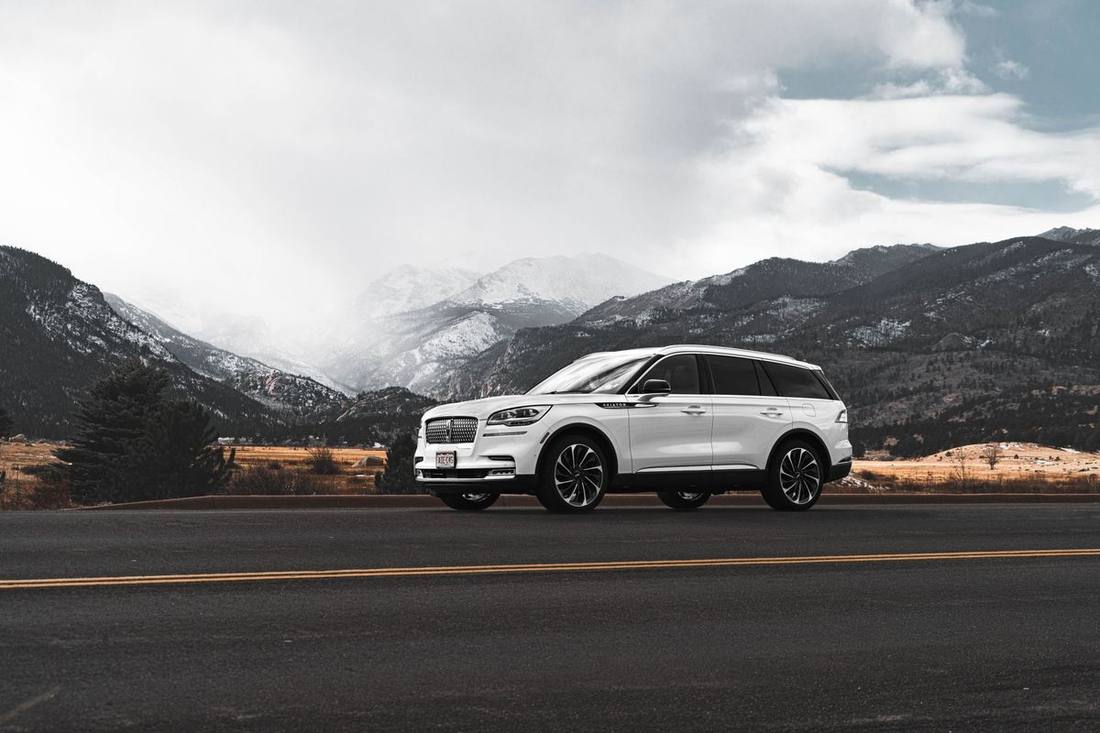
The engines
The Navigator: Ford's 3.5-litre EcoBoost twin-turbo V6 — 440 horsepower and 510 pound-feet, a ten-speed automatic, the turbos' torque from low revs (the launch from a King Street light with six aboard), the V6's quieter idle at the curb, and a fuel figure a litre or two per hundred better than the V8's on the highway. The Escalade: GM's 6.2-litre V8 — 420 horsepower and 460 pound-feet, the same ten-speed, the V8's sound and its effortless 100 km/h on the 401 with the load, cylinder deactivation for the cruise, and the 3.0-litre Duramax diesel option some fleets take for the long-distance runs; the Escalade IQ electric and Lincoln's own electric plans are the hybrid and electric article's subject. A passenger notices neither from the second row; a fleet notices the fuel bill and the parts.
The ride
The Navigator's adaptive air suspension is tuned soft — the Lincoln "Quiet Flight" philosophy — and the vehicle floats over the Gardiner's expansion joints and the DVP's patches with a slight lean in the Yorkville corners; the Escalade's magnetic ride control (and the air suspension on the newest generation) is tuned firmer — the dampers read the road and hold the body flat — and the vehicle feels planted on the 407 at speed with a little more of the surface reaching the seat. A passenger who wants to sleep on the red-eye article's run prefers the Navigator; a passenger who wants to work on a laptop in the roadshow article's second row prefers the Escalade's steadier floor; and both are better than the Suburban and worse than the S-Class.
The seats and the third row
The Navigator's Perfect Position front seats (thirty-way adjustable, massaging) are the driver's and the front passenger's, its second-row captain's chairs are heated, ventilated and reclining with the same console as the Escalade's, and its third row — the point of difference — has 20 to 30 millimetres more legroom and headroom than the Escalade's on the same wheelbase and reclines further, which matters for two adults on a forty-minute Pearson run; the Escalade's second row is the same, its third row a little tighter, and its seats' leather and stitching a little richer on the Premium Luxury trim. The child seats article's two car seats and a booster fit both identically.
The cargo
Behind the third row: the Navigator 580 litres, the Escalade 720 — two large bags in either; the Navigator L 970, the Escalade ESV 1,150 — four large bags in either with six aboard. Behind the second row: the Navigator 1,630 and the L 2,060; the Escalade 2,050 and the ESV 2,650 — five to eight large bags. The luggage capacity article's table has the figures and the families with luggage article's family of five with eight pieces fits either long-wheelbase vehicle; the Escalade's numbers are slightly larger on paper and the difference is a carry-on.
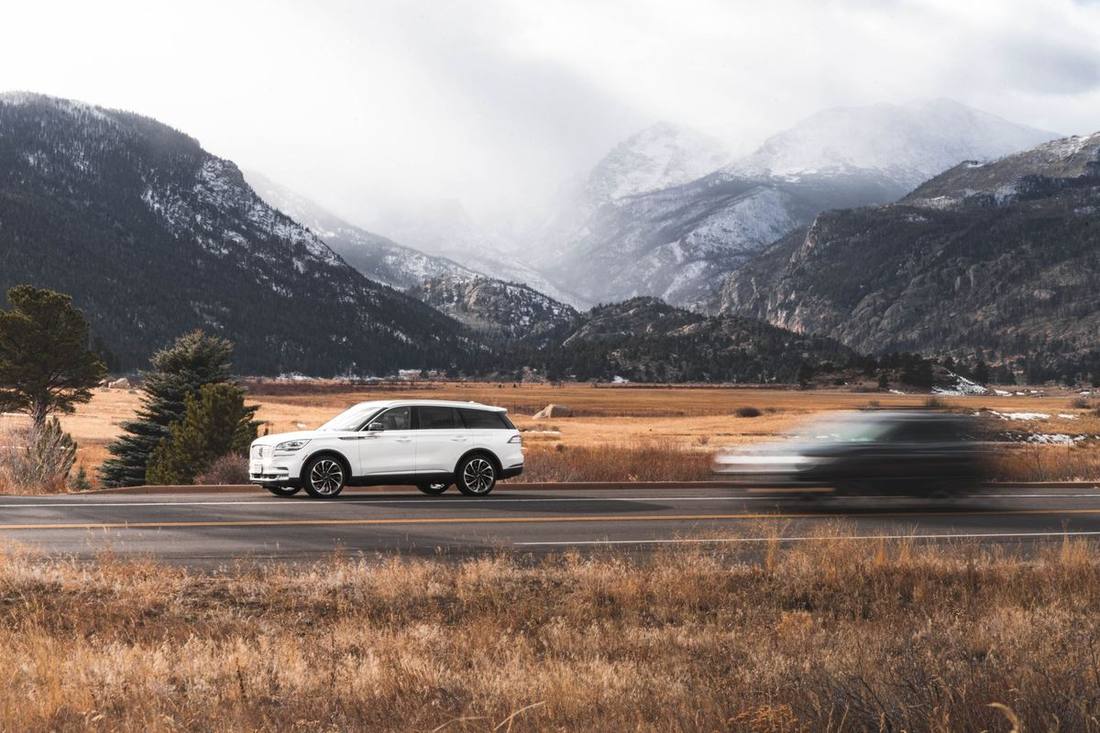
The cabins
The Navigator: the Lincoln design — the horizontal dash, the piano-key gear selector, the 13.2-inch centre screen, the Revel audio (28 speakers on the top trim), the panoramic roof, the rear-seat entertainment on the Black Label, the ambient lighting, and the quietest cabin of the two (Lincoln's acoustic glass and its sound insulation) — a lounge. The Escalade: the Cadillac design — the 38-inch curved OLED display across the dash, the 36-speaker AKG audio, the rear 12.6-inch screens with HDMI, the Super Cruise hands-free driving the fleet's chauffeurs do not use on a passenger's trip, and a cabin that is a little louder and a lot more theatrical. A passenger who wants quiet books the Navigator; a passenger who wants the screens books the Escalade; the in-car amenities article's water, chargers and Wi-Fi are in both.
The step-in
Identical in practice: a 55-centimetre floor, power-deploying running boards to 35, grab handles at the A- and B-pillars, and the chauffeur's arm; the seniors' guide's advice — a step up for a bad back, a sedan's step down for a bad hip — applies to both, and the accessible service article covers the passengers who need the ramp neither has.
The winter
Both all-wheel drive with a two-speed transfer case, both on the winter tires article's tires from November to April, both 20 centimetres off the road and 2,600 to 2,800 kilograms — both storm-day vehicles (the Pearson winter storm article); the Navigator's aluminum body and lighter nose (the V6) make it a touch more nimble on an icy crescent and a touch more sensitive to a crosswind on the Skyway; the Escalade's mass holds a line; the winter driving article's chauffeur drives both the same way and the defensive driving article's training applies.
The fuel and the fleet's cost
The Navigator's V6 returns 12 to 13 litres per hundred in the city and 9 to 10 on the highway; the Escalade's V8 13 to 14 and 10 to 11 — a fleet Escalade at 70,000 kilometres a year burns roughly 700 litres more than a Navigator, which is a fleet's argument, not a passenger's; the purchase prices are within a few thousand dollars trim for trim, the depreciation curves similar, and the fleet maintenance article's five-year rule retires both at the same age. The fare is the same because the cost to the fleet is nearly the same.
The reliability
Both have fleet records — the Navigator's EcoBoost with its turbos and its early cam-phaser issues (fixed by the 2018 generation), the Escalade's V8 with its lifter issues on some years and its air suspension's compressor — and a fleet's mechanic prefers the one they know; the fleet maintenance article says the fleet's maintenance schedule matters more than the badge, and the vehicle cleaning article that the interior's wear is the same. A fleet that runs one brand runs it because its mechanic, its dealer and its parts supply are set up for it.
The brand's meaning
Lincoln built the Town Car, the trade's sedan for twenty-five years, and the fleets that ran Town Cars bought Navigators when the Town Car ended and stayed; Cadillac built the Escalade into the name the public says — "send the Escalade" — and the fleets that serve passengers who ask for it by name bought Escalades; the what makes a car a black car article says both are black cars by every standard, and the what to expect on a first ride article says a first-time passenger recognises the Escalade at the curb and rides more comfortably in the Navigator's third row. A wedding couple's photograph is the same in either (the wedding limo guide); a corporate client's assistant books "an SUV."
Which fleets run which
The older fleets with Lincoln dealers run Navigators; the fleets that grew on Cadillac's name run Escalades; most of Toronto's larger fleets run both and assign by cleanliness and proximity; the limousine network's affiliates across the 905 and beyond run whichever their local dealer supports; and a passenger who asks for one by name at booking gets it if the fleet has it clean that day, or a call from dispatch offering the other.
The fare
Identical — the how much does a black car cost article's SUV fare is the SUV fare, the long-wheelbase versions are the same fare as the standard in most fleets, the engine prices "SUV" for the date, and the what is included article's inclusions are the same; a fleet does not charge more for the Escalade's screens or the Navigator's seats.
The dispatcher's honest answer
"They are the same size, the same fare and the same job; the Navigator rides softer and is quieter with a slightly bigger third row; the Escalade rides firmer with the screens and the name; if you have a preference, say it and we will send it; if you do not, you will get whichever is clean and closest and you will not notice." The sedan vs SUV article's question — do you need an SUV at all? — is the one that matters.
Navigator vs Escalade quick reference
| Factor | Lincoln Navigator / L | Cadillac Escalade / ESV |
|---|---|---|
| Length | 5.3 m / 5.6 m | 5.4 m / 5.8 m |
| Engine | 3.5 L twin-turbo V6, 440 hp / 510 lb-ft | 6.2 L V8, 420 hp / 460 lb-ft; 3.0 L diesel option; Escalade IQ electric |
| Ride | Adaptive air, tuned soft — floats; the sleeper's choice | Magnetic ride + air on the newest, tuned firm — planted; the laptop's choice |
| Third row | 20–30 mm more leg and headroom; reclines further | A little tighter |
| Cargo behind 3rd row | 580 L / 970 L (L) | 720 L / 1,150 L (ESV) |
| Cargo behind 2nd row | 1,630 L / 2,060 L | 2,050 L / 2,650 L |
| Cabin | Quietest; Revel audio; panoramic roof; Perfect Position seats | 38-in OLED; AKG 36-speaker; rear 12.6-in screens with HDMI |
| Winter | AWD; lighter aluminum body; a touch more nimble, a touch more crosswind | AWD; more mass; holds a line |
| Fuel | 12–13 city / 9–10 hwy L/100 km | 13–14 / 10–11 |
| Fare | The same | The same |
| The name | The Town Car's heir; the trade's loyalty | The one the public says; recognised at the curb |
Booking one by name
The fleet page shows which the fleet runs; the engine books "SUV" and the notes take the name; dispatch sends the named vehicle if it is clean that day or calls to offer the other. Book the SUV for the bags and the winter; name the brand for the ride you prefer.
Two worked trips, one in each
The Navigator: a Rosedale couple to Terminal 1 for a 6 a.m. flight, two large bags, a January morning — the Navigator's quiet cabin for the half-asleep passengers, the soft ride over the DVP's patches, the lighter nose through the rush hour article's empty 5 a.m. roads, the Door A lane, the bags out of the 580-litre rear; the couple noticed the silence. The Escalade: a Bay Street team of four to a Mississauga client, the pitch on the rear screens over the HDMI from a laptop, the firmer ride that kept the coffee level on the Gardiner, the 407 at speed, the four roller cases behind the folded third row; the team noticed the screens. Same fare, same fleet, same chauffeur standard; two preferences, both served.






