Funeral transport, in one paragraph
Funeral and memorial transport in Toronto is the family's cars behind the hearse — black sedans and black SUVs for the immediate family, a Sprinter for the extended family, an accessible vehicle for an elderly mourner — from the funeral home (Turner & Porter, Ogden, Humphrey, Rosar-Morrison, Benjamin's Park Memorial Chapel, Glendale, Cardinal, Chapel Ridge, Scott, Ward and the rest) or the place of worship to the cemetery (Mount Pleasant, Prospect, Pine Hills, Glendale, Highland Memory Gardens, Pardes Shalom, Resurrection, Holy Cross, Assumption, the Islamic cemeteries) in the procession (the hazards on, the headlights, the funeral home's lead car, a police escort on the large ones) and to the reception after; the out-of-town family met at Pearson on a day's notice; the shiva's, the wake's and the prayer meeting's runs through the week; the same-day booking any operator takes at any hour; and the chauffeur's discretion — the door held, the tissues in the back, nothing said. The privacy and discretion article sets the standard and the accessible service article covers the mourner who needs the ramp.
Every operator in the trade drives funerals, and every chauffeur who has driven one knows its rules without being told: the vehicle spotless and black, the chauffeur in the dark suit, the door held for the widow and the grandmother, the hazards on behind the hearse, the speed the hearse's, the tissues and the water in the back and nothing else, no radio, no small talk unless the passenger begins it, the wait at the cemetery's road in the rain, and the drive to the reception with the family silent in the back. This guide covers the funeral homes and their procession rules, the cemeteries, the procession's etiquette, the vehicles, the out-of-town family, the week's runs for the faiths that keep one, the accessible mourner, the reception, the same-day booking, the chauffeur's conduct, what the operator does and does not do, and a worked funeral day.
The funeral homes and their procession rules
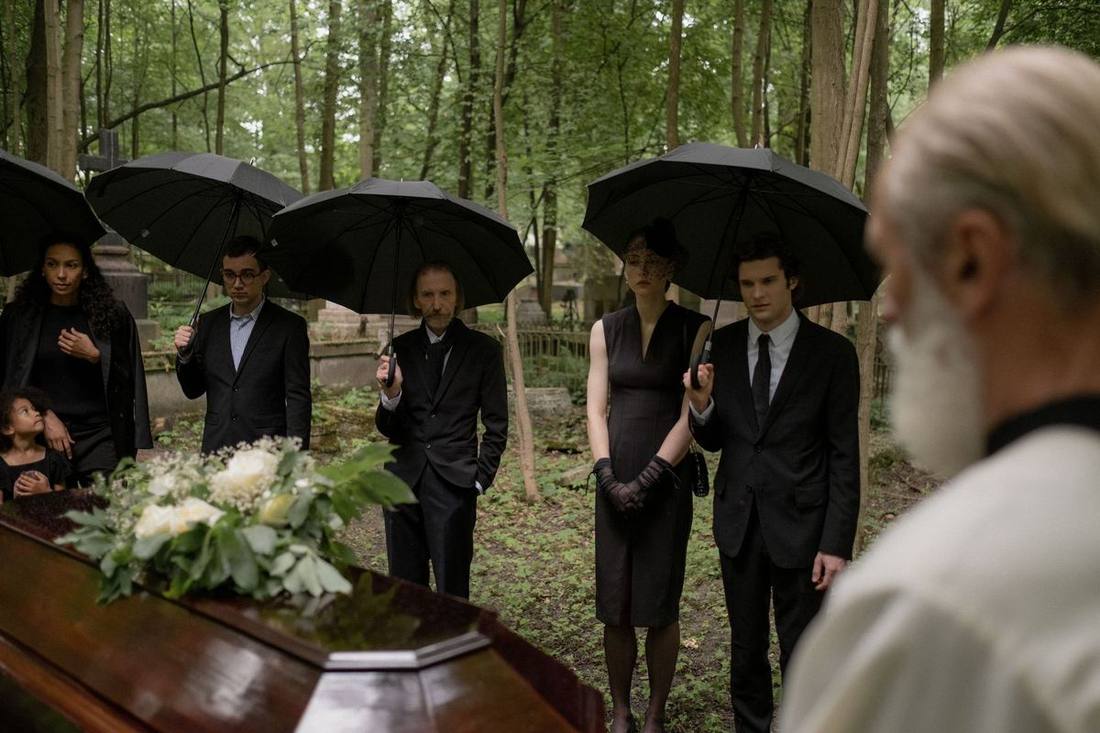
The city's and the 905's funeral homes — Turner & Porter (Bloor West, Yorke Chapel on Bloor, Peel Chapel in Mississauga, Butler Chapel in Etobicoke), Ogden (Sheppard and Bathurst), Humphrey (Bayview), Rosar-Morrison (Sherbourne), Benjamin's Park Memorial Chapel (Steeles, for the Jewish community), Glendale (Etobicoke), Cardinal (Vaughan), Chapel Ridge (Markham), Scott (Whitby and Pickering — the Whitby page, the Pickering page), Ward (Oshawa — the Oshawa page), Bates & Dodds, McDougall & Brown (Scarborough), Jerrett (North York), Kane-Jerrett (Thornhill), Ogden, the Islamic funeral services in Scarborough and Mississauga, the Chinese funeral homes of Scarborough and Markham, and the rest — each runs the procession from its chapel: the hearse and the funeral home's lead car first, the family's cars in an order the director sets (the immediate family's sedan or SUV directly behind the hearse, the extended family's Sprinter next, the friends' own cars after), the funeral home's flags or the magnetic placards on the family's cars, and the director's instructions at the chapel's door; the chauffeur takes the director's order and follows it. The wedding venues article's doors are the churches' too: St. Michael's Cathedral, St. Paul's Bloor, Holy Blossom, Beth Tzedec, the Jami Mosque, the gurdwaras and the mandirs (the South Asian weddings article's), the Greek and the Ukrainian cathedrals, each with its curb and its own procession custom.
The cemeteries
Mount Pleasant (the Mount Pleasant Group's flagship on Yonge north of St. Clair — the midtown guide's roads; the internal roads narrow; the section's number on the director's sheet), Prospect (St. Clair West), Pine Hills (Birchmount in Scarborough — the Scarborough guide), York (Yonge north of Lawrence), Elgin Mills (Richmond Hill — the Richmond Hill page), Glendale (Etobicoke), Highland Memory Gardens (Steeles), Pardes Shalom and Pardes Chaim (Dufferin north of Major Mackenzie — the Vaughan page), Beth Tzedec and the Jewish cemeteries of Roselawn and Bathurst, Resurrection (Whitby), Holy Cross (Thornhill), Assumption (Mississauga — the Mississauga page), Queen of Heaven (Woodbridge), Christ the King (Markham), the Islamic cemeteries at Brampton's and Richmond Hill's, the Chinese sections at Elgin Mills and Pine Hills, and the crematoria at Mount Pleasant, St. James and Glendale; each has its gate, its internal speed (walking pace), its section's road and its rule on where the family's cars park for the committal (behind the hearse, on the road's shoulder, engines off), and the chauffeur stays with the vehicle or, if asked, stands at the road with the umbrella.
The procession's etiquette
The hazards on from the chapel's door to the cemetery's gate; the headlights on; the speed the hearse's; no gap larger than a car's length; the intersections crossed on the lead car's signal (Ontario law gives a funeral procession no right of way but the custom of yielding is nearly universal, and a police escort — arranged by the funeral home for a large or a public funeral — holds the intersections); the rush hour article's peaks avoided by the funeral home's scheduling (the 10 a.m. and the 1 p.m. services); the 407 not used in a procession (the hearse takes the surface roads); and at the cemetery's gate the procession forms again behind the hearse to the section. A chauffeur who has driven a hundred processions knows the funeral homes' habits — Turner & Porter's Bloor West to Prospect via St. Clair, Benjamin's Steeles to Pardes Shalom via Dufferin — and the winter driving article's roads on a January morning.
The vehicles
The immediate family (the spouse, the children, the parents): a black sedan for three, a black SUV for six — the vehicle directly behind the hearse, spotless, the chauffeur in the dark suit. The extended family (the siblings, the grandchildren, the cousins): a Sprinter for fourteen, or two SUVs. The elderly mourner: the accessible service article's vehicle with the ramp or the lift, and the chauffeur's arm at the chapel's step and the cemetery's road. The stretch: some families want it — a black stretch behind the hearse is a tradition in some communities — and the stretch limo page's black vehicles serve. No white vehicles, no decorations, no branding on the door; the fleet page shows the black vehicles and dispatch assigns the newest.
The out-of-town family
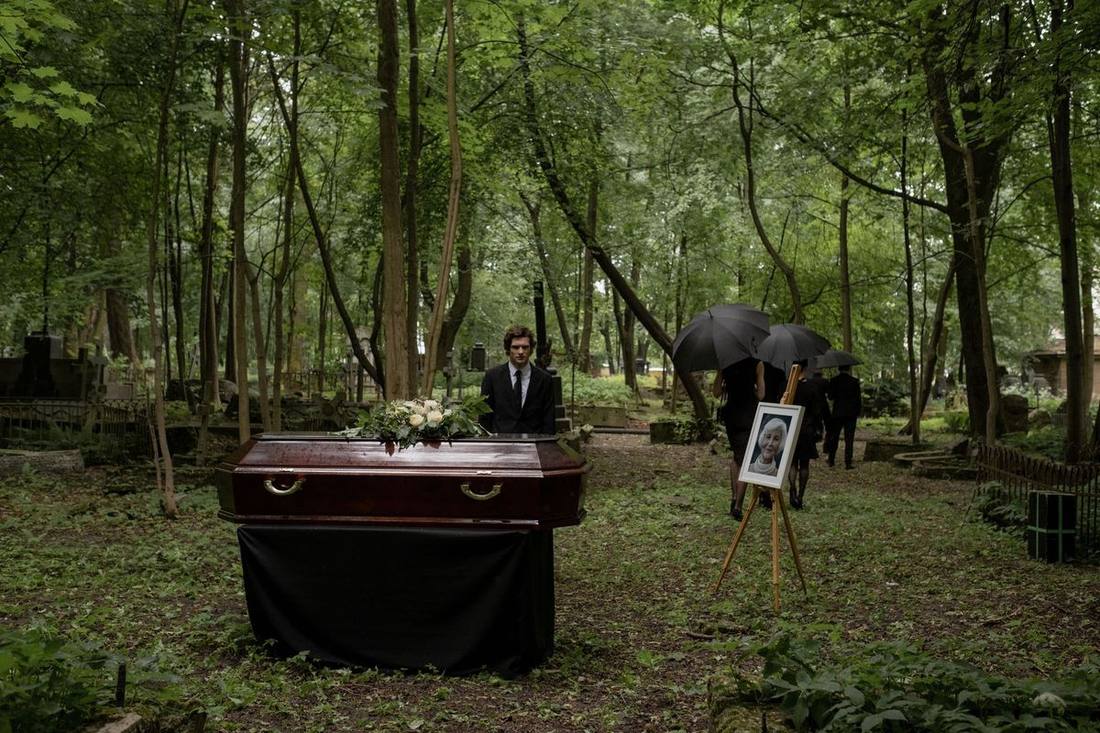
A death gives a day's notice — the children from Vancouver, Calgary, London, Hong Kong, Mumbai, Manila, Lagos, Florida on the next flight — and the Pearson page's runs are booked by text at midnight for a 6 a.m. arrival: the meet and greet with the family's name, the flight delays article's delays, the international arrivals article's customs time, the bags, and the drive to the family's home or the funeral home directly (a mourner who lands at 6 for a 10 a.m. service goes straight there, changes in the funeral home's family room, and the chauffeur holds the bags); the Billy Bishop page for the Montreal and Ottawa family; the Union Station guide for the train. The departures a week later are the same in reverse, and the corporate account billing article's single statement serves a family's week as it serves a company's.
The week's runs
The faiths that keep a week keep the car: the shiva (seven days of evening prayers at the family's home — the elderly relatives' runs each evening, the hourly or a standing transfer at 6 and 9), the wake and the visitation (two evenings at the funeral home before the service — the family's runs at 2 and 7), the Hindu and Sikh prayer meetings (the third day's, the tenth day's, the thirteenth day's — at the mandir, the gurdwara or the home), the Muslim janazah (the same day or the next — the mosque, the cemetery, and the three days' condolences), the Chinese funeral's several days at the funeral home and the cemetery, the Italian and Portuguese rosaries and the mass, the Greek trisagion and the memorial at forty days, the Filipino nine days' novena — and the family's car serves each run with the same chauffeur if the family asks (the privacy and discretion article's continuity), booked on one manifest with the funeral home's schedule.
The accessible mourner
The grandmother in the wheelchair, the uncle with the walker, the aunt on oxygen — the accessible service article's vehicle with the ramp, the chauffeur trained on the lift and the tie-downs, the funeral home's accessible entrance and the cemetery's road closest to the section (the director knows; the chauffeur asks), the umbrella, the blanket in the winter, and the patience of a chauffeur who has done this before; a family that has a mourner who cannot stand at the graveside is driven to the section's road and the committal is watched from the vehicle's open door.
The reception after
The funeral home's reception room, a church hall, a restaurant's private room (the fine dining article's rooms do funerals as they do celebrations), a banquet hall for the large communities' funerals (the wedding venues article's halls), or the family's home — the family's cars from the cemetery's gate, the chauffeur waiting through the reception, and the drive home; the hourly covers the day from the chapel to the home and the how much does a black car cost article's worked hourly applies with no surcharge for the occasion.
The same-day booking
A funeral is booked the day before or the same morning — dispatch takes it at any hour, assigns the black vehicles and the senior chauffeurs, confirms with the funeral home's director, and sends the family the chauffeur's name and the vehicle's plate by text; the cancellation policies article's occasion terms are waived for a funeral (a service that moves, moves the car), and the deposits and payment article's deposit is not asked for; the funeral home's own limousine (some have one; most subcontract) is often ours, and a family that books through the funeral home and a family that books directly get the same vehicle.
The chauffeur's conduct
The dark suit, the black tie, the polished shoes; the vehicle detailed that morning; the tissues, the water and nothing else in the back; no radio; the door held; the umbrella; the name of the deceased known and used if the family uses it; no condolences unless the family speaks first, and then a sentence; the pace the hearse's; the wait in the rain; the eyes down at the graveside; the drive to the reception in silence unless the family talks; and after, nothing said to anyone about anything seen. The privacy and discretion article and the how chauffeurs are vetted article cover the standard, and dispatch assigns the chauffeurs who have it.
What the operator does and does not do
Does: the family's cars, the procession, the airport runs, the week's runs, the accessible vehicle, the reception, the same-day booking, the coordination with the funeral home's director, the flags or the placards the funeral home supplies. Does not: carry the deceased (the hearse is the funeral home's, licensed separately under Ontario's Funeral, Burial and Cremation Services Act), carry the flowers or the casket spray (the funeral home's flower car), lead the procession (the funeral home's lead car), arrange the police escort (the funeral home's), or advise on the service; a family who asks is pointed to the director. The Bereavement Authority of Ontario licenses the funeral homes and the Toronto limousine licensing article covers the operator's.
A worked funeral day
A North York family, a Tuesday in November, the 11 a.m. service at Benjamin's Park Memorial Chapel on Steeles and the burial at Pardes Shalom. Monday 11 p.m.: the booking by text — the son from Vancouver landing at 6:40 a.m., the family's SUV, the grandmother's accessible vehicle, the cousins' Sprinter. Tuesday 6:40: Terminal 1, the son met, to the family's Bathurst Manor home by 7:45. 9:45: the SUV (the widow, the two children, the son's wife) and the accessible vehicle (the grandmother in her chair, an aunt) from the home; the Sprinter (twelve cousins) from a Thornhill home. 10:15: Benjamin's — the director's order: the hearse, the lead car, the SUV, the accessible vehicle, the Sprinter, the friends' cars; the placards on the windshields. 12:15: the procession — Steeles east, Dufferin north, walking pace at the gate, section 14's road; the grandmother's chair to the graveside on the paved path, the umbrella in the sleet; the committal. 1:30: the family to the home for the shiva's first meal; the vehicles released. Tuesday to Sunday: the grandmother's 6 p.m. and 9 p.m. runs from her Bathurst Street apartment to the shiva and back, the same chauffeur. Monday: the son's Terminal 1 departure. One manifest, three vehicles, seven days, one chauffeur the grandmother asked for by name.
Funeral transport quick reference
| Element | Detail |
|---|---|
| Vehicles | Black sedan / SUV for the immediate family directly behind the hearse; Sprinter for the extended family; accessible vehicle for an elderly mourner; black stretch by tradition in some communities |
| The procession | Hazards, headlights, the hearse's speed, no gaps, the lead car's signal at intersections; a police escort on the large ones; no 407 |
| The funeral homes | Turner & Porter, Ogden, Humphrey, Rosar-Morrison, Benjamin's, Glendale, Cardinal, Chapel Ridge, Scott, Ward, McDougall & Brown, Jerrett, the Islamic and Chinese homes — the director sets the order |
| The cemeteries | Mount Pleasant, Prospect, Pine Hills, York, Elgin Mills, Glendale, Highland, Pardes Shalom, Resurrection, Holy Cross, Assumption, Queen of Heaven, Christ the King, the Islamic cemeteries; walking pace inside |
| The out-of-town family | Pearson on a day's notice; met at Door A; straight to the funeral home if the timing needs it |
| The week | Shiva, wake, visitation, prayer meetings, novena, trisagion — the same chauffeur on one manifest |
| Same-day | Booked at any hour; occasion terms and deposit waived; confirmed with the director |
| Conduct | Dark suit; detailed vehicle; tissues and water only; no radio; the door; the umbrella; silence unless spoken to |
| Not done | The deceased, the flowers, the lead car, the escort, the service's arrangements — the funeral home's |
Booking funeral transport
Dispatch takes a funeral booking at any hour on the book page or by phone; the Pearson page the family's arrivals; the accessible service article the vehicle with the ramp; the funeral home's director and dispatch confirm the order. Our condolences.






