Passenger safety, in one paragraph
A professional Toronto black car operation builds safety in layers around every trip: the chauffeur vetted and re-checked (the vetting article's vulnerable-sector check, quarterly abstract, drug and alcohol policy, fatigue rules, defensive driving and first aid); the vehicle under the five-year rule, inspected every morning, on winter tires from November to April, with seat belts in every position and child seats installed; the trip record (a named passenger, a named chauffeur, a plate and a route, recorded before the trip — the Toronto limousine licensing article's pre-arrangement) and the passenger's text with the chauffeur's name, photo and plate; the dispatcher who watches every vehicle on the map by telematics (speed, braking, location, hours) and the panic protocol on both sides; the insurance at $5 million (the limo insurance article); the protocols for women travelling alone, unaccompanied minors, seniors and accessible passengers; the chauffeur's refusal of an unsafe request; and the duty of care article's corporate standard over all of it. A passenger adds their own layer — the plate check, the share-my-trip, the seat belt — and the what to expect on a first ride article shows the layers from the back seat.
The trade's safety record is the product of a system, and the system is what a passenger buys: a rideshare's safety is an app's rating and a support ticket; a taxi's is the City's licence and the meter's record; a black car's is the operator's vetting, the vehicle's rule, the dispatcher's map, the trip's record and the insurer's requirements — layered so that a failure in one is caught by another. This guide walks the layers: the chauffeur, the vehicle, the trip record and the text, the dispatcher and the telematics, the panic protocol, the drug and alcohol and fatigue rules, the training, the insurance, the route and the refusal, the protocols for the passengers who need more, the cleaning that stayed, the corporate standard, what a passenger can do, and a worked trip with the layers visible.
Layer one: the chauffeur
The vetting article's standard — the City's licence and course, the fleet's vulnerable-sector police check, the ten-year abstract with the strict demerit limit, the medical, the references, the interview, the road test, the probation — and the ongoing: the abstract pulled every quarter, the 24-hour duty to report any charge or collision, the zero-tolerance drug and alcohol policy with testing on cause and after any incident (the Ontario HTA rules article's commercial-driver zero-BAC), the fatigue rules (a maximum shift, a minimum rest, the a day in the life article's hours — a chauffeur who has driven fourteen hours does not take the 1 a.m. Pearson run), the defensive driving article's annual training with the closed-course skid day, the first aid and CPR certification, and the privacy and discretion article's conduct that keeps a passenger's address and routine inside the fleet. The chauffeur vs driver article says this layer is the difference.
Layer two: the vehicle
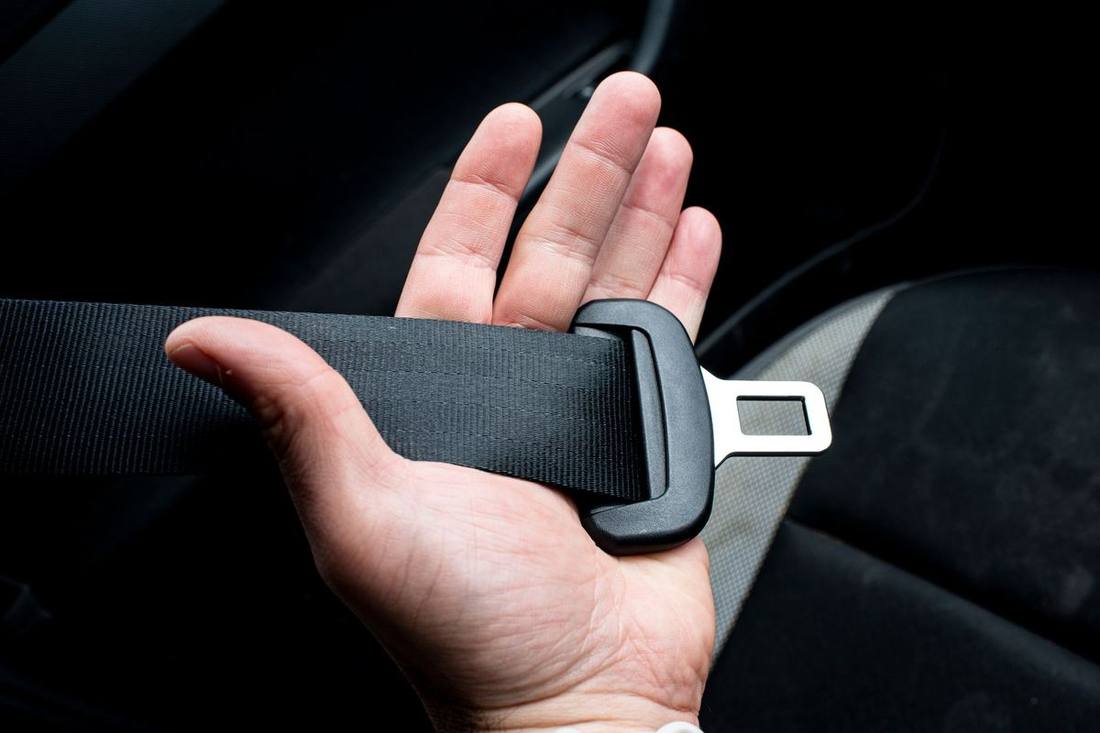
The fleet maintenance article's five-year rule and severe-service schedule (the brakes inspected monthly, the air suspension at every oil change, the alignment after every pothole), the daily pre-trip inspection signed on the chauffeur's app (the tires, the lights, the brakes, the belts in every position, the child seat anchors, the warning lights), Toronto's annual safety inspection for the limousine licence, the winter tires article's tires from November to April on every vehicle, the manufacturer's safety systems (the automatic emergency braking, the blind-spot monitoring, the lane-keeping and the rear cross-traffic alert that every fleet vehicle under five years carries), the child seats article's seats installed by a certified chauffeur, the seat belts in every seating position including the stretch's bench and the Sprinter's fourteen, the vehicle cleaning article's condition, and the substitution of any vehicle that fails.
Layer three: the trip record and the passenger's text
Before the wheels turn, the Toronto limousine licensing article's pre-arrangement record exists in the brokerage's system: the passenger's name (or the account and the traveller), the pickup, the destination, the time, the assigned chauffeur by name and licence number, the assigned vehicle by plate, and the quoted fare — and the passenger has, by text before the pickup, the chauffeur's name, photo and plate (the women travelling alone article's first rule: the car that arrives matches the text, or it is not the car); a rideshare's record is the app's and a taxi's is the meter's, and neither gives the passenger the driver's identity before the door opens.
Layer four: the dispatcher and the telematics
Every fleet vehicle carries a telematics unit (the GPS, the accelerometer, the engine data) that reports its location, speed, braking, acceleration, cornering and idling to dispatch every few seconds and logs the chauffeur's hours; the dispatcher's screen is the map of the fleet with every trip in progress, the ETA against the booking, the deviation alert if a vehicle leaves its route, the speed alert over the limit, the harsh-braking event, and the stationary alert if a vehicle stops where it should not; a dispatcher who sees a vehicle stopped on the DVP calls the chauffeur within a minute and, if there is no answer, the passenger, and then the incident protocol; the telematics record is reviewed weekly with the chauffeur (the defensive driving article's smoothness score) and produced to the corporate account or the insurer on request. The privacy and discretion article covers what the record is and is not used for.

Layer five: the panic protocol
The passenger's: a word or a text to dispatch (the number on the confirmation) that means "I need this to stop now" — dispatch calls the chauffeur on the vehicle's hands-free, the vehicle stops at the next safe place, and dispatch stays on the line with the passenger; the women travelling alone article has the phrasing. The chauffeur's: the button on the app or the phrase to dispatch that means the chauffeur is in trouble — a passenger who is violent, a medical event, a threat — and dispatch calls 911 with the vehicle's location, the nearest fleet vehicles are routed, and the incident protocol begins. Both are drilled annually.
Layer six: the training
The defensive driving article's annual programme (the following distance, the scanning, the smooth inputs, the highway merges, the winter skid day on a closed course, the night driving, the fatigue recognition), the passenger service modules, the child seat certification, the accessible lift and transfer training, the first aid and CPR with the AED (some fleets carry one in every SUV), the incident protocol drill, the de-escalation module (the passenger who has had too much at the stag), the unaccompanied minors article's handover protocol, and the corporate clients' own modules; logged in the chauffeur's file.
Layer seven: the insurance
The limo insurance article's commercial automobile policy — $2 million is the City's minimum and $5 million the corporate norm — covering the passenger's injury, the third party's, and the property, with the City named for cancellation notice, the GTAA named for the airport permit, the underwriter's loss-control conditions (the vetting, the winter tires, the maintenance log) as the policy's terms, and the limo accident article's claims process; a passenger can ask for the certificate and a corporate account receives it annually.
Layer eight: the route, and the refusal
The route is planned (the rush hour article's alternatives, the 407 with the passenger's consent) and the passenger may choose it; the chauffeur refuses an unsafe request — "run the light," "go faster," "take the shoulder," "one more for the road," "let the kid sit on my lap," "I'll hold the baby" — kindly and finally, and dispatch backs the refusal; the Ontario HTA rules article is the reason and the prom article's parents are told so in advance. A chauffeur who is asked to do something illegal ends the trip at the next safe place and calls dispatch.
The protocols for the passengers who need more
Women travelling alone: the women travelling alone article — the text with the name, photo and plate, the female chauffeur on request, the chauffeur's wait at the door until it closes, the share-my-trip link, the panic word. Unaccompanied minors and teens: the unaccompanied minors article — the parent's booking, the named chauffeur, the handover to a named adult at each end with a text, the no-detour rule, the prom article's alcohol rule. Seniors: the seniors' guide — the door-to-door, the arm, the medication reminder if asked, the family's text. Accessible passengers: the accessible service article — the lift, the tie-downs, the trained chauffeur, the service animal. The passenger who is unwell: the hospital row article's discharge run and the chauffeur who knows the emergency department's door. The passenger who has had too much: the stag and bachelorette article's drop sequence and the chauffeur who waits until the door closes.
The cleaning that stayed
The pandemic's protocols became the standard: the vehicle cleaning article's between-trip wipe of every touch surface, the hand sanitizer in every console, the cabin filter changed on the severe schedule, the fresh-air setting on the climate, the chauffeur's mask on request, and the ozone treatment after an unwell passenger; a passenger who asks for the vehicle to be wiped in front of them gets it.
The corporate duty-of-care standard
The duty of care article's questionnaire is the layers above in a form: the vetting, the vehicle rule, the telematics, the trip record, the insurance, the training, the incident protocol, the protocols for the vulnerable, the substitution policy, the complaint path, the audit right; a travel manager who books a fleet that answers it has met the employer's duty to the travelling employee, and the corporate car service page's account is built on the answers.
What a passenger can do
Check the plate against the text before getting in (the single most effective step); sit in the back; wear the seat belt (Ontario's law applies to limousine passengers and a professional chauffeur asks); use the share-my-trip link on the confirmation to send the live trip to a friend; keep the dispatch number in the phone; say the panic word if needed; tell the chauffeur if the driving feels wrong (a professional adjusts without offence); give the child's age and weight at booking so the seat is installed; tell dispatch about a medical condition the chauffeur should know; and give feedback after the trip — the rating is read.
A worked trip, with the layers visible
A Bay Street associate, 1:30 a.m. on a Saturday, King West to a Leslieville home, booked on the firm's corporate account at 1:10 from the restaurant. Layer three: the text at 1:15 — "Your chauffeur is Daniel M., licence T-48213, in a black Escalade ABCD 123, arriving 1:30." Layer one: Daniel — eleven years with the fleet, the last abstract clean in March, the shift's ninth hour (the limit is twelve), the breathalyser at the depot at 5 p.m. as the fleet's Saturday policy. Layer two: the Escalade — 2024, inspected at 4:30 p.m. by Daniel, the winter tires on (it is February), the belts checked. 1:30: the Escalade on Adelaide (the King Street corridor's no-stopping); the associate checks the plate against the text (her layer), gets in, belts. Layer four: dispatch's map shows the trip start, the ETA 1:52, the route Adelaide–Eastern–Queen; at 1:41 a harsh-brake event at Queen and Broadview (a cyclist) logs and the dispatcher glances. Layer eight: "Can we stop at the 7-Eleven?" — yes, within the hourly's spirit; "can you go faster, I'm exhausted" — "we'll be there in eight minutes" and no. 1:53: the Leslieville door; Daniel waits with the lights on until the door closes (the women-alone protocol); the trip closes on the map; the statement's line on Monday. Eleven layers, twenty-three minutes, one associate home.
Passenger safety quick reference
| Layer | What a professional operation does |
|---|---|
| The chauffeur | Vetted (vulnerable-sector check, 10-yr abstract, medical, references, road test, probation); quarterly abstract; 24-h reporting; zero-BAC and testing; fatigue limits; annual defensive driving; first aid / CPR |
| The vehicle | Under 5 yr; severe-service maintenance; daily signed inspection; City's annual inspection; winter tires Nov–Apr; ADAS; belts in every seat; child seats installed by a certified chauffeur; substitution on failure |
| The record | Pre-arrangement: passenger, chauffeur (name + licence), plate, route, fare — before the trip |
| The text | The chauffeur's name, photo and plate before the pickup; the plate check is the passenger's step |
| The dispatcher | Telematics (location, speed, braking, hours) on every vehicle; deviation, speed, harsh-event and stationary alerts; a call within a minute |
| The panic protocol | The passenger's word / text; the chauffeur's button; dispatch's 911 with the location; drilled annually |
| The insurance | $2M City minimum; $5M corporate norm; the City and the GTAA named; the underwriter's conditions |
| The route / refusal | Planned; the passenger's choice; the chauffeur refuses the unsafe or illegal request and dispatch backs it |
| The protocols | Women alone; minors; seniors; accessible; unwell; over-served |
| The cleaning | Touch surfaces wiped between trips; sanitizer; the ozone after an incident |
| The passenger | Plate check; back seat; seat belt; share-my-trip; the dispatch number; the panic word; feedback |
Booking a safe trip
Every booking on the engine, the Pearson page, the corporate car service page and the hourly chauffeur page carries the layers; the confirmation carries the chauffeur's name, the plate, the dispatch number and the share-my-trip link. Check the plate, belt up, and let the system do the rest.






