Fleet age and maintenance, in one paragraph
A Toronto black car runs 60,000 to 80,000 kilometres a year (a private car runs 15,000), so a five-year-old fleet vehicle has 300,000 to 400,000 on it — and a professional fleet retires at five years (the S-Class at five or 300,000, the Escalade at five or 350,000, the Sprinter at six or 400,000, the stretch at eight on the coachwork's condition) because by then the air suspension's struts and compressor, the leather, the electronics, the transmission and the trim are past a flagship's standard however well they were maintained. The maintenance is the manufacturer's severe-service schedule — oil at 8,000 kilometres, brakes inspected monthly and replaced at 40,000, the transmission's fluid at 100,000, the coolant, the cabin filter, the alignment after every pothole — by the depot's mechanic and the dealer, with a pre-trip inspection every morning, Toronto's annual limousine inspection (the Toronto limousine licensing article) and the province's semi-annual for the buses, a log for every vehicle, and the road-call rate (breakdowns per 10,000 trips) as the fleet's metric; a vehicle that fails is substituted from the fleet at no charge, the corporate RFP asks the age, and the cheap limo service article explains why the ten-year-old sedan is not the bargain it looks. The fleet page shows the fleet's years.
The five-year rule is the trade's quiet expense — a fleet that buys an S-Class at $150,000 and sells it at five years for $40,000 has spent $22,000 a year on depreciation alone before the tires, the brakes and the detailing — and it is also the trade's product: the passenger who steps into a vehicle that looks, smells and rides like a new one on every trip is paying for the rule without seeing it. This guide covers the fleet vehicle's life, the five-year rule and its exceptions, what wears and when, the maintenance schedule, the mechanic and the dealer, the pre-trip inspection, the inspections the law requires, the log, the road-call rate, the substitution, the resale and the cost, the RFP's question, what the passenger should ask, why the old sedan is not a bargain, and a worked vehicle's five years.
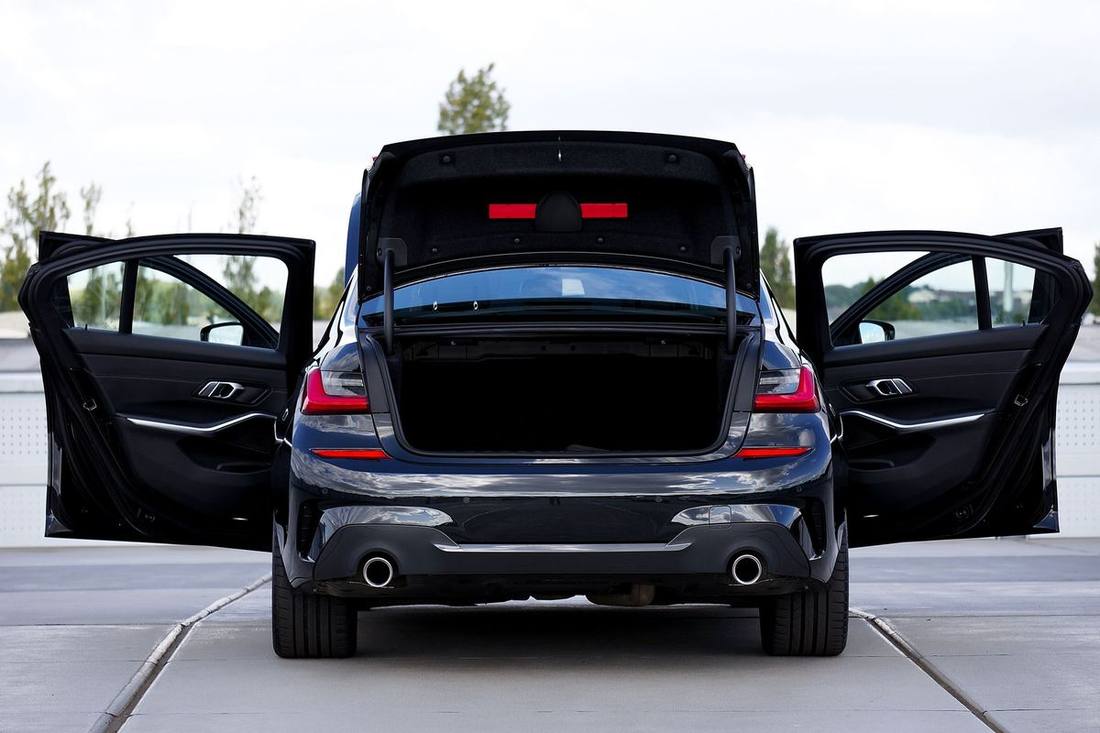
The fleet vehicle's life
A black car leaves the depot at 5 a.m. and returns at 1 a.m., six days a week, with two chauffeurs on split shifts on the busiest vehicles; it makes ten to fourteen trips a day, 200 to 300 kilometres, in Toronto's stop-and-go (the rush hour article's Gardiner at 8 a.m. is a transmission's worst hour), the 401's 120 km/h, the Pearson run's 60 kilometres of highway forty times a week, the potholes of March, the salt of January, and a thousand door cycles a month; the leather is sat on by fifty different passengers a week, the trunk's cargo mat takes two hundred suitcases, the rear climate runs on every trip, and the vehicle cleaning article's detailing is itself a wear (the leather cleaner, the vacuum, the extractor). At five years it has done what a private car does in twenty.
The five-year rule and its exceptions
Five years or the kilometre figure, whichever first: the sedans (the S-Class, the E-Class, the 7 Series, the LS) at five years or 300,000 — the air suspension's struts (the S-Class's AIRMATIC struts are $2,000 each and fail between 250,000 and 350,000), the mild hybrid's battery, the leather's wear at the driver's-side rear seat where the passenger slides in, the infotainment's age; the SUVs (the Escalade, the Navigator, the Suburban) at five years or 350,000 — the magnetic dampers and the air springs, the transfer case, the third row's mechanism, the running boards' motors; the Sprinter at six years or 400,000 — a commercial chassis built for it, the sliding door's rollers and the step's motor the wear items, the seats' vinyl or leather; the stretch at eight years on the coachbuilder's work (the stretch limousine guide — the donor car's drivetrain at low kilometres, the coachwork's electrics and the bar's plumbing the failures, and the Toronto bylaw's model-year limit for a limousine licence the ceiling); the EVs (hybrid and electric article) on the battery's degradation (10 percent at 300,000 on the fleet's data) rather than the year. A vehicle that reaches the rule in good condition is sold to a private buyer or a smaller operator; one that reaches it worn is sold at auction.
What wears, and when
The brakes: pads at 40,000 kilometres in the city (a fleet SUV goes through a set every eight months), rotors every second set; inspected monthly. The tires: the winter tires article's two sets, each lasting 40,000 to 60,000 — a set a year each. The air suspension: the compressor at 200,000, the struts at 250,000 to 350,000, the ride-height sensors at any time — the item that decides the sedan's retirement. The transmission: the fluid at 100,000 (the manufacturer's "lifetime" fluid is not, in a fleet), the unit itself at 250,000 to 400,000 on a bad day. The engine: the oil at 8,000 (severe service), the spark plugs at 100,000, the water pump and the belts at 150,000, the turbos on the Navigator's V6 and the lifters on the Escalade's V8 as the Navigator vs Escalade article notes. The battery: two to three years in a vehicle that idles at curbs and runs the rear climate. The leather: conditioned monthly, worn through at the entry bolster by 300,000 regardless. The electronics: the infotainment's screens and the sensors' failures rise after four years. The trim: the piano-black scratches, the door handles wear bright, the carpet at the driver's heel. The doors: the hinges and the check straps at a thousand cycles a month. The cabin filter: every 15,000 for the salt dust. The alignment: after every pothole — the winter driving article's March.
The maintenance schedule
The manufacturer's severe-service interval — not the normal one — for every item: oil and filter at 8,000 kilometres (every five to six weeks), the brake inspection monthly with the tire pressure and the tread, the tire rotation at 10,000, the cabin filter at 15,000, the engine air filter at 30,000, the brake fluid at two years, the transmission fluid at 100,000, the coolant at 150,000 or five years, the spark plugs at 100,000, the differential and the transfer case fluids at 100,000, the alignment twice a year and after a pothole, the air suspension's inspection at every oil change, the battery's load test in October, the wipers twice a year, the winter tires article's changeover, and the dealer's software updates as they issue; the vehicle cleaning article's weekly detail shares the bay and the schedule, and a vehicle is out of service one day in twenty for the two together.
The depot's mechanic and the dealer
A fleet of twenty or more runs a bay with a licensed technician (the Ontario 310S automotive service technician certificate) who does the oil, the brakes, the tires, the inspections and the diagnostics, and sends the warranty work, the air suspension, the transmission and the software to the dealer (the Mercedes, Cadillac, Lincoln and Ford dealers with fleet accounts and a loaner arrangement); a smaller fleet uses the dealer for everything and an independent for the tires and the brakes; the fleet page's vehicles are under the manufacturer's warranty for the first three years and the extended fleet warranty to five on the vehicles the fleet buys it for.
The pre-trip inspection
Every morning, every vehicle, ten minutes — the a day in the life article's ritual and the Ontario Highway Traffic Act's daily inspection requirement for commercial vehicles (mandatory for the buses, adopted for the whole fleet): the tires (the pressure, the tread, the damage), the lights, the wipers and the washer, the brakes' feel, the fluids, the horn, the mirrors, the seat belts (every one, every position), the child seat anchors if a seat is booked, the doors and the latches, the warning lights, the exhaust, the underbody for a leak, and the interior's condition; a defect that affects safety takes the vehicle out of service and the substitution is sent; the chauffeur signs the inspection on the app and the log holds it.
The inspections the law requires
Toronto's Vehicle-for-Hire bylaw requires an annual safety inspection of every limousine by a licensed inspection station (the Ontario Safety Standards Certificate — the brakes, the steering, the suspension, the tires, the lights, the glass, the body) as a condition of the owner's licence, and a model-year limit for the vehicle to be licensed at all (the Toronto limousine licensing article has the current figure); the province requires the semi-annual inspection and the CVOR's records for the buses and the larger Sprinters (the limo bus article); the GTAA permit requires the City's inspection; and the limo insurance article's underwriter requires the log at renewal. The fleet's own inspection exceeds all of them.
The log
Every vehicle's file: the purchase, the warranty, every service with the date, the kilometres, the parts and the technician, every inspection, every tire set's date and depth, every road call, every incident (the limo accident article), every detail, the child seat installations, and the retirement; the duty of care article's RFP asks for a sample, the underwriter asks at renewal, the City's inspector asks at the annual, and a passenger who asks gets the vehicle's year and its last service date from dispatch.
The road-call rate
The fleet's metric: breakdowns (a vehicle that cannot complete a trip) per 10,000 trips — a professional fleet on the five-year rule and the severe-service schedule runs under 2; a fleet on older vehicles and the normal schedule runs 10 to 20; and the difference is the Pearson passenger who makes the flight or does not. Dispatch tracks it monthly, the mechanic answers for it, and the corporate car service page's account managers quote it.
The substitution
A vehicle that fails — at the depot's inspection, on the road, at the curb — is replaced from the fleet at no charge to the passenger and no change to the fare: the nearest vehicle of the same class or the next class up, dispatched within minutes in the city, the chauffeur's text to the passenger with the new plate, and the cancellation policies article's substitution clause in the contract; a stretch that fails on a wedding morning is the stretch limousine guide's reason to keep two, and a fleet of one vehicle has no substitution and the cheap limo service article says so.
The resale and the fleet's cost
An S-Class bought at $150,000 sells at five years and 300,000 for $35,000 to $45,000; an Escalade at $130,000 for $40,000 to $50,000; a Sprinter at $110,000 for $35,000 at six years; the depreciation is $18,000 to $22,000 a year per vehicle, the tires $3,000, the brakes $2,500, the scheduled maintenance $4,000, the unscheduled $3,000, the detailing's products and labour $4,000, the insurance $8,000 to $12,000, the licence and the inspections $1,500 — $45,000 to $55,000 a year to keep a vehicle to the standard before the chauffeur, the fuel and the dispatch, which is what the how fares are calculated article says a fare pays for and the how much does a black car cost article works into the number.
The corporate RFP's age question
"Maximum vehicle age and kilometres; the maintenance schedule; a sample log; the road-call rate; the substitution policy" — the duty of care article's questionnaire and the corporate car service page's RFP, answered with the five-year rule, the severe-service schedule, a redacted log, the rate and the clause; a travel manager who reads the answers books the fleet whose vehicles will not fail the CFO at Door A.
What a passenger should ask
The vehicle's year (on the fleet page, or from dispatch), its last service (the log), the fleet's age rule (five years), the road-call rate (under 2), the substitution policy (the same class or better at no charge), the inspection (the City's annual and the fleet's daily), and — at the curb — the what to expect on a first ride article's look: no warning lights, no rattles, no worn leather, a ride that is level and quiet. A fleet that answers is the fleet; one that does not is the cheap limo service article's.
Why the ten-year-old sedan is not a bargain
A ten-year-old Town Car or S-Class with 600,000 kilometres on a magnetic sign costs the operator nothing to own and everything to run — the air suspension replaced with coil springs, the transmission on its second rebuild, the leather cracked, the rear climate intermittent, the brakes the cheapest pads, the tires all-seasons because a set of winters costs more than the car is worth, the annual inspection passed on the day and not the month after, the road-call rate in the twenties — and the fare it undercuts by 20 percent is the Pearson passenger's flight when the car does not start at 5 a.m.; the cheap limo service article and the what makes a car a black car article say the same thing from the other side.
A worked vehicle's five years
An Escalade ESV, bought new in March 2021 for a Toronto fleet. Year one: 72,000 kilometres, nine oil changes, two brake sets, a winter set of tires, the dealer's warranty work on a running-board motor, the road-call rate zero. Year two: 75,000, the same, a windshield from a 401 stone, a second winter set, a pothole alignment in March. Year three: 70,000, the magnetic dampers' first fault code (the dealer under the extended warranty), the third row's latch, the battery, the leather's first conditioning failure at the entry bolster. Year four: 68,000, the air spring on the right rear ($1,400), the transfer case fluid, the infotainment's screen replaced, the cabin filter every 12,000 for the salt. Year five: 65,000, the compressor ($1,800), the second air spring, the front bushings, the transmission's shift flare at 340,000 — and the retirement in March 2026 at 350,000 with the sale to a Barrie operator for $42,000. Five years, 350,000 kilometres, 4,900 trips, two road calls (the battery and the windshield), one CFO who never noticed. Its replacement, an ESV bought in February 2026, is on the fleet page.
Fleet maintenance quick reference
| Element | Detail |
|---|---|
| Annual use | 60,000–80,000 km; 10–14 trips a day; 1,000 door cycles a month |
| Retirement | Sedans 5 yr / 300,000 km; SUVs 5 yr / 350,000; Sprinter 6 yr / 400,000; stretch 8 yr on the coachwork; EVs on battery degradation |
| Wear items | Brakes 40,000; tires 40,000–60,000 a set; air suspension 200,000–350,000; transmission fluid 100,000; battery 2–3 yr; leather bolster ~300,000; electronics after 4 yr |
| Schedule | Severe service: oil 8,000; brakes monthly; rotation 10,000; cabin filter 15,000; brake fluid 2 yr; transmission 100,000; coolant 150,000; alignment twice a year + potholes; battery load test Oct |
| Who | Depot's 310S technician + the dealers with fleet accounts; the tire dealer's changeover |
| Inspections | Daily pre-trip (HTA-style, signed on the app); Toronto's annual SSC for the limousine licence; province's semi-annual for the buses; the underwriter's log at renewal |
| Metric | Road-call rate under 2 per 10,000 trips (a professional fleet); 10–20 (an old-vehicle fleet) |
| Substitution | The same class or better, at no charge, within minutes in the city |
| Cost | $45,000–$55,000 a year per vehicle before the chauffeur, the fuel and dispatch |
| Ask | The year, the last service, the age rule, the road-call rate, the substitution policy |
Booking a maintained fleet
The fleet page shows the years; the engine books the vehicle; the corporate car service page's account gets the log and the rate on request; dispatch answers the vehicle's year and its last service to anyone who asks. The five-year rule is the reason the car starts at 5 a.m.






