Defensive driving for the chauffeur, in one paragraph
A Toronto chauffeur's defensive driving is a fleet's annual programme — a classroom day (the principles, the Ontario law, the incident protocol), a closed-course day (the skid pad, the emergency stop, the evasive lane change, the winter tires' limits), and a ride-along assessment with a senior chauffeur — built on the principles of a three- to four-second following distance (six in winter), scanning twelve seconds ahead, an escape route at every moment, smooth inputs (the throttle, the brake and the steering that a passenger's coffee does not notice), and speed for the conditions, not the limit; applied to Toronto's hazards by road — the Gardiner's merges and joints, the DVP's curves and floods, the 401's collector-express transfers and its sixteen lanes at the 400, the QEW's Skyway crosswinds, the 407's speed differential, the streetcar tracks and the King Street corridor, the cyclists on Bloor and Richmond, the pedestrians at Yonge and Dundas, the construction zones, the potholes of March — and to the winter (the winter driving article's black ice at dawn, the whiteout on the 400, the snowbank at the curb) on the winter tires article's tires. The measure is the passenger's comfort and the telematics' smoothness score (the passenger safety article's data), the fatigue rules cap the shift, and the vetting article's road test is the entrance exam.
The fleet trains its chauffeurs to drive in a way that a passenger does not notice — which is the hardest way to drive — and it trains them for the roads they will actually use: the 401 at 6 a.m. in a February squall with the Pearson passenger asleep in the back, the Gardiner's Jameson merge at 5:15 p.m. with the CFO on a call, the King Street streetcar tracks in the rain, the DVP's Bayview curve in the fog, the Skyway's crosswind with a Sprinter full of wedding guests. This guide covers the programme, the principles, the Toronto hazards road by road, the winter day, the night and the fatigue, the smoothness score, the incident response, the province's courses and the fleet's, the instructors, what the passenger notices, and a worked assessment drive.
The fleet's annual programme
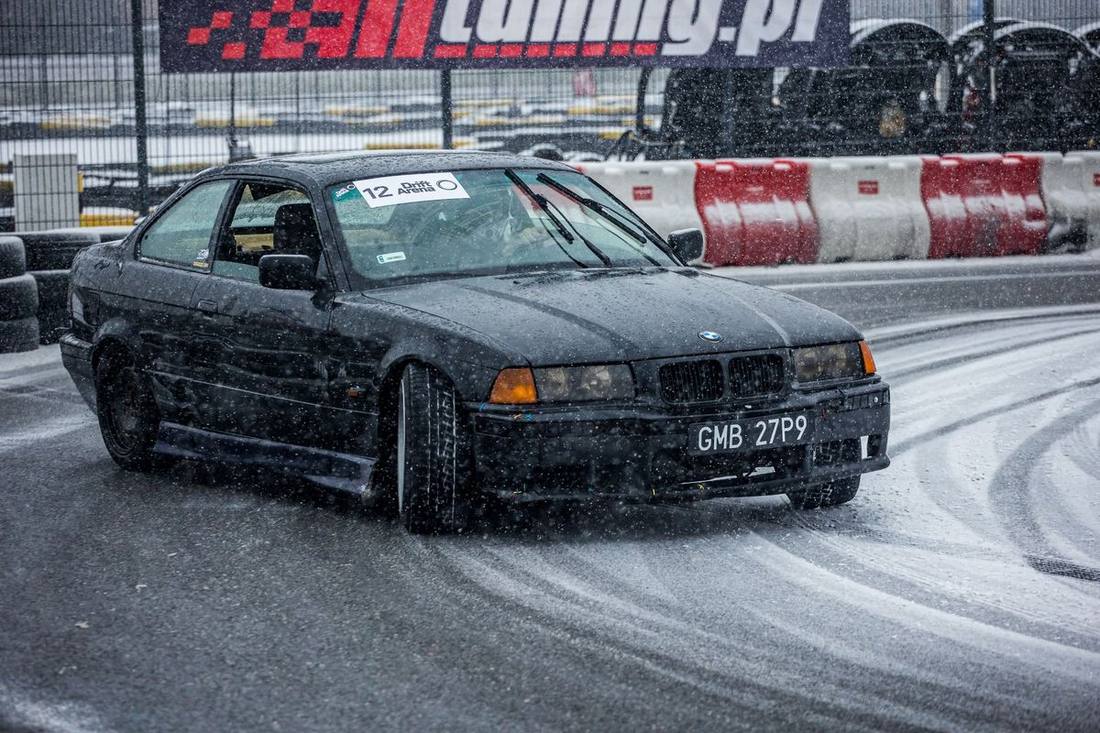
The classroom day (eight hours, every chauffeur, every year): the principles below; the Ontario HTA rules article's law as it applies to a commercial driver (the zero-BAC, the distracted-driving rule and the mount, the move-over law for emergency vehicles, the school bus rule, the streetcar door rule, the bicycle passing distance of one metre); the fleet's route knowledge (the porte-cochères, the lanes, the no-stopping corridors); the incident protocol; the fatigue module; the winter module; the passenger safety article's telematics review of the chauffeur's own year. The closed-course day (at a driver-training facility — the fleets use the Ontario tracks and the winter skid schools): the emergency stop from 80 with and without ABS engagement, the evasive lane change around the cones, the skid pad (the wetted asphalt, the induced oversteer and understeer, the recovery), the threshold braking, the following-distance exercise with the measured gap, the winter tires' limits on the pad in the fall, and the vehicle-specific handling (the S-Class's rear steer, the Escalade's mass, the Sprinter's height). The ride-along assessment (two hours with a senior chauffeur on a working shift): the smoothness, the scanning, the gaps, the curbs, the passenger handling, scored; a failing score means a second day and, if repeated, the sedan roster before the S-Class.
The principles
The following distance: three seconds to the vehicle ahead in the dry (count from the overpass), four in the rain, six on snow or ice — the distance that lets a chauffeur brake smoothly rather than hard, and the one that Toronto's tailgating traffic makes a discipline. The scan: twelve seconds ahead (the light two blocks up, the brake lights three cars ahead, the pedestrian at the corner), the mirrors every five to eight seconds, the blind spot before every move. The escape route: at every moment a place to go — the shoulder, the gap, the lane — and never boxed in behind a truck with a truck beside. The smooth inputs: the throttle squeezed, the brake applied early and eased off at the stop (the "no-nod" stop — the passenger's head does not move), the steering in one motion, the lane change signalled three seconds before and made over three; the S-Class article's glass of water on the armrest is the test. The speed: for the conditions — the visibility, the surface, the traffic, the load — not the posted limit and not the traffic's pace; a chauffeur in the right lane at 100 on the 401 while the traffic does 125 is doing the job. The anticipation: the light that will change, the bus that will pull out, the door that will open, the cyclist who will swerve at the streetcar track, the pedestrian who will step off at Yonge and Dundas — assumed, and planned for.
Toronto's hazards, road by road
The Gardiner: the short merges at Jameson, Spadina and York, the expansion joints that unsettle a vehicle at speed, the lane that ends at the Don, the westbound backup at the Humber, the rush hour article's 5 p.m.; the chauffeur takes the merge lane early and holds the centre lane. The DVP: the Bayview and Bloor curves, the floods at the Bayview underpass in a summer storm (the chauffeur knows the closure and the midtown guide's alternatives), the deer at the Don Mills exit at dawn. The 401: the collector-express transfers (the chauffeur decides at the sign and never at the last gap), the sixteen lanes at the 400 interchange, the trucks in the right two lanes, the Yorkdale and the Allen merges, the Pearson approach on the 427; the winter's worst road. The QEW: the Burlington Skyway's crosswind (a Sprinter in a 60 km/h gust is a two-hands road — the Sprinter guide), the Ford plant's traffic, the Niagara-bound Sunday. The 407: the 407 article's empty road where the speed differential between the chauffeur's 110 and the traffic's 140 is the hazard. The streetcar tracks: King, Queen, Dundas, College, Spadina, Bathurst, St. Clair — the wet rail's grip, the cyclist's front wheel, the streetcar's open door (the law: stop behind it), the King Street corridor's no-stopping and its right-turn rule. The cyclists: Bloor, Richmond, Adelaide, Sherbourne, the one-metre passing law, the door-zone check before every curb stop. The pedestrians: Yonge and Dundas, the Entertainment District at 2 a.m., the Distillery's lanes, the school zones' 30 km/h and the unaccompanied minors article's school doors. The construction: the lane shifts on every arterial every summer, the Eglinton Crosstown's legacy, the Gardiner's rebuild. The potholes: March's — the fleet maintenance article's alignment and the chauffeur's line through the lane.
The winter day
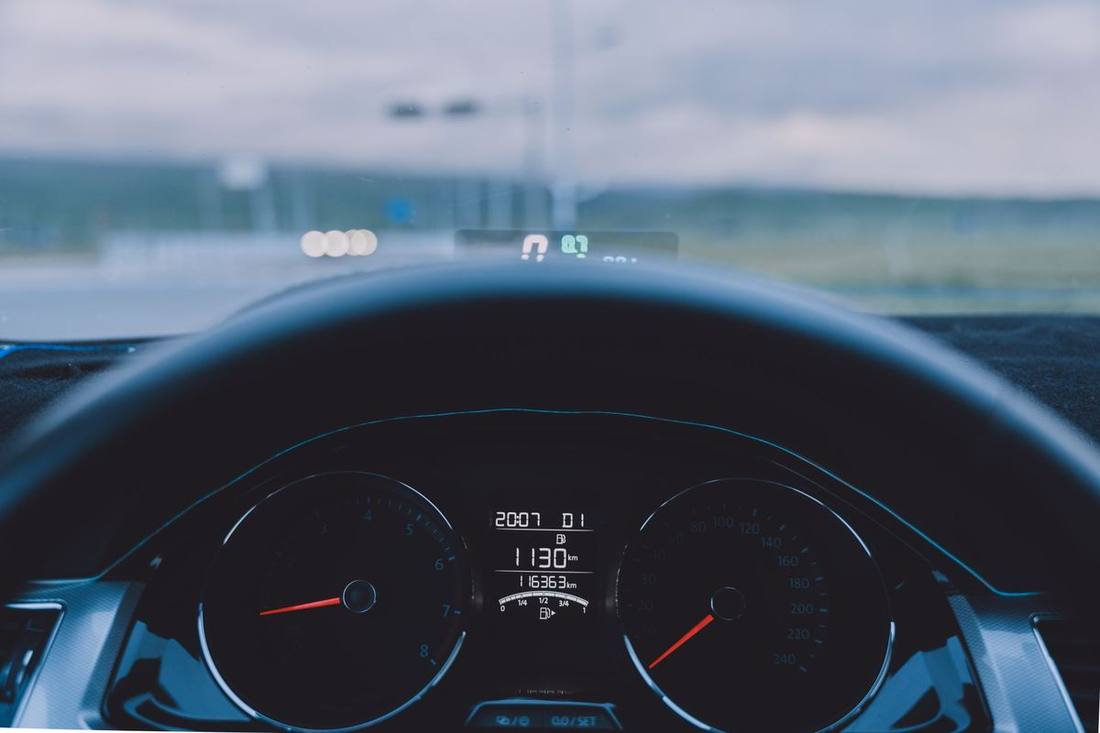
The winter driving article's roads on the closed course: the skid pad in October before the first snow (the fleet's winter tires on, the induced skid, the recovery — the eyes where you want to go, the steering into the skid, the throttle held), the emergency stop on the wetted pad from 60 (the ABS pulsing, the distance measured against the dry), the following-distance exercise at six seconds (the arithmetic — at 100 km/h a car covers 28 metres a second, a winter stop from 100 takes 90 to 120 metres on packed snow, and a three-second gap is 84 metres), the black-ice briefing (the bridge decks, the overpasses, the shaded curves, the dawn after a thaw — the red-eye article's 5 a.m. Gardiner), the whiteout protocol (the 400 north of Barrie in a lake-effect band — the hazards on, the speed to the visibility, the shoulder if it closes, the Muskoka article's cottage runs), the snowbank at the curb (the Escalade article's clearance and the stretch limousine guide's lack of it), and the Pearson winter storm article's storm-day plan.
The night and the fatigue
The night module: the headlights' range against the speed (at 100 km/h the low beams light 60 metres and the stop takes 70 — the chauffeur slows), the glare and the eyes' recovery, the deer on the 400 and the DVP, the Nuit Blanche and late-night article's pedestrians at 3 a.m., the impaired drivers after midnight (the chauffeur's gap and the escape route), and the women travelling alone article's lit-corner pickups. The fatigue rules: the fleet's maximum shift (twelve hours on duty, ten driving), the minimum rest (ten hours between shifts), the split shift's rules, the a day in the life article's breaks, the province's hours-of-service for the bus drivers (the limo bus article), the self-assessment (the yawn, the drift, the missed exit — the chauffeur calls dispatch and dispatch swaps), and the telematics' hours log that dispatch reads before assigning the 1 a.m. run.
The smoothness score
The passenger safety article's telematics unit records every acceleration, brake and cornering event above a threshold (the g-force that spills a coffee), and the fleet scores each chauffeur weekly — the events per hundred kilometres, the speed over the limit, the following distance where the forward camera measures it, the idling — and posts the score to the chauffeur's file; the S-Class and the corporate accounts' regulars go to the top scores, the ride-along assessment is triggered by a falling one, and the fleet's coffee test (the senior chauffeur's cup on the console for the assessment drive) is the human version. A passenger who never notices the driving has ridden with a chauffeur in the top quartile.
The incident response
The limo accident article's protocol, drilled: the vehicle to the safest place (the shoulder, the exit, not the live lane), the hazards, the passenger's safety first (the seat belts, the injuries, the 911 if needed), the dispatch call (the location, the passengers, the vehicle), the other party (the exchange of information, no admission, the photographs), the police where the law requires (injury, damage over the reporting threshold, a hit-and-run), the collision reporting centre within 24 hours, the passenger's onward trip by the substitute vehicle dispatch sends, the insurer's notice, the telematics' record preserved, and the chauffeur's statement to the fleet within the shift; the passenger safety article's first aid and CPR training is part of it, and the AED in the fleet's SUVs.
The province's courses and the fleet's
Ontario's Ministry-approved driver improvement and defensive driving courses (the Canada Safety Council's Defensive Driving Course, the National Safety Council's, the fleet-safety providers' — the Ontario driver training page lists the approved schools) are the base the fleets adopt; the fleet's own programme adds the Toronto route knowledge, the vehicle-specific handling, the winter skid day, the passenger-comfort standard and the telematics review; the becoming a chauffeur article says a candidate who arrives with a defensive driving certificate has a head start and the vetting article's road test is where it shows.
The instructors
The fleet's senior chauffeurs (ten years and a clean telematics record, trained as instructors by the safety providers), the closed-course facility's professional instructors (the racing-school and the skid-school staff), the winter driving schools' (the fleets book the Ontario skid schools' fleet days in October), and the passenger safety article's first-aid trainers; the corporate accounts' own safety officers audit the programme on the duty of care article's schedule.
What the passenger notices
Nothing — which is the standard: no lurch at the light, no late brake at the off-ramp, no lane change that moves the shoulders, no speed that feels fast, no horn, no gesture at the driver who cut in, no phone, no music, no comment on the traffic; the coffee stays level, the laptop stays open, the sleeper stays asleep, and the what to expect on a first ride article's passenger arrives at the porte-cochère having thought about the meeting and not the drive. The chauffeur vs driver article says this is the skill the word names.
A worked assessment drive
A chauffeur's annual ride-along, a Tuesday in November, 6 a.m., a senior chauffeur in the front passenger seat with a full coffee on the console. The Rosedale pickup (the red-eye article's passenger asleep by Bloor); the Bayview on-ramp to the DVP (the merge lane taken early, the gap chosen, the signal at three seconds); the DVP's Bloor curve in the dark on a wet road (the speed 90 in a 90, the four-second gap, the scan to the brake lights at the Don Mills exit); the Gardiner's Spadina merge (the centre lane held, the escape route to the left noted aloud); the 427's transfer to the 409 (decided at the sign); the Terminal 1 Door A departures curb (the approach in the right lane 500 metres out, the stop with no nod, the coffee at the same level it started). 31 minutes, zero telematics events, the coffee unspilled, the passenger woken by the chauffeur's "Terminal 1, Ms. Reyes." Score: 97. The senior chauffeur's one note: "You checked the mirror at seven seconds on the Gardiner; make it five."
Defensive driving quick reference
| Element | The standard |
|---|---|
| Programme | Annual: a classroom day; a closed-course day (skid pad, emergency stop, evasive change, winter limits); a two-hour ride-along assessment, scored |
| Following distance | 3 s dry; 4 s rain; 6 s snow / ice (at 100 km/h, 3 s = 84 m; a winter stop from 100 = 90–120 m) |
| Scan | 12 s ahead; mirrors every 5–8 s; blind spot before every move |
| Inputs | Squeezed throttle; early brake eased to a no-nod stop; one-motion steering; signal 3 s, change over 3 s |
| Speed | For the conditions, not the limit or the traffic |
| Toronto roads | Gardiner merges / joints; DVP curves / floods; 401 transfers / the 400's 16 lanes; QEW Skyway wind; 407 differential; streetcar tracks and the King corridor; cyclists (1 m); Yonge-Dundas pedestrians; construction; March potholes |
| Winter | Skid day in October on winter tires; black ice at dawn on bridges and shaded curves; whiteout protocol on the 400; the snowbank at the curb |
| Night / fatigue | Headlight range vs speed; 12 h on duty / 10 h driving max; 10 h rest; the self-assessment and the swap |
| The measure | The telematics smoothness score weekly; the coffee test; the S-Class to the top quartile |
| Incident | Safest place; passengers first; dispatch; the exchange; police where required; the reporting centre in 24 h; the substitute; the record |
| The passenger | Notices nothing |
Booking a trained chauffeur
Every chauffeur on the fleet page's vehicles has passed the programme this year; the engine books them; the corporate car service page's account can see the programme's outline and the fleet's smoothness data on request. The coffee will stay level.






