Winter tires on black cars, in one paragraph
Ontario does not require winter tires (Quebec has since 2008, from December 1 to March 15; Ontario requires insurers to offer a discount for them and nothing else), and a professional Toronto black car fleet fits them anyway — every sedan, SUV and Sprinter on tires carrying the three-peak mountain snowflake symbol from November 1 to April 15, no all-seasons in winter, no studs (Toronto's roads are bare more days than not), a tread depth of 6/32-inch minimum (the law's 2/32 is a summer number), a second set of rims so the changeover is a morning at the depot, pressures checked weekly in the cold, and the Michelin X-Ice, Bridgestone Blizzak, Nokian Hakkapeliitta, Continental VikingContact and Pirelli Scorpion Winter as the brands. The reason is physics — an all-season's rubber hardens below 7 degrees and a winter tire's stays soft, and the stopping distance on a cold, wet or icy road is 30 to 50 percent shorter — and the winter driving article covers the chauffeur who drives on them; the sedan vs SUV article says all-wheel drive is not a substitute; the duty of care article's RFP asks; and a passenger can check the sidewall at the curb.
The fleet's winter-tire rule is one of the standards a passenger never sees and always benefits from: the sedan that stops in time on the Gardiner's black ice at 5:40 a.m., the SUV that holds the 401's lane in a squall, the Sprinter that climbs a hall's unplowed lot with fourteen guests aboard — and it costs the fleet two sets of tires and a second set of rims per vehicle, a morning's changeover twice a year, and the storage, which is why the cheap operator runs all-seasons and calls them "all-weather." This guide covers what Ontario requires and does not, what the fleet does instead, the physics, the symbol, the tread depth, the brands and the sizes, the changeover and the storage, the pressure and the inspection, the all-wheel drive myth, the insurance discount and the underwriter, the corporate RFP, what the passenger can check, the fleet's winter checklist beyond the tires, and a worked changeover morning.
What Ontario requires, and does not
Nothing, for tires: the Highway Traffic Act requires a minimum tread of 2/32-inch (1.5 millimetres) year-round and forbids studded tires south of the northern districts (Parry Sound and north may use them from October to April), and since 2016 the province has required every auto insurer to offer a discount (typically 2 to 5 percent) to drivers who fit winter tires — that is the whole of Ontario's winter-tire law. Quebec's is the contrast: winter tires with the three-peak mountain snowflake mandatory on every passenger vehicle and taxi from December 1 to March 15, a fine of $200 to $300 without them, and a measurable drop in winter collisions since 2008 that the Ministry of Transportation's winter driving page cites when it recommends them. British Columbia requires them on the mountain highways. Ontario recommends and leaves it to the operator, and the Toronto limousine licensing article notes that the City's bylaw does not require them either.
What the fleet does instead
Every vehicle on winter tires from November 1 to April 15 (the dates move a week for an early or a late season; the trigger is the seven-degree average, not the calendar); the three-peak mountain snowflake symbol on every sidewall — not the "M+S" mud-and-snow mark that an all-season carries and that means nothing about cold; no all-seasons and no "all-weather" tires (the all-weather with the snowflake is a compromise the fleet does not make on a vehicle carrying passengers on the 401 at speed); no studs (a studded tire is worse on the bare, wet pavement Toronto has most winter days and is illegal in the city); a tread depth minimum of 6/32-inch (4.8 millimetres) — a winter tire's snow performance falls off below that, and the fleet replaces at 6/32 where the law would allow 2/32; two sets of rims per vehicle so the changeover is a wheel swap and not a remount; the pressures checked weekly (a tire loses a pound per five degrees, and a December cold snap drops a 35-psi tire to 30 — the fleet sets the winter pressures to the door-jamb figure plus two); and the fleet maintenance article's log records every set's date, depth and rotation.
The physics
An all-season tire's rubber compound is designed for a range that centres on 20 degrees; below 7 it hardens, loses its grip on a cold road (dry, wet or icy) and cannot conform to the surface; a winter tire's compound (silica-rich, with more natural rubber) stays pliable to minus 30 and grips; the tread has thousands of sipes (the fine slits that open under load to bite the snow and pump water off ice) and deep, wide grooves that clear slush; and the result, measured by Transport Canada and the tire makers, is a stopping distance from 50 km/h on packed snow 30 to 40 percent shorter than an all-season's, on ice 20 to 30 percent shorter, and on cold wet pavement 10 to 15 percent — the difference between stopping at the Gardiner's stalled car and joining it. The defensive driving article's chauffeur drives as if on all-seasons and has the winter tire's margin in reserve.
The symbol and the tread depth
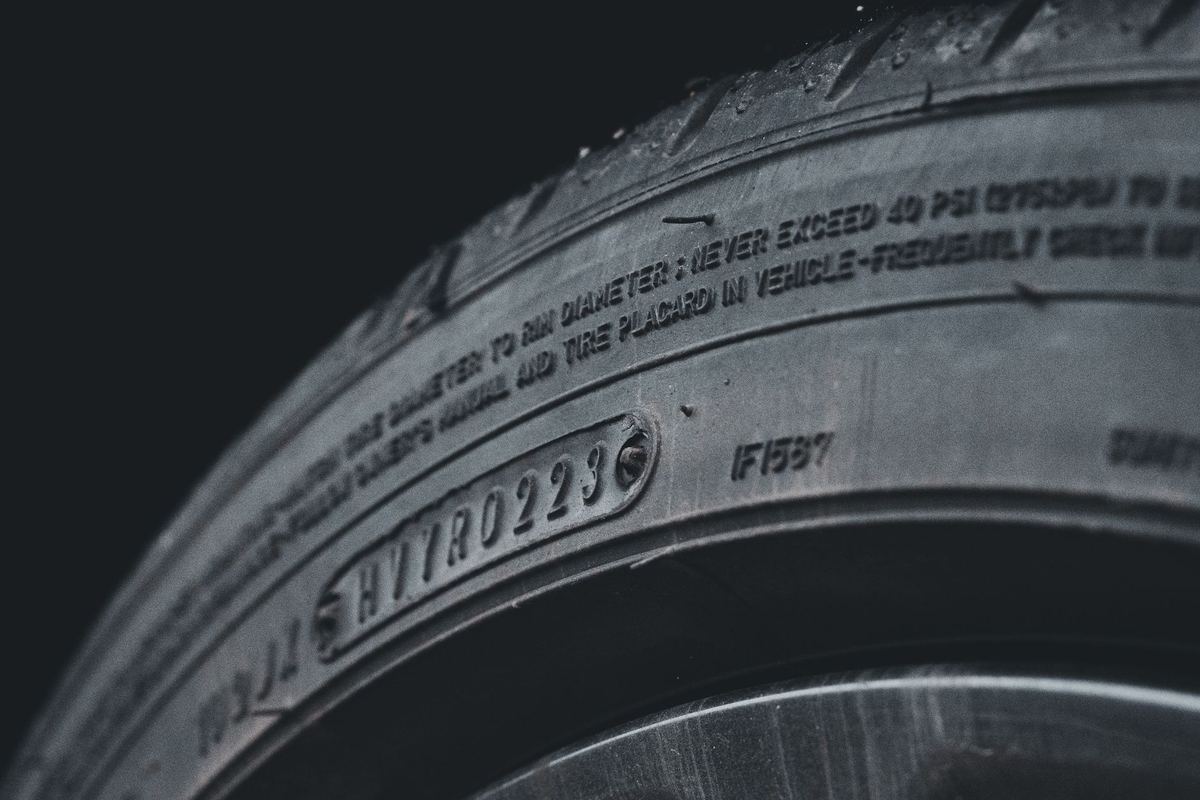
The three-peak mountain snowflake (the "Alpine" symbol — a mountain outline with a snowflake inside) on the sidewall certifies that the tire passed an industry snow-traction test (ASTM F1805) at least 10 percent better than a reference all-season; the "M+S" alone does not; the fleet's chauffeurs check the symbol at the daily walk-around (the a day in the life article) and the depot's technician measures the tread with a gauge at every weekly detail (the vehicle cleaning article's bay shares the schedule) — 6/32 or the tire comes off; a passenger can see the symbol and, with a quarter inserted in the tread, judge the depth (the caribou's nose covered is more than 6/32).
The brands and the sizes the fleet runs
The sedans (S-Class, E-Class, 7 Series, LS): the Michelin X-Ice Snow or the Pilot Alpin (the performance winter for the S-Class's speed rating), the Bridgestone Blizzak WS90, the Nokian Hakkapeliitta R5, the Continental VikingContact 7 — in the 245/45R19 and 255/40R20 sizes the sedans carry, on the second set of 19-inch rims the fleet buys with the car (a smaller rim than the summer 20 or 21 — a taller sidewall for the potholes and a cheaper tire). The SUVs (Escalade, Navigator, Suburban): the Michelin X-Ice Snow SUV or the Latitude X-Ice, the Bridgestone Blizzak DM-V2, the Nokian Hakkapeliitta R5 SUV, the Pirelli Scorpion Winter, the Continental VikingContact 7 — in the 275/50R22 the Escalade carries or the 275/55R20 on the winter rims. The Sprinter: the Michelin Agilis CrossClimate or the Alpin, the Continental VanContact Winter, the Bridgestone Blizzak W965 — a commercial-rated (load range E) winter tire in the 245/75R16 the Sprinter carries. The stretch (stretch limousine guide): the donor car's size with the load rating the coachbuilder specifies. The EVs (hybrid and electric article): the EV-rated winter tires (the Michelin X-Ice Snow EV, the Nokian Hakkapeliitta R5 EV) for the weight and the low rolling resistance the range needs.
The changeover and the storage
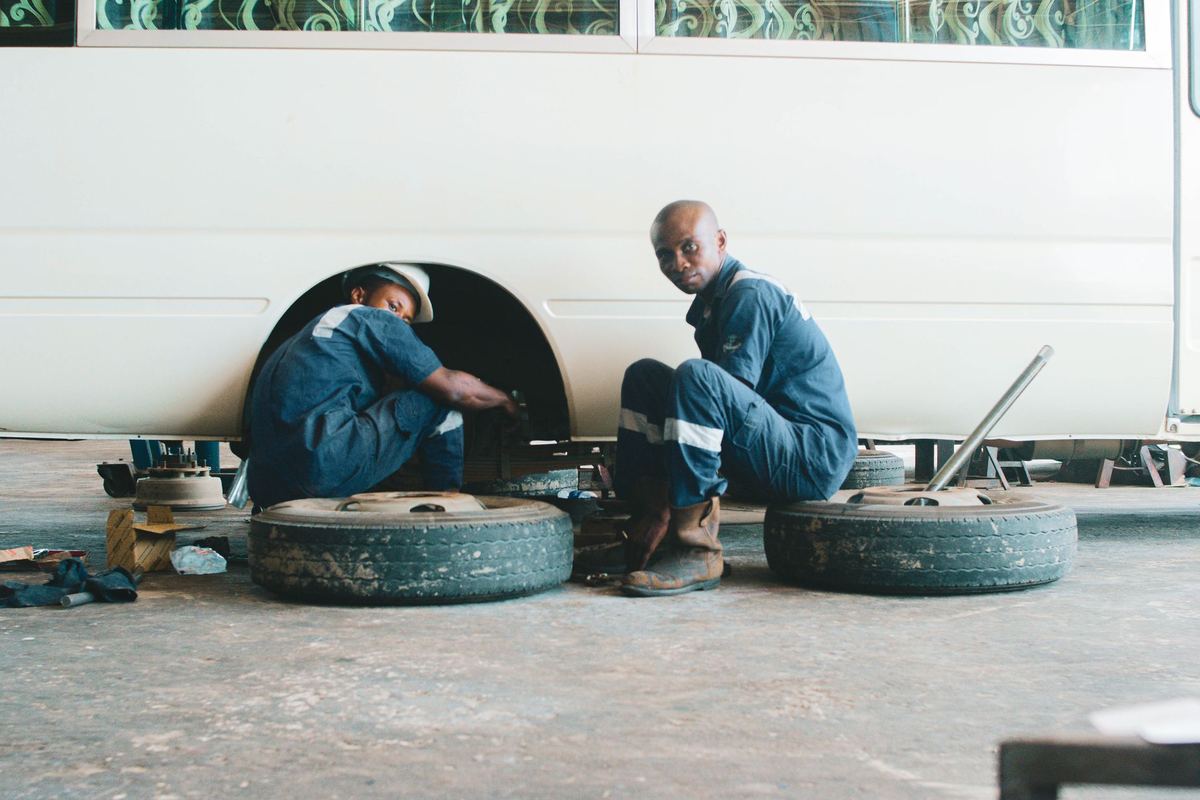
The depot's two weekends at the end of October and the middle of April: the technician and two helpers, the lift, the torque wrench (the lug nuts torqued to the spec and re-torqued after 100 kilometres), the TPMS sensors in both sets of rims so the dashboard reads the winter set, the summer set cleaned, bagged, labelled by vehicle and position and stored on racks in the depot's tire room (or at the tire dealer's storage), the pressures set, the alignment checked on the vehicles due, and the log updated; thirty vehicles is two days, and a vehicle that comes back from a late run is swapped at 5 a.m. before its first pickup. A fleet without a depot uses its tire dealer's changeover service and pays for the storage.
The pressure and the inspection
Weekly through the winter: the pressures with a gauge (not the dashboard's estimate) at the door-jamb figure plus two, the tread depth at the four grooves, the sidewalls for the pothole's bulge (the winter driving article's potholes are the tire's other enemy), the valve stems, and the wheel weights; monthly the rotation front to rear; and at the daily walk-around the chauffeur's look for a flat, a nail and the snow packed in the tread. A tire that fails goes to the dealer that day and the vehicle runs on the spare set from the tire room.
The all-wheel drive myth
All-wheel drive helps a vehicle go — the Escalade pulls away from an unplowed curb that a rear-drive sedan cannot — and does nothing to help it stop or turn; the stopping distance on ice is the tires' and the tires' alone, and an all-wheel-drive SUV on all-seasons stops no shorter than a front-drive compact on the same tires. The sedan vs SUV article's winter argument for the SUV assumes the winter tires; the fleet fits them to every vehicle, all-wheel drive or not, and the Sprinter guide's rear-wheel-drive van on winter tires stops shorter than a four-wheel-drive pickup on all-seasons.
The insurance discount and the underwriter's requirement
Ontario's mandated discount is the small part; the limo insurance article's commercial underwriter is the large part — a fleet's commercial auto policy at $5 million carries the underwriter's loss-control conditions, and winter tires on every vehicle from November to April is one of them at the better insurers (a fleet that cannot show the changeover log at the annual inspection loses the rate or the policy); the limo accident article notes that a winter collision on all-seasons is a question the adjuster asks first.
The corporate RFP's question
The duty of care article's questionnaire and the corporate car service page's RFP have a winter-readiness line — "Are all vehicles fitted with winter tires from November to April? Provide the policy and the log." — and a travel manager who has read the Quebec regulation asks it in Ontario because the physics do not stop at the border; the fleet's answer is the policy, the dates, the brands and the log.
What a passenger can check at the curb
The sidewall for the three-peak mountain snowflake (visible at the curb on any tire), the tread's depth with a glance (a new winter tire's tread is deep and heavily siped; a worn one is smooth), the tire's type (a winter tire's tread looks different — the fine sipes, the blocky pattern), the date (the DOT code's last four digits — a tire more than six years old is replaced regardless of tread), and the question to the chauffeur, who knows the answer because the what to expect on a first ride article's standard includes it; the cheap limo service article describes the sedan on bald all-seasons in January.
The fleet's winter checklist beyond the tires
The winter driving article's vehicle list: the battery load-tested in October (a cold morning kills a weak one), the washer fluid rated to minus 40 and topped daily, the wiper blades' winter set, the coolant's concentration, the block heater or the EV's pre-conditioning, the in-car amenities article's blanket, the snow brush and the scraper, the bag of sand or salt, the booster pack, the emergency kit (the candle, the matches, the flares, the shovel on the SUVs and the Sprinters), the rubber winter mats, the door seals treated, the underbody wash for the salt, the headlight lenses cleaned (the salt film cuts the light by half), and the chauffeur's own kit (the boots, the gloves, the hat) for the Pearson winter storm article's long night.
A worked changeover morning
The last Saturday of October, the depot, 6 a.m.: thirty vehicles, the technician and two chauffeurs on the lift and the floor jack; each vehicle in turn — the summer set off, the lugs' threads cleaned, the winter set from the rack (labelled "S-Class 7 — LF/RF/LR/RR"), the pressures set to 37 (the jamb's 35 plus two), the lugs torqued to 140 newton-metres, the TPMS relearned, the summer set bagged and racked, the log line written (date, vehicle, set, depths 9/32 all round, next inspection); twelve minutes a vehicle, six hours for thirty with the re-torque queue; the first vehicle out for a 1 p.m. wedding on winter tires two weeks before the first snow. In April, the same in reverse, with the winter set's depths measured and the three sets under 6/32 retired.
Winter tires quick reference
| Element | Ontario's law | The fleet's standard |
|---|---|---|
| Requirement | None (an insurance discount must be offered); 2/32 tread minimum; no studs in the south | Winter tires on every vehicle Nov 1–Apr 15 |
| Symbol | — | Three-peak mountain snowflake on every sidewall; M+S alone does not qualify |
| Tread | 2/32 in | 6/32 in minimum; replaced below it |
| Type | — | Dedicated winter (not all-season, not all-weather); no studs |
| Rims | — | A second set per vehicle; TPMS in both |
| Pressure | — | Weekly with a gauge; the jamb figure + 2 psi in the cold |
| Brands | — | Michelin X-Ice / Pilot Alpin; Bridgestone Blizzak; Nokian Hakkapeliitta; Continental VikingContact; Pirelli Scorpion Winter; commercial-rated on the Sprinter; EV-rated on the EVs |
| Changeover | — | Two depot weekends (late Oct, mid-Apr); torque + re-torque; storage racked and labelled; the log |
| AWD | — | Helps go, not stop; winter tires on every vehicle regardless |
| Insurance | The discount | The underwriter's loss-control condition; the log at the annual inspection |
| The passenger | — | Check the symbol, the tread, the DOT date; ask the chauffeur |
Booking a winter-ready car
Every vehicle on the fleet page is on winter tires from November to April; the engine books it; the corporate car service page's account gets the policy and the log on request; the Pearson page's 6 a.m. February run is the reason. Check the sidewall at the curb.






