Hybrid and electric black cars, in one paragraph
Hybrid and electric black cars are in Toronto's fleets now: the hybrids (the Lexus ES 300h and LS 500h, the Toyota Sienna hybrid van, the Mercedes S 580e plug-in) that change nothing for the passenger and cut the fleet's fuel by a third, and the battery EVs (the Tesla Model S and Model X, the Mercedes EQS sedan and SUV, the BMW i7, the Cadillac Lyriq and the arriving Escalade IQ, the Lucid Air) with 400 to 600 kilometres of rated range that becomes 250 to 400 in February (the 30 to 40 percent winter loss from the cabin heat and the cold battery), charged at the fleet's depot overnight and topped up at the DC fast chargers on the 401, the QEW and at Pearson between bookings. An EV does the downtown day, the Pearson run and the Niagara trip without a thought, the Muskoka run with a charging stop planned, and the Ottawa run with a charge at Kingston; the fare is the same as the equivalent gas vehicle on the engine; the corporate client's sustainability report gets the trip's emissions figure; and the environment article covers the rest of the fleet's footprint. The fleet page shows which the fleet runs.
The trade's transition is real and uneven: the hybrids came first and quietly (a Lexus hybrid sedan is indistinguishable from the gas version to a passenger and saves a fleet a third of its fuel), the EVs came next to the fleets with depots and chargers (a Tesla or an EQS does a downtown day on a single charge and a Pearson run four times over), and the SUV-sized EVs a corporate client can book with the bags are arriving as the Escalade IQ, the EQS SUV and the Model X reach the fleets. This guide covers the vehicles in the fleets, the range on paper and in February, the charging and the time, a chauffeur's day in an EV, the passenger's experience, the Pearson run, the long-distance runs, the corporate ask, the fare, the incentives and the fleet's cost, the honest state of the transition, and a worked EV day.
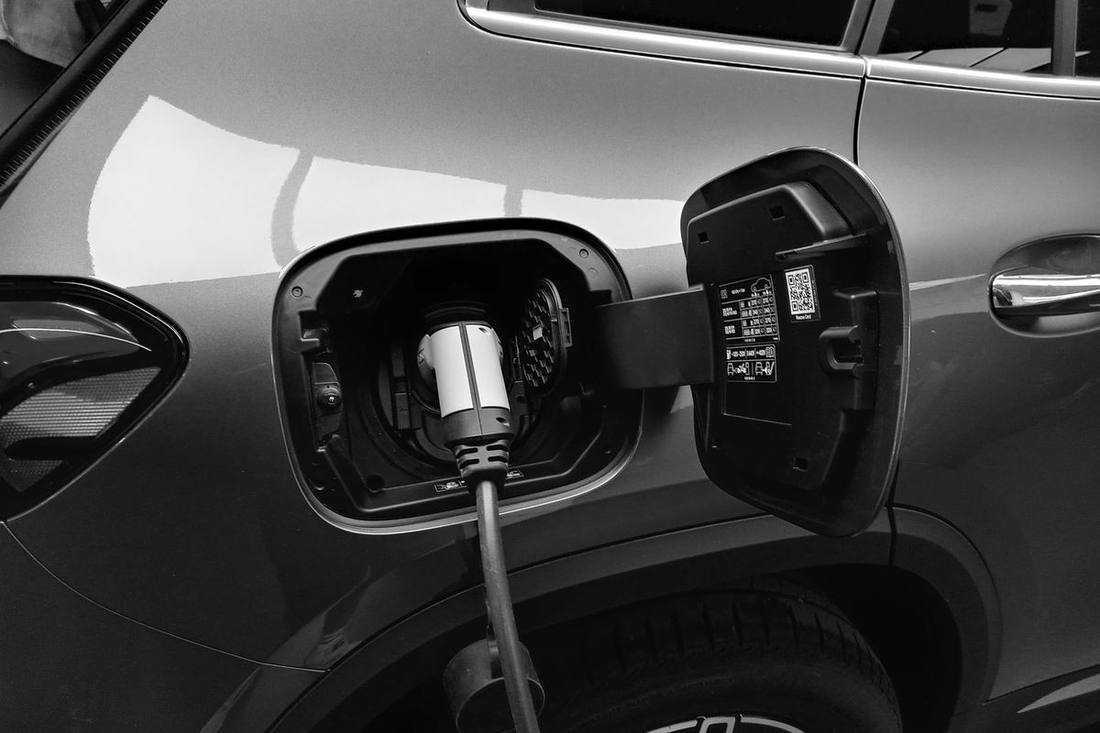
The vehicles in the fleets
Hybrids: the Lexus ES 300h (the fleets' workhorse — 5.0 litres per hundred, a sedan's trunk), the Lexus LS 500h (the flagship hybrid — the S-Class article's rival), the Toyota Sienna hybrid (the seven-passenger van some fleets run as the Sprinter's small sibling — 6.5 litres per hundred), the Toyota Highlander and Grand Highlander hybrids (the SUV-shaped economy choice), the Lincoln Aviator Grand Touring plug-in, the Mercedes S 580e plug-in (100 kilometres electric, then the V6). EVs: the Tesla Model S (the first fleet EV — 600 kilometres rated, the Supercharger network, a trunk plus a frunk) and the Model X (the SUV with the falcon doors that porte-cochères hate — 550 kilometres), the Mercedes EQS 450 and 580 sedan (the S-Class's electric sibling — 550 to 650 kilometres, the Hyperscreen, the rear seat) and the EQS SUV (the seven-seat — 500 kilometres), the BMW i7 (the 7 Series electric — 500 kilometres, the theatre screen), the Cadillac Lyriq (the mid-size — 500 kilometres) and the Escalade IQ (the full-size — 700 kilometres rated, arriving), the Lucid Air (the range leader — 800 kilometres rated), the Genesis G80 Electrified and GV70 Electrified, the Audi e-tron GT and Q8 e-tron, the Polestar 2 in a few. The what makes a car a black car article says an EV is a black car by the same standards — black, clean, licensed, chauffeured.
The range: on paper and in February
Rated ranges (Natural Resources Canada's figures) assume 20 degrees and gentle driving; a Toronto black car runs at minus 15 in January with the cabin at 22, the seats heated, the defroster on and the 401 at 110, and the range drops 30 to 40 percent — a 600-kilometre Model S is a 380-kilometre car in February, a 550-kilometre EQS a 350, a 500-kilometre i7 a 320 — which is still three Pearson round trips and a full downtown day, but is not Ottawa without a charge. A heat pump (the EQS, the i7, the newer Teslas) cuts the loss to 25 percent; pre-conditioning the battery and the cabin on the depot charger before the first pickup (the chauffeur's app does it) saves another 10; the winter driving article's storm-day buffers apply to the range as they do to the time. From April to November the rated range is nearly real.
The charging
The fleet's depot: Level 2 chargers (7 to 19 kilowatts — a full charge overnight in six to ten hours) at every bay, and a DC fast charger (50 to 150 kilowatts) for the midday top-up. The public DC fast chargers: the Tesla Superchargers (250 kilowatts — 10 to 80 percent in 25 minutes) at the 401's ONroute service centres, along the QEW and at the Yorkdale and Sherway lots; the Electrify Canada, Petro-Canada, Flo and Ivy (Ontario Power Generation's) networks (150 to 350 kilowatts) at the ONroutes, the Canadian Tires and the highway plazas; the chargers at Pearson's garages and the commercial lot (Level 2 — enough for a two-hour wait); and the hotels' Level 2 (the Toronto luxury hotels guide's garages have them). A chauffeur's rule: never below 20 percent, top up at every wait over thirty minutes, and know the nearest fast charger to every airport, arena and hall.
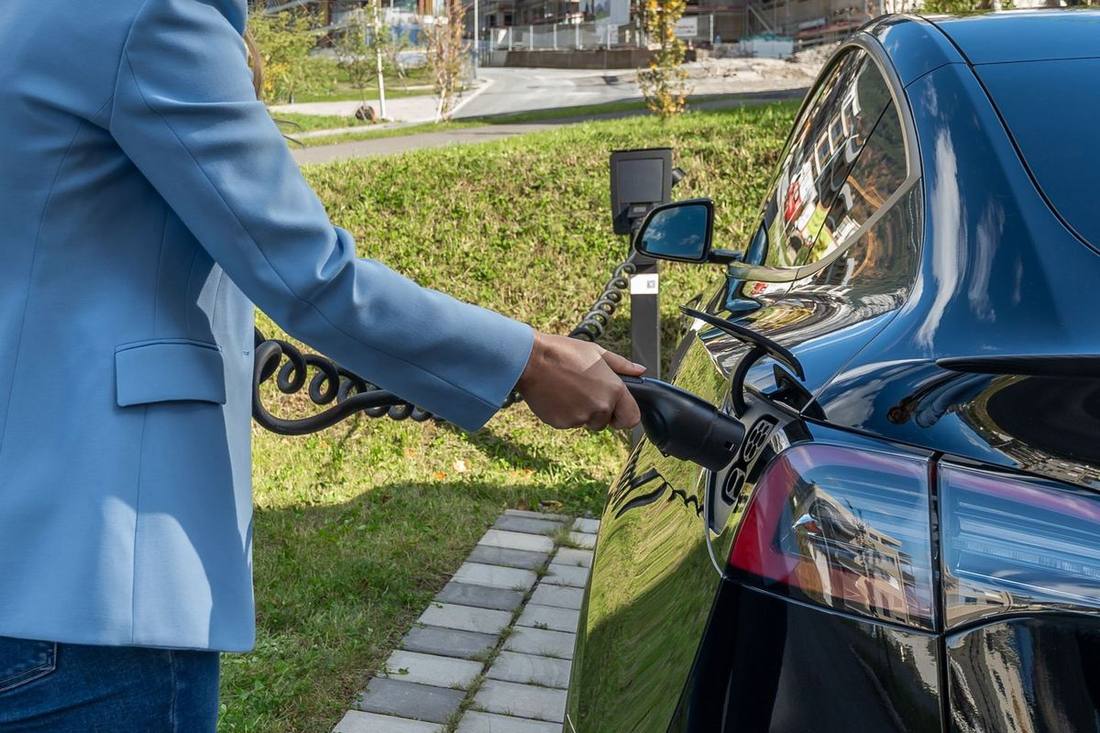
A chauffeur's day in an EV
The car leaves the depot at 100 percent and pre-conditioned; a 6 a.m. Pearson run from Rosedale and back is 60 kilometres (10 percent); a 9 a.m. downtown transfer and a two-hour hourly are 40 kilometres (8 percent, with the cabin idling on the battery at the curb — no engine, no idling bylaw issue); a Mississauga run and back is 60 (10 percent); the Pearson garage's Level 2 during a ninety-minute wait adds 15; a 4 p.m. Vaughan run and a 7 p.m. King West dinner drop are 70 (12 percent); the evening's Pearson pickup is 60 (10 percent); the car returns to the depot at 40 percent after 300 kilometres and eleven hours, and charges overnight. In February the same day ends at 20 percent and the chauffeur takes a 20-minute Supercharger stop at Yorkdale between the 4 p.m. and the 7 p.m. The a day in the life article is the gas version.
The passenger's experience
Silence — an EV at a red light is silent, and at 100 km/h the S-Class article's library is an EV's default; acceleration the chauffeur does not use (the defensive driving article's smooth standard); a cabin pre-heated at the curb without an engine running (the winter driving article's cold-morning pickup is warmer); the in-car amenities article's water, chargers and Wi-Fi the same; the rear seats of the EQS and the i7 the equal of their gas siblings; the Model S's rear a little lower and the Model X's falcon doors a spectacle at a porte-cochère (and a problem in a low garage — the Sprinter guide's clearance question); and the trunk — a Model S's trunk plus frunk takes three large bags, an EQS sedan's 610 litres takes three, an EQS SUV's takes the Escalade's count, and the luggage capacity article has the table.
The Pearson run
Sixty kilometres return from downtown, 10 percent of a summer charge and 15 of a winter's — an EV does it six times on a charge in July and four in January, the Pearson page's Door A lanes take it (the GTAA permit is the same), the garage's Level 2 tops it up during a long wait, and the flight delays article's two-hour delay is a charging opportunity rather than an idling cost. The Billy Bishop page's run is fifteen kilometres.
The long-distance runs
Niagara (130 kilometres each way — the Niagara Falls day trip article, the wine tour article): an EV does the round trip on a summer charge and tops up at the QEW's Supercharger or the falls' garage in winter — yes without a thought. Muskoka (200 kilometres each way — the Muskoka article): a summer round trip on a charge with a lodge's Level 2 overnight; a winter round trip with a 20-minute stop at the Barrie Supercharger — yes with a plan. Blue Mountain (150 kilometres — the Blue Mountain article): the same as Muskoka with the Collingwood chargers. Ottawa (450 kilometres — the long-distance article): a Kingston charge each way — yes with an hour added, or the gas sedan. Montreal (540 kilometres): two charges, or the gas sedan. Prince Edward County (220 kilometres): a Belleville charge in winter. Dispatch assigns the EV to the runs it does without a stop and the gas vehicle to the rest, and tells the booker.
The corporate client's ask
The corporate car service page's clients ask, increasingly, for the EV and the number: the corporate account billing article's statement carries the trip's vehicle and its emissions (zero tailpipe for the EV; Ontario's grid at about 30 grams of CO2 per kilowatt-hour makes an EV's lifecycle figure a tenth of a V8's), the duty of care article's questionnaire has a sustainability section, and a client with a Scope 3 target books "EV where available" on the account and gets the EV on every run the range allows.
The fare
The same as the equivalent gas vehicle — an EV sedan is the sedan's fare, an EQS SUV or an Escalade IQ the SUV's, on the engine for the date — because the fleet's saving on fuel is offset by the purchase price and the charging time, and the how much does a black car cost article's arithmetic is the same; a fleet does not charge more for the silence or less for the fuel, and the what is included article's inclusions are the same.
Ontario's incentives and the fleet's cost
The federal iZEV rebate (paused in 2025 as its funding ran out; watch the federal programme page) applied to vehicles under a price cap that excluded the S-Class-sized EVs; Ontario ended its provincial rebate in 2018 and offers the green plate's HOV lane access; the fleet's arithmetic is a higher purchase price against a third of the fuel, half the maintenance (no oil, no exhaust, regenerative braking that saves the pads — the fleet maintenance article) and the depot's electricity; the environment article covers the fleet's whole footprint and the Toronto limousine licensing article the City's own EV requirements for vehicles-for-hire as they arrive.
The honest state of the transition
Every Toronto fleet runs hybrids; the larger fleets run EVs for the downtown and the airport work and gas or hybrid for the long-distance and the winter-storm days; the SUV-sized EVs are arriving and the Escalade IQ will change the corporate fleet when it lands in numbers; the stretch and the Sprinter have no electric versions in the fleets yet (the eSprinter's range is a city shuttle's); a passenger who asks for an EV gets one for a downtown or an airport booking in most fleets and a plan for the rest; and the fleet page says what this fleet runs today.
A worked EV day
An EQS 580 sedan, a Thursday in January. 5:15 a.m.: the depot at 100 percent, pre-conditioned. 5:45: a Forest Hill pickup to Terminal 1 (32 kilometres, 8 percent in the cold). 7:30: Terminal 1 to a Bay Street tower (30 kilometres, 7 percent). 9:00–11:30: an hourly for a Bay Street executive — three stops, 20 kilometres, the cabin warm at every curb on the battery (5 percent). 12:00: a Yorkdale Supercharger, 25 minutes, 60 to 95 percent, the chauffeur's lunch. 1:30: a Mississauga transfer and back (55 kilometres, 12 percent). 4:00: a Vaughan pickup to a King West dinner (40 kilometres, 9 percent). 7:30: a King West to Pearson pickup and a Rosedale drop (65 kilometres, 14 percent). 9:30: the depot at 55 percent after 240 kilometres. The passengers noticed the silence and the warm cabin; the chauffeur noticed the 25 minutes at Yorkdale; the fleet noticed the fuel bill.
Hybrid and EV quick reference
| Element | Detail |
|---|---|
| Hybrids in fleets | Lexus ES 300h, LS 500h; Toyota Sienna, Highlander hybrids; Lincoln Aviator PHEV; Mercedes S 580e — nothing changes for the passenger |
| EVs in fleets | Tesla Model S / X; Mercedes EQS sedan / SUV; BMW i7; Cadillac Lyriq / Escalade IQ (arriving); Lucid Air; Genesis, Audi, Polestar in a few |
| Rated range | 400–800 km |
| February range | 30–40% less (25% with a heat pump; pre-conditioning saves 10 more) — 250–400 km |
| Charging | Depot Level 2 overnight; depot DC midday; Superchargers / Electrify / Petro-Canada / Flo / Ivy on the 401 and QEW; Pearson and hotel Level 2 during waits |
| Chauffeur's rule | Never below 20%; top up at every wait over 30 min; know the nearest fast charger to every venue |
| Pearson | 60 km return — 6 runs on a summer charge, 4 in winter |
| Long distance | Niagara yes; Muskoka / Blue Mountain / the County with a planned stop in winter; Ottawa with a Kingston charge; Montreal the gas sedan |
| Passenger | Silence; a pre-warmed cabin without an engine; the same amenities; the same rear seats in the EQS and i7; the Model X's doors at a porte-cochère |
| Fare | The same as the gas equivalent |
| Corporate | "EV where available" on the account; the trip's emissions on the statement |
Booking a hybrid or an EV
The fleet page says which the fleet runs; the engine takes "EV preferred" in the notes and dispatch assigns it where the range allows; the corporate car service page's account sets it as a default. Ask, and expect a yes downtown, a yes to Pearson and Niagara, and a plan for the rest.






