Receipts and expense reports, in one paragraph
A compliant black car receipt in Ontario shows the operator's legal name and HST registration number, the date, the route (pickup and drop-off), the fare's components (the base fare, the wait time, the 407 toll at cost, the extras), the HST at 13% as its own line, the gratuity (set at booking, itemised), and the total — because the employer's finance team claims the HST back as an input tax credit only with the HST number and the tax shown, and because the CRA's rules on travel expenses want the date, the purpose and the amount. The receipt is emailed within minutes of the trip as a PDF, and a corporate account's monthly statement and CSV replaces the individual receipt for employees who ride on the account; the receipt imports into Concur, Expensify, Brex, Ramp, Navan and Zoho by forwarding or by the CSV. The traveller's common mistakes — the app receipt with no HST number, the cash gratuity unreceipted, the 407 toll queried — are avoidable, and the corporate account avoids all of them.
Every business traveller has filed an expense report with a car receipt that finance sent back — no tax number, no route, a gratuity that does not match, a toll line no one understands — and every finance team has written off an input tax credit because the receipt did not support it. The black car receipt is a small document that does a lot of work: it is the traveller's proof of the expense, the employer's proof for the tax credit, the CRA's proof of a deductible travel cost, and the audit trail for a corporate account's statement. This article explains what the receipt contains and why, how it is delivered, the systems it imports into, the mistakes travellers make and how to avoid them, the corporate account that removes the individual receipt altogether, the CRA's rules that sit behind all of it, and a worked example of a receipt from booking to expense report.
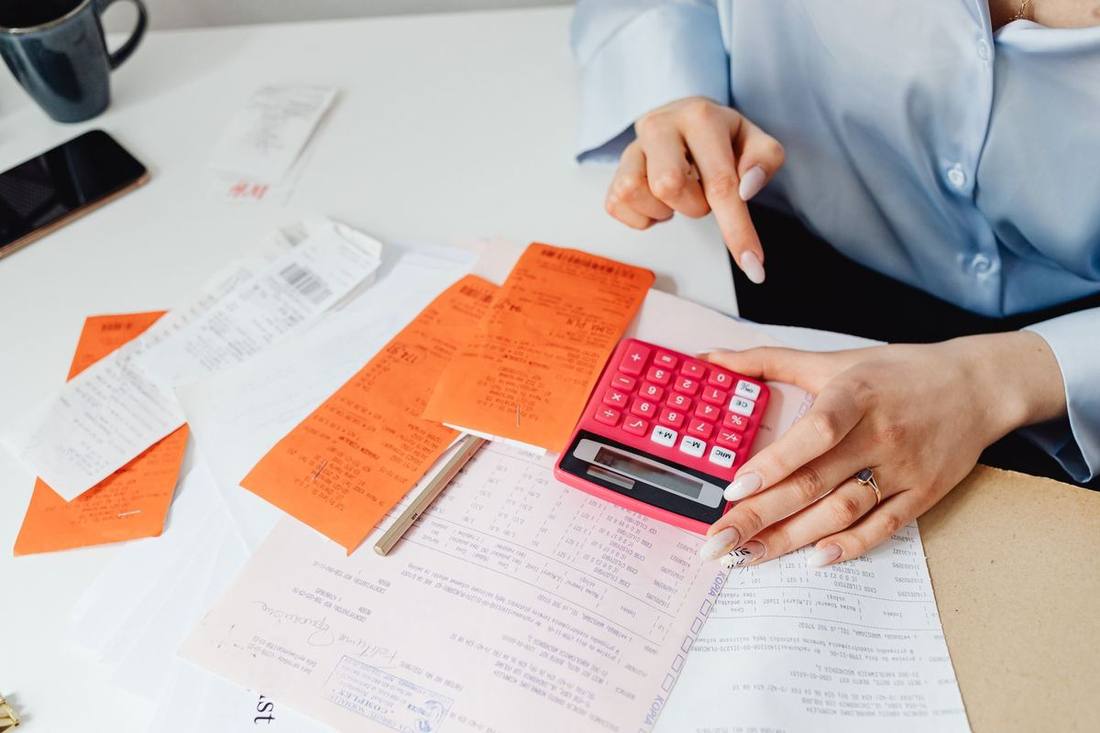
What a compliant receipt contains
Ontario's HST rules require a supplier's receipt for a taxable supply over $30 to show the supplier's name (or business name) and HST registration number, the date, the total amount, and the tax amount or a statement that the total includes HST; over $150 it must also show the recipient's name, the terms of payment and a description of the supply. Our receipt shows, on every trip regardless of amount: the operator's legal name and HST number; the passenger's name (and the company's on an account); the booking reference; the date and the pickup time; the pickup and drop-off addresses (the route is the description of the supply and the expense's purpose); the vehicle class; the fare's components — the base fare, any wait time beyond the wait policy's inclusion, the 407 toll at cost where the account or the passenger approved it (the 407 article), any extras such as a child seat; the HST at 13% on the taxable components as its own line; the gratuity set at booking as its own line; the total; and the payment method. The what drives the fare article explains the components and the cheap limo service article why they are all shown.
Why the HST number matters
A business registered for HST recovers the HST it pays on business expenses as an input tax credit, and the CRA requires the supplier's registration number on the receipt for a claim over $30. A receipt without it — the typical rideshare app receipt for a driver who is a small supplier, or a taxi receipt scrawled by hand — cannot support the credit, and a company with hundreds of trips a year writes off 13% of them. The black car vs Uber Black article counts this among the differences, and a finance team that has learned it insists on operators whose receipts carry the number.
The gratuity and the 407, itemised
The two lines finance queries most: the gratuity and the toll. The gratuity is set at booking — a percentage or an amount, or the account's default — and appears as its own line on the receipt, so that it matches the policy and is not a cash tip the traveller cannot prove; the gratuity guide explains the conventions and the etiquette article the reason a cash tip on top is the traveller's own. The 407 toll appears at cost, labelled, with HST applied only where the 407 applies it, and a note that the route was approved — so that finance sees a toll that saved forty minutes rather than a mystery charge.

How the receipt is delivered
The receipt is emailed as a PDF within minutes of the trip's end to the passenger's address and, on an account, to the booker's or the travel desk's; it is also in the passenger's booking history for download at any time, and a lost receipt is re-sent by a text to dispatch. A corporate account's monthly statement collects every trip's receipt as lines with the cost centre, and the CSV export carries one row per trip with every component in its own column — the corporate account billing article shows the format.
The expense systems it imports into
Concur: forward the PDF to the Concur receipts address, or upload; the OCR reads the total, the date and the vendor, and the traveller adds the HST from the line. Expensify: forward to receipts@expensify.com; SmartScan reads it. Brex and Ramp: the card transaction matches the emailed receipt automatically when the trip is paid on the card, and the CSV imports for account-billed trips. Navan (formerly TripActions): the receipt attaches to the trip. Zoho Expense, QuickBooks, Xero, Dext: forward or upload; the HST line is read where the OCR recognises it and entered by hand where it does not. For a corporate account, the CSV imports into all of them in a batch, with the cost centre as a column, and the traveller files nothing.
The traveller's common mistakes
The app receipt without an HST number (avoid the app for business trips, or accept the lost credit). The gratuity added in cash and unreceipted (set it at booking). The 407 toll queried (the receipt labels it and notes the approval; the 407 article is the answer to forward). The personal trip booked on the company profile (the profile has a personal card; the corporate travel policy article covers the separation). The receipt filed a month late (it is in the inbox within minutes and in the booking history forever). The shared car split between two travellers from different companies (the receipt can be issued in two parts on request; the hourly vs point-to-point article covers the arithmetic).
The corporate account that removes the receipt
For an employee on a corporate account, there is no expense report for the car at all: the trip is billed to the company, coded to the cost centre at booking, and appears on the monthly statement that finance reconciles once; the employee's only task is to book with the right code. The executive assistants' guide describes the booker's side and the consulting firms article the project-coded version that rebills clients. A company with ten or more travellers a month saves the expense-report labour many times over.
The CRA's rules on travel expenses
The CRA allows the deduction of reasonable travel expenses incurred to earn business income — including ground transportation — supported by receipts showing the date, the amount and the purpose; a route on the receipt (the airport to the client's office) is the purpose in most cases, and a note in the expense system supplies it where it is not obvious. Employees reimbursed under an accountable plan are not taxed on the reimbursement; the receipt is what makes the plan accountable. The CRA's own guidance on business travel expenses is the reference, and a company's finance team reads it so that the traveller does not have to.
A worked receipt: airport to a client's office
Booking: Terminal 1 to a Bay Street tower, premium sedan, 407 not applicable, gratuity 15% set at booking, on a company profile with the "Client X — Toronto visit" cost centre. Trip: landed 3:40, met at Door A at 4:15, the tower at 5:05. Receipt at 5:07 p.m. in the passenger's inbox and the travel desk's: operator's name and HST number; passenger and company; reference; date and time; Terminal 1 → 100 King Street West; premium sedan; base fare; wait time: none; HST 13% on the fare; gratuity 15%; total; charged to the account. Expense report: none — the trip is on the monthly statement under "Client X — Toronto visit", the CSV imports into the company's Concur on the 1st, and the HST is claimed as an input tax credit with the number on the line. The traveller's only action was choosing the code.
Receipts and expenses quick reference
| Item | On the receipt | Why |
|---|---|---|
| Operator's legal name and HST number | Always | Required for the input tax credit over $30 |
| Date, time, booking reference | Always | The expense's date and audit trail |
| Pickup and drop-off addresses | Always | The description of the supply and the expense's purpose |
| Fare components | Base, wait time, 407 at cost, extras | Transparency; finance's queries answered in advance |
| HST 13% | Its own line | The credit's amount |
| Gratuity | Its own line, set at booking | Matches policy; no unreceipted cash |
| Total and payment method | Always | Reconciliation |
| Delivery | PDF within minutes; booking history; CSV on the statement | Never lost; imports anywhere |
| Corporate account | No individual receipt; statement and CSV monthly | The expense report disappears |
Making the receipt disappear
The corporate car service page opens the account that replaces the individual receipt; the booking engine holds every receipt for download; the corporate account billing article shows the statement finance will reconcile.
The receipt for a multi-stop or hourly trip
An hourly booking — a showing day, a roadshow, a client's afternoon — produces one receipt with the hourly rate, the hours (the minimum or the actual, whichever is greater), the stops listed, the 407 and any parking at cost, the HST and the gratuity; finance sees a single line for the day rather than six point-to-point fares. A multi-stop point-to-point trip — a pickup at the office, a stop at the hotel for the client's bag, the airport — shows each stop in the route with the stop charge if any, and the hourly vs point-to-point article explains which the booking should have been.
Foreign currency and the visiting traveller
A traveller from the United States, Britain or Europe paying on a foreign card sees the receipt in Canadian dollars with HST shown, and their expense system converts at the card's rate; the receipt's HST line still matters, because a foreign business registered for Canadian GST/HST — or one using a recovery service — can reclaim it, and a foreign business that is not can at least show the tax as part of the deductible cost. The payment methods article covers the foreign-card terms and the currency shown.
When the receipt needs correcting
A name misspelled, the wrong cost centre chosen at booking, a gratuity the traveller wants changed, a trip that should have gone on the personal card — the receipt is reissued by dispatch on a text or an email, the original voided in the booking history, and the statement corrected before the month closes; a correction after the statement has gone to finance appears as a credit line on the next one. Nothing is corrected by hand on a PDF, which is what an auditor looks for.
Per diems, allowances and the car
Some companies pay a ground-transport per diem rather than reimbursing receipts, and a traveller on a per diem books on a personal card and keeps the receipt for their own records; some pay a flat allowance for the airport run and reimburse the rest at cost; most reimburse at cost against receipts or run a corporate account. The corporate travel policy article suggests the language for each, and the receipt serves all three — as proof of the cost, as the record behind the allowance, or as the line on the statement.
The audit
When a company is audited — by the CRA for its input tax credits, by its own auditors for its expense controls — the black car receipts are among the easiest documents to produce: every one is in the booking history, every one carries the HST number and the route, the statements reconcile to the receipts line by line, and the CSV matches the expense system's import. An auditor who asks for the ground-transport file for a year receives it in an afternoon, which is the whole point of a receipt that does its job.






