Luxury hotels and the chauffeur, in one paragraph
Toronto's luxury hotels — the Four Seasons, the Hazelton, the Park Hyatt and the Windsor Arms in Yorkville; the Ritz-Carlton, the Shangri-La, the St. Regis, the Fairmont Royal York and the King Edward in the core; the Thompson, the Bisha, the Soho and the Ace on King West; the Drake and the Gladstone in Parkdale; the Broadview in the east — each have a front-door choreography a chauffeur learns: where a pre-arranged car waits (the porte-cochère, a lay-by, a side street), how it announces itself (the doorman's board, the concierge's call, the guest's text), who opens which door (the doorman the hotel's, the chauffeur the car's), how the bags move (the bell desk to the trunk), how a discreet arrival is handled (the side or garage entrance, a first name on the board), and how the concierge fits in (booking through the concierge, or a guest's own chauffeur the concierge is told about). The individual articles — the Royal York, the Four Seasons, the Ritz, Shangri-La and St. Regis, the Hazelton and Park Hyatt — cover each door in detail; this is the guide to the manners that apply at all of them.
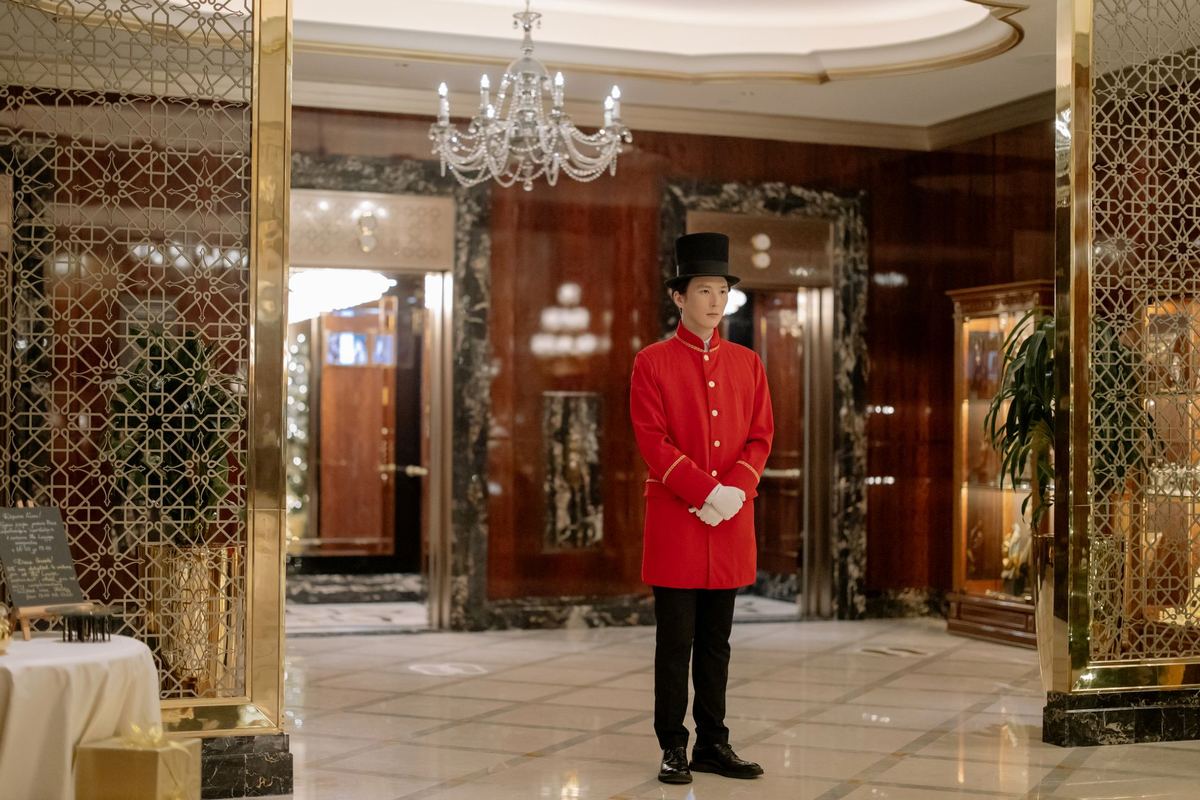
A luxury hotel's front door is a small stage with a cast — the doorman, the bell staff, the valet, the concierge behind the desk — and a script that runs a thousand times a day: the car arrives, the doorman opens the passenger's door, the bell staff take the bags, the guest walks in without breaking stride. A chauffeur bringing a guest to that door, or collecting one from it, joins the cast for two minutes and is judged on whether they know the script: where to stop, when to get out, which door to open, how to tell the doorman whose car this is, how to move the bags, and how to leave without blocking the next arrival. The chauffeurs who work Toronto's luxury hotels daily know each door's version of the script, and this guide describes it — the common manners, the announcement, the bags, the discreet arrival, the concierge's role, the hotel's own cars, each hotel's particulars, the peaks, and a worked arrival and departure.
The common manners
At every door: the car stops where the doorman directs, not where the chauffeur prefers; the chauffeur steps out and stands at the rear passenger door while the doorman opens it (the doorman's right on arrival; the chauffeur's on departure, with the doorman's nod); the chauffeur says to the doorman whose car it is — "Ms. Chen, pre-arranged" — so the doorman can call the guest or the bell desk; the bags go from the trunk to the bell staff's cart and never onto the driveway; the car leaves the porte-cochère the moment the guest is inside, and waits — if waiting is needed — where the doorman says (a lay-by, a side street, the garage's staging lane) rather than in the driveway; and the chauffeur is dressed as the doorman is, which is to say in a dark suit. The etiquette article covers the passenger's side of these manners and the chauffeur vs driver article why a professional knows them.
Announcing a pre-arranged car
A hotel's front door sees hundreds of cars a day, and the doorman's first question of an unfamiliar one is whose it is; a chauffeur who arrives with the guest's name, the pickup time and the confirmation on a phone is welcomed, and one who cannot say is asked to move. For a collection, the chauffeur arrives five minutes early, tells the doorman the name, and — at the hotels that prefer it — waits in the lay-by rather than the driveway until the doorman signals; at the Four Seasons and the Ritz, the doorman calls the room or the concierge; at the Royal York, the guest's text is the signal; at the Hazelton, the concierge walks the guest out. The passenger's confirmation text carries the chauffeur's name, photo and plate, which the doorman can be shown.
The bags
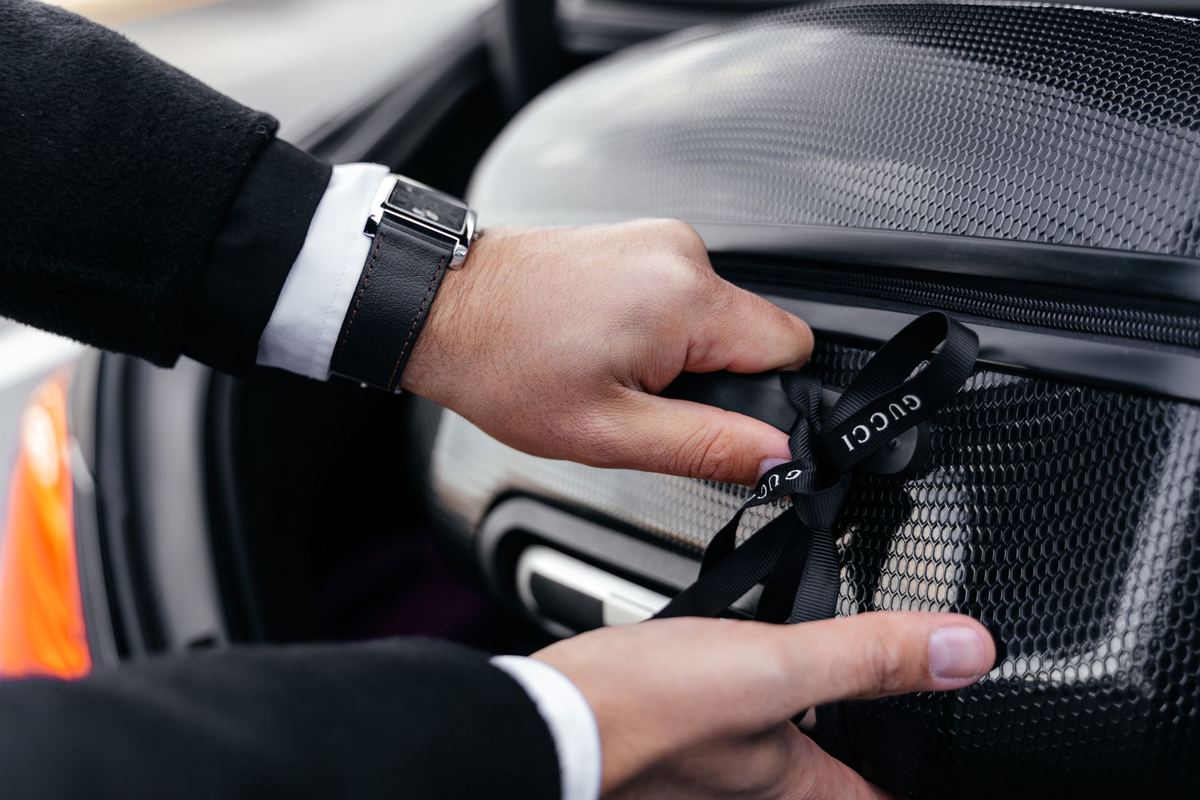
On arrival, the chauffeur opens the trunk and the bell staff take the bags to their cart — the chauffeur does not carry bags across a luxury hotel's threshold, because the bell staff's job is exactly that and the doorman's script depends on it; on departure, the bell staff bring the bags to the car and the chauffeur loads the trunk, checking the count against the guest's word. A guest with a stroller, a wheelchair or golf clubs is the families with luggage article's and the luggage capacity article's planning question, settled before the car is chosen. The lost luggage article covers the guest who arrives without theirs.
The discreet arrival
For a guest who does not want to be seen — the actor during TIFF, the executive whose presence in the city is news, the family with a security concern — every luxury hotel has a second door: the Four Seasons' Bay Street exit and its residential entrance, the Ritz's Simcoe side and its garage, the Shangri-La's Adelaide entrance, the Royal York's York Street and garage entrances, the Hazelton's forecourt itself (which is discreet by design), the King Edward's Leader Lane side; the hotel's security or the concierge arranges it, the chauffeur is told which door and when, a first name or a code goes on the board, and the privacy and discretion article sets the standard. The TIFF guide covers the festival's ten days when every Yorkville door runs this way.
The concierge's role
A guest can book a car three ways: through the concierge (who calls the hotel's preferred operators, of which we are one at several of these hotels), directly through us with the hotel as the pickup (the engine takes the hotel's name and the room number is not needed), or on a corporate account through a travel desk (the corporate account billing article); in the second and third cases the chauffeur tells the doorman and the concierge that the guest has their own car, which the concierge notes so that the hotel's own car is not sent. A concierge who knows a guest's chauffeur by name — as the concierges at the Four Seasons, the Hazelton and the Ritz come to — walks the guest out to the right car without being asked.
The hotel's own cars
Several of the hotels run their own house cars — the Four Seasons' and the Ritz's for guests' short trips, the Shangri-La's and the Hazelton's on request — and a guest choosing between the house car and their own chauffeur weighs the house car's convenience for a ten-minute hop against a chauffeur who stays with them for the day, knows their preferences, and is on their account; the hourly chauffeur page covers the day and the visiting clients itinerary article the pattern. The two coexist at every hotel and the doorman handles both.
Each hotel's particulars
The Four Seasons (Yorkville Avenue): the porte-cochère entered eastbound, the exit onto Bay, the doorman's board, the residential entrance on Yorkville for the discreet arrival — the Four Seasons article. The Hazelton (Yorkville Avenue): the small forecourt, the concierge who walks guests out, the most discreet door in the city — the Hazelton and Park Hyatt article. The Park Hyatt (Avenue Road): the lay-by on Avenue's east side, three cars, the Bloor traffic to leave. The Windsor Arms (St. Thomas): a small canopy on a quiet street, the tea-room's afternoon pickups. The Ritz-Carlton (Wellington): the driveway entered eastbound, four cars, fast valets, the Simcoe side for discretion — the Ritz, Shangri-La and St. Regis article. The Shangri-La (University): the forecourt entered northbound, three cars, the Adelaide side door. The St. Regis (Adelaide at Bay): the short Adelaide lay-by, the butlers who bring the bags. The Fairmont Royal York (Front): the porte-cochère and its queue, the doorman's taxi line to avoid, the York Street and garage entrances — the Royal York article. The King Edward (King East): the King Street door is on the streetcar corridor's eastern end — the pickup is on Leader Lane or Victoria Street, and the doorman knows it. The Thompson, the Bisha, the Soho and the Ace (King West): the Entertainment District guide's side-street doors. The Drake and the Gladstone (Queen West): Queen Street's curb outside rush hour, the Drake's Beaconsfield side. The Broadview (Broadview at Queen East): the Broadview curb.
The peaks at the door
A luxury hotel's porte-cochère has three peaks — the 7–9 a.m. departures, the 3–5 p.m. arrivals (check-in), and the 6–8 p.m. dinner departures — when the driveway holds a queue and a pre-arranged car waits its turn; a chauffeur books the arrival five minutes early and waits in the lay-by, and a guest who is told "the car is in the lay-by on Simcoe" walks the thirty metres rather than waiting for the driveway to clear. Conference days (the conference transportation article), TIFF (the TIFF guide) and PDAC week (the PDAC article) are the peaks on top of the peaks.
A worked arrival and departure
Arrival: a couple from Terminal 1 to the Ritz-Carlton at 4:30 p.m. — the chauffeur enters Wellington's driveway eastbound behind two cars, tells the doorman "Mr. and Mrs. Okafor, pre-arranged, three bags," the doorman opens the rear door, the bell staff take the bags from the trunk, the couple are inside in ninety seconds, the car leaves onto Wellington. Departure, three days later, 6:45 a.m.: the chauffeur in the Simcoe lay-by at 6:38, the doorman told the name, the concierge's call to the room, the bell staff's cart at the driveway at 6:44, the chauffeur pulls into the driveway, loads three bags, opens the door with the doorman's nod, and is on University toward the Gardiner at 6:49. Two visits to the door, no waiting in the driveway, and a doorman who says "see you next time."
Luxury hotels quick reference
| Hotel | Where the car waits | Discreet door |
|---|---|---|
| Four Seasons | Yorkville Ave porte-cochère (eastbound), exit Bay | Residential entrance / Bay exit |
| Hazelton | Yorkville Ave forecourt | The forecourt itself |
| Park Hyatt | Avenue Road lay-by (east side) | Garage |
| Windsor Arms | St. Thomas canopy | — |
| Ritz-Carlton | Wellington driveway (eastbound); Simcoe lay-by to wait | Simcoe side / garage |
| Shangri-La | University forecourt (northbound) | Adelaide entrance |
| St. Regis | Adelaide lay-by east of Bay | — |
| Fairmont Royal York | Front Street porte-cochère | York Street / garage |
| King Edward | Leader Lane or Victoria — never King | Leader Lane |
| Thompson / Bisha / Soho / Ace | King West side streets | — |
| Drake / Gladstone | Queen West curb off-peak | Beaconsfield (Drake) |
Booking a hotel car
The engine takes the hotel's name as the pickup or drop-off and the notes field the door; the Pearson page books the arrival from the airport; the hourly chauffeur page the day with the same chauffeur.
The airport arrival that ends at the door
Most luxury-hotel arrivals begin at Pearson, and the chauffeur's work at the hotel's door is the last two minutes of a forty-minute run that began with meet and greet at Door A, the customs time absorbed by the tracking, the route chosen for the hotel (the Pearson to downtown hotels article — the Gardiner for the core and King West, the Allen and Avenue Road for Yorkville), and a text to the hotel's concierge from dispatch where the hotel prefers it; a guest who lands at 3:40 is at the Ritz's door at 4:30 with the bell staff waiting because the concierge knew.
Tipping at the door
The doorman and the bell staff are tipped by the guest according to the hotel's custom — a few dollars a bag, more at Christmas — and the chauffeur's gratuity is set at booking on the receipt (the gratuity guide); a guest who asks the chauffeur whether to tip the doorman is told yes and roughly how much, because a chauffeur who works these doors knows the staff who work them and what the custom is at each.
When the hotel's door is closed
A hotel's driveway closes for a film shoot, a state visit's security perimeter, a construction crane, a marathon's route or a snow emergency, and the hotel's front desk tells the concierge, who tells the guest; dispatch learns it from the hotel or from the chauffeur who arrived first, and the pickup moves to the hotel's second door or the nearest curb with the guest walked out by the bell staff. The marathon road closures article covers the October Sunday when the Royal York's and the Financial District's doors are inside the route, and the winter storm article the day the driveway is a snowbank.






