Toronto construction season, in one paragraph
Toronto's construction season runs May to October because the freeze-thaw winter damages the roads and the mains, the streetcar tracks are renewed in the warm months, and the city's transit decade (the Ontario Line's station digs at Queen, Osgoode and King, the Eglinton Crosstown and its West extension, the Scarborough Subway Extension, the Finch West LRT, the Yonge North early works, the Bloor-Yonge expansion) and its road decade (the Gardiner's Dufferin-to-Strachan rebuild with its lane reductions, the Port Lands flood protection, the 401's collector rebuilds, the QEW's Credit River bridge) all dig at once; the event closures (Caribbean Carnival, the Honda Indy's Lake Shore, Pride, the marathons) stack on top; the chauffeur's tools are the city's road restrictions map, Ontario 511, Waze's reports and dispatch's 5 a.m. briefing; the routing principles are the parallel arterial, the timing, the 407 as the summer bypass and the DVP–Gardiner alternative; the airport runs get the rush hour article's summer buffer; and the passenger gets an honest ETA, an alternate pickup point when the street is closed, and a chauffeur who knew the closure before leaving the depot.
The joke about Toronto's two seasons is old because it is true: the city's roads, mains, tracks and tunnels are all rebuilt in the same six warm months, and in the second half of the 2020s the city is in the biggest transit-and-road construction decade of its history — a new subway line under the downtown, an LRT finishing on Eglinton, the Gardiner rebuilt section by section, and the Don River rerouted through the Port Lands — on top of the ordinary summer's water mains and track renewals and the event closures every weekend. A black car fleet does not route by the map; it routes by the morning's restrictions feed and the chauffeur's knowledge of what is open this week. This guide covers why the season exists, the headline projects of 2026 and 2027, the ordinary summer closures, the event closures, the chauffeur's tools, the routing principles, the airport in construction season, the passenger's expectations, and a worked July afternoon.
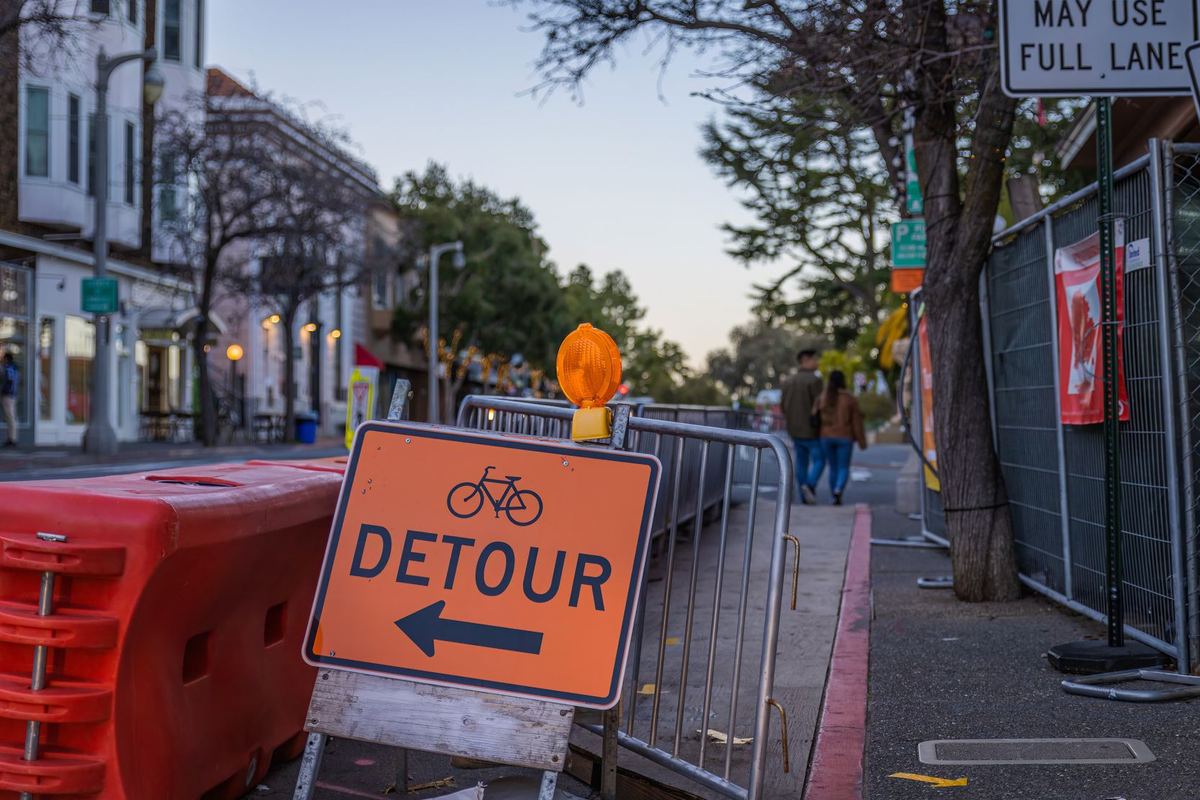
Why the season exists
The freeze-thaw of the winter driving article — fifty crossings of zero a winter — heaves the asphalt, cracks the concrete and breaks the cast-iron water mains (the city replaces around 50 kilometres of mains a year and repairs more than a thousand breaks a winter), and the repairs need warm, dry pavement; the streetcar tracks (the TTC's 300 kilometres of track renewed on a cycle — a section of Bathurst, Dundas, College, Queen or King closed for a summer at a time); the transit projects (below) that dig where the road is; the utilities (Toronto Hydro's cables, Enbridge's gas mains, the telecoms' fibre) that open the same trench; the developers (the condo tower's crane, the lane closure for the concrete pour — the Yorkville guide's Bloor Street is a permanent example); and the provincial highways (the MTO's 401, 400, 427, QEW and 404 rehabilitations that close a lane overnight and a ramp for a weekend). The city's own count is more than 2,000 active construction permits on its roads at the summer's peak.
The 2026–2027 headline projects
The Gardiner Expressway rebuild — the Dufferin-to-Strachan section (the elevated deck's replacement, the lanes reduced from three to two in each direction in phases, the ramps at Jameson and Dunn affected, the work running into 2027 and beyond; the province's 2024 acceleration promised earlier completion and the lane closures remain the Gardiner and DVP closures guide's daily subject) and the Jarvis-to-DVP section's earlier rebuild; the city's advice to use Lake Shore Boulevard and the fleet's preference for the 407-and-427 from the north. The Ontario Line (the 15.6-kilometre subway from Exhibition to the Science Centre — the station excavations at Queen (Queen Street closed between Bay and Victoria for the station box for years — the Eaton Centre's and the Sheraton's access moved), Osgoode (University and Queen — the Four Seasons Centre's corner), King–Bathurst, Moss Park, Corktown and the Don Valley's crossing; the streetcar diversions on Queen; the Ontario Line's 2031 opening). The Eglinton Crosstown (the 19-kilometre LRT's long-delayed opening — the Metrolinx timeline — and the Eglinton corridor's final surface works from Mount Dennis to Kennedy; the Crosstown West extension's tunnelling under Eglinton West to Renforth and the Pearson connection). The Scarborough Subway Extension (the 7.8-kilometre Line 2 extension from Kennedy to Sheppard — the tunnel done, the stations at Lawrence, Scarborough Centre and Sheppard under construction; McCowan Road's closures). The Finch West LRT (the 11-kilometre line from Finch West station to Humber College — opened; the Finch Avenue surface's aftermath). The Yonge North Subway Extension (the Line 1 extension to Richmond Hill — the early works at Steeles, Clark and the Langstaff hub). The Bloor-Yonge station expansion (the second platform for Line 2 — the Bloor and Yonge corner's lane closures through 2030). The Port Lands flood protection (the Don River's new mouth and the Villiers Island — the Lake Shore, Cherry and Commissioners Street closures and the new bridges; the Distillery guide's neighbour). Union Station and the rail corridor (the GO expansion's tracks and the Bay Street's Union Station Bus Terminal's works — the Union Station guide's pickup changes). The 401 (the MTO's collector rebuilds through the city and the Highway 401–409 works near Pearson), the QEW's Credit River bridge (the new twin bridge at Mississauga — the lane shifts through 2026), and the 403 widening at Oakville and Burlington.
The ordinary summer's closures
Streetcar track renewals (a section of one of the 500-series lines each summer — Bathurst's, Dundas's, College's and Queen's rotations; the street closed to through traffic for weeks with the buses replacing the streetcars and the chauffeur's parallel arterial), the water main season (the neighbourhoods' residential streets dug one block at a time — the Rosedale or Leaside street closed for six weeks; the pickup moved to the corner), the resurfacing (the city's summer paving on the arterials — a lane at a time, the milled surface's shudder), the Yonge Street pilots (the YongeTOmorrow's downtown lane reductions and the pedestrian priority between Queen and College), the bike lane installations (the Bloor, Danforth, University and Yonge lanes' construction seasons and their lane reductions), the bridge rehabilitations (the DVP's and the Gardiner's overnight lane closures — the Gardiner and DVP guide), and the developers' lane occupations (the crane swing, the concrete pour, the hoarding that takes a lane for three years — Bloor-Yorkville, King West, the waterfront).
The event closures on top
The events calendar article has the year; the summer's road-closing events — the Pride parade (Yonge and Bloor's last Sunday of June), the Honda Indy (Lake Shore Boulevard closed at Exhibition Place for the July weekend — the Gardiner's alternative gone at the same time as the Gardiner's lane closures), the Caribbean Carnival (the Lake Shore's Grand Parade on the August long weekend), the Taste of the Danforth (the Danforth closed in August), the CNE's three weeks, the Toronto Waterfront Marathon and the Toronto Marathon (the Sunday closures of University, Bay, Lake Shore and the Bayview Extension), the TIFF King Street closure in September, the Nuit Blanche night, the Blue Jays' and the Scotiabank Arena's game-night streets, and the Toronto Islands' ferry-terminal lanes on the summer weekends.
The chauffeur's tools
The city's road restrictions map (T.O.INview and the open-data restrictions feed — every permit, closure and lane reduction with its dates), Ontario 511 (the provincial highways' closures, the construction zones, the cameras — the chauffeur's check before every airport run), Waze (the crowd's reports of the closure that started an hour ago — the chauffeur vs driver article's difference is that the chauffeur reads it and does not follow it blindly), the TTC's service alerts (the streetcar diversion tells the chauffeur which street is closed), the Metrolinx and the city's project pages (the week's planned closures), dispatch's 5 a.m. briefing (the a day in the life article's morning — the day's closures compiled and the affected bookings re-routed before the chauffeurs leave), and the fleet's own knowledge — a chauffeur who drove the Queen Street diversion yesterday knows today's, and the chauffeur vetting article's city-knowledge test includes the construction season.
The routing principles
The parallel arterial: Toronto's grid gives every closed street a parallel one — Queen closed means Richmond and Adelaide; King closed means Wellington and Front; Bathurst closed means Spadina or Dufferin; the Gardiner reduced means Lake Shore or the 401; the DVP closed means Bayview or Don Mills. The timing: the rush hour article's windows shift in construction season — the Gardiner's reduced lanes make the 7–9 a.m. westbound and the 3:30–6:30 eastbound worse and the summer's off-peak clearer; the chauffeur books the 10 a.m. meeting's pickup at 9 rather than 9:20. The 407 as the summer bypass: the 407 article's toll bought when the 401 is a construction crawl — the Vaughan, Markham and Pearson runs from the north and the east; the fleet passes it at cost and the chauffeur decides at the ramp. The DVP–Gardiner alternative: when the Gardiner is reduced, the downtown-from-the-east run takes the DVP to Richmond or the Bayview Extension to Front; when the DVP is closed (the overnight rehabilitations, the fall marathon), the 401 to Bayview or Don Mills. The airport's three ways: the 427 from the Gardiner, the 401 from the DVP, the 409 from the 401 west — the chauffeur has all three and the Pearson run's summer buffer is fifteen minutes. The pickup point moved: the closed street's pickup becomes the corner, the parallel street or the lobby's other door — dispatch tells the passenger the night before (the executive assistants' guide's standing note). The honest ETA: the chauffeur's text at the departure with the real time — twenty-five minutes in June is forty in July on a construction route, and the corporate car service page's accounts prefer the truth to the optimism.
The airport in construction season
Pearson's summer — the 401–409 works, the 427's rehabilitations, the airport's own terminal road projects (the Terminal 1 departures curb's lane changes, the LINK train's works) — the how early to book article's summer buffer of fifteen to twenty minutes, the Billy Bishop's Eireann Quay and the Bathurst Street track renewal in the years it falls, and the Hamilton airport's 403 widening; the flight delays article's tracking is the same and the meet-and-greet's cell phone lot is unaffected.
The passenger's expectations
The buffer: fifteen to thirty minutes on a downtown or airport run in construction season — built into the flat-rate bookings by dispatch and stated on the hourly. The alternate pickup: the chauffeur or dispatch names the corner or the door the night before when the street is closed. The ETA: real, texted at departure, updated if the closure moves. The route: the chauffeur's, not the passenger's app's — the privacy and discretion article's chauffeur explains the detour once and drives it. The noise and the dust: the windows up and the climate on recirculate past the excavation (the in-car amenities article's cabin filter). The cost: the flat rate does not move with the detour; the hourly's clock does; the 407 at cost when taken.
A worked July afternoon
A Wednesday in mid-July, a Bay Street partner with a 3 p.m. client meeting at a Liberty Village agency, a 5:30 flight from Billy Bishop after. Dispatch's 5 a.m. briefing: the Gardiner westbound reduced to two lanes between Jarvis and Spadina for the deck work; King Street West's streetcar track renewal closing King between Bathurst and Dufferin; Queen closed at Bay for the Ontario Line's station box; a water main on Strachan. 2:15 p.m.: the pickup at the First Canadian Place porte-cochère — the chauffeur's text at 2:10: "Gardiner and King West both reduced today; taking Adelaide to Bathurst to Lake Shore; 30 minutes"; Adelaide west at 25 (the bike lane's construction lane taken by the city), Bathurst south past the King closure's barriers, Lake Shore west at 40 with the Gardiner's deck work overhead, Strachan north (the water main's flagger, two minutes), the agency's door on Liberty Street at 2:47 — thirty-two minutes for a run that is fifteen in April. 4:30: the pickup — the chauffeur has waited on Liberty Street on the hourly; Lake Shore east at 40, the Bathurst Street turn south (the track renewal is on King, not Bathurst south of it — checked at 4:25), Eireann Quay at 4:48, the Billy Bishop tunnel's door — forty minutes before the flight, the Billy Bishop page's twenty-minute rule met with a margin. Two runs, three closures avoided, one honest ETA, one flight made, and a route that no app would have drawn because the chauffeur knew at 5 a.m. what the app learned at 2:30.
Construction season quick reference
| Element | Detail |
|---|---|
| The season | May–October; the freeze-thaw's roads and mains (50 km of mains replaced a year, 1,000+ breaks a winter); the streetcar track cycle; the transit decade; 2,000+ active road permits at the peak |
| 2026–27 headline projects | The Gardiner's Dufferin–Strachan rebuild (lanes 3 → 2 in phases); the Ontario Line's station boxes (Queen at Bay–Victoria closed, Osgoode, King–Bathurst, Moss Park, Corktown); the Eglinton Crosstown's opening and the Crosstown West tunnelling; the Scarborough Subway Extension (McCowan); the Finch West LRT's aftermath; the Yonge North early works; Bloor-Yonge station (through 2030); the Port Lands and the Don's new mouth (Lake Shore, Cherry, Commissioners); Union Station's rail corridor; the 401's collectors; the QEW's Credit River bridge; the 403's widening |
| The ordinary summer | One 500-series track renewal a summer (Bathurst / Dundas / College / Queen); the residential water mains (six weeks a block); the arterial resurfacing; the Yonge pilots; the bike lane builds; the DVP and Gardiner overnights; the developers' lane occupations |
| Event closures | Pride (June); the Honda Indy's Lake Shore (July); the Caribbean Carnival's Lake Shore (August long weekend); Taste of the Danforth; the CNE; the marathons (University, Bay, Lake Shore, Bayview); TIFF's King Street; Nuit Blanche; the game nights |
| The tools | The city's road restrictions map and feed; Ontario 511; Waze read critically; the TTC's alerts; the Metrolinx pages; dispatch's 5 a.m. briefing; the chauffeur's own week |
| Routing principles | The parallel arterial (Queen → Richmond / Adelaide; King → Wellington / Front; Gardiner → Lake Shore / 401; DVP → Bayview / Don Mills); the shifted timing; the 407 as the summer bypass; the DVP–Gardiner alternative; the airport's three ways; the moved pickup point; the honest ETA |
| The passenger | A 15–30 min buffer built in; the alternate pickup named the night before; the real ETA at departure; the windows up past the dig; the flat rate unchanged; the 407 at cost |
Booking in construction season
The engine books the flat rate with the summer's buffer built in; the hourly chauffeur page for the multi-stop afternoon; the corporate car service page's accounts get the moved pickup points as standing notes; dispatch reads the restrictions feed at 5 every morning so you do not have to.






