Law firms and the car, in one paragraph
A Toronto law firm's ground transportation has four patterns: partners' travel — Pearson and Billy Bishop runs on standing orders and one-off bookings, the 407 approved, the premium sedan; client and witness pickups — meet and greet at the airport with the firm's name on the board, the premium sedan, the hotel; court, discovery and mediation days — the Superior Court at 330 University Avenue, Osgoode Hall, Old City Hall, College Park, the Federal Court on Queen Street, the mediators' and reporters' offices across the city, on hourly bookings that wait; and the late night — associates and staff home after midnight on a safe-ride policy. All four run on a corporate account with matter codes, so that client-billable trips appear on the statement by matter for rebilling, and all four require the confidentiality the firm's own rules impose on everyone who hears a client's name.
Toronto's law firms — the national firms in the Financial District's towers, the litigation boutiques on University Avenue near the courthouses, the specialist firms in the Bay-Bloor corridor — are among the trade's oldest corporate accounts, because a firm's economics reward the car: a partner's hour is billed, a client's visit is an impression, an associate at midnight is a duty of care, and every trip that can be rebilled to a matter should carry the matter's number. This article describes the service as firms use it: the towers and the courthouses and their pickups, the partner's airport pattern, the client and witness pickup, the court and discovery days, the deal week, the late-night policy, the matter-coded statement and rebilling, the confidentiality, and a worked month for a mid-sized firm.

The towers and the courthouses
The firms' offices are the Financial District's towers — the executive car service article has each tower's lay-by — and the Bay-Bloor and University Avenue buildings. The courts: the Superior Court of Justice at 330 University Avenue (the main civil and criminal courthouse, with its entrance on University and a lay-by that the sheriffs police; Armoury Street's side is the alternative); Osgoode Hall at Queen and University (the Court of Appeal and the Law Society, with its gates on Queen Street and the drop at the Queen Street curb); Old City Hall at Queen and Bay (the Ontario Court of Justice's criminal courts, with the drop on Queen or Bay); College Park at Yonge and College (family and provincial offences courts); the Federal Court at 180 Queen Street West; the new Ontario Court of Justice at 10 Armoury Street behind the Superior Court, opened in 2023, with its entrance on Armoury; and the Ontario Labour Relations Board and the tribunals on Bay and Dundas. Each has a drop-off the chauffeur knows and a security perimeter that decides where a car may wait; the hospital row article covers University Avenue's other institutions.
The partner's airport pattern
Partners fly — to Calgary, Vancouver, Montreal, New York, London — on a pattern that is a standing order for the regular ones and a one-line booking on the account for the rest: the premium sedan from the house or the tower, the 407 approved for the partners in the 905, Billy Bishop for the Montreal and New York legs (the Pearson vs Billy Bishop comparison), the flight tracked, the receipt on the statement. A partner's assistant books it as the executive assistants' guide describes, and the partner works in the back seat on the Gardiner.
The client and witness pickup
A client arriving for a closing, a witness for a trial, an expert for a discovery, a counterparty's team for a mediation: booked with meet and greet, the firm's name (or, for a witness who should not be identified, a first name only) on the board, the premium sedan, the hotel's full name, and a chauffeur briefed that the passenger is the firm's guest. A witness who must not meet the other side's witness at the airport is a note dispatch reads and a chauffeur who waits at a different door; the privacy and discretion article covers the rest.
Court, discovery and mediation days
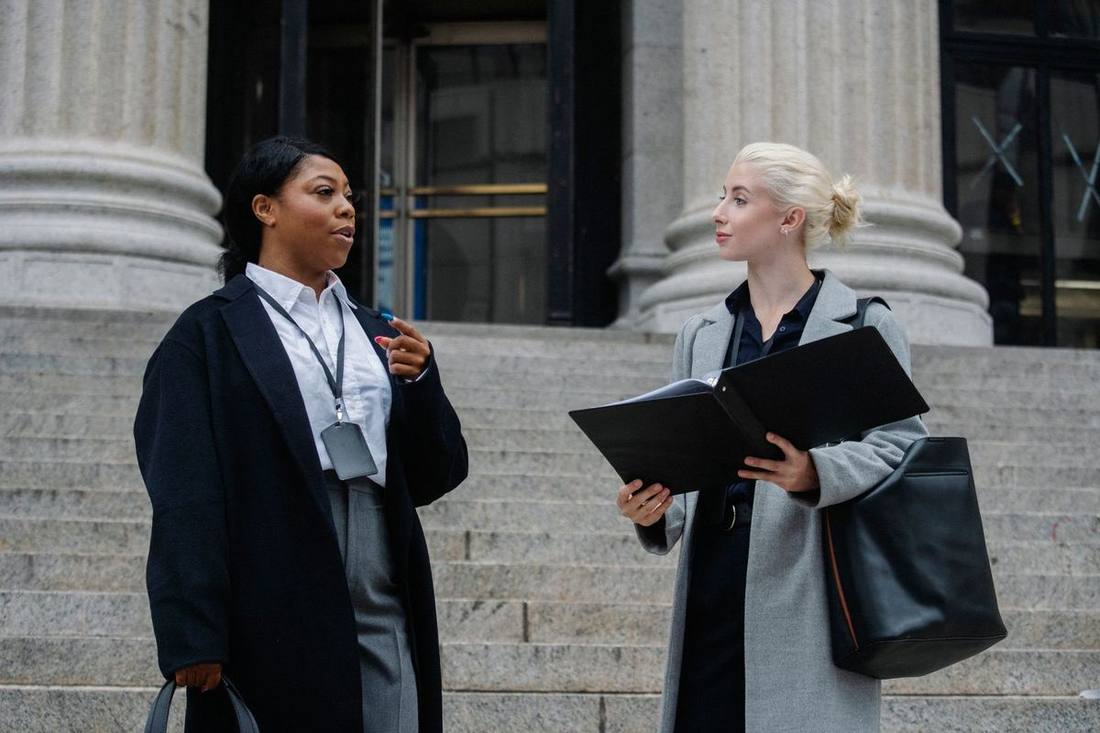
A trial day is an hourly booking: the partner and the associates from the tower to 330 University at 9 with the trial boxes in the trunk (the SUV for the boxes), the car waiting on Armoury Street or returning at the noon recess and at 4:30, the boxes back to the tower. A discovery is the same at the court reporter's offices on Bay or Adelaide; a mediation at the mediator's offices or a hotel's boardroom, with a car that waits through a day whose end nobody can predict. The hourly vs point-to-point article explains why the hourly is right for a day with no known end.
The deal week
A closing week — the client's executives in from head office, the counterparty's team at another firm, the bankers, the signing at midnight on Friday — is a roadshow-style booking: an hourly fleet on the firm's account for the week, the client's cars on the matter's code, the airport runs with meet and greet, the late-night drops after the signing, and a chauffeur who has driven closings and knows that "we'll be down in ten minutes" means an hour. The board meeting and AGM article covers the directors' version.
The late night and the safe-ride policy
Associates and staff working past 9 or 10 p.m. go home by car under most firms' safe-ride policies — the firm pays, the trip is on the firm's cost code rather than a matter's, and the chauffeur waits at the tower's lay-by and sees the passenger to the door; the women travelling alone article describes the standard that a safe-ride policy exists to buy, and the red-eye article the overnight shift that covers the 1 a.m. drop to Leslieville. A firm's late-night volume is predictable by the calendar — closings, trials, the fiscal year-end — and dispatch rosters for it.
The matter-coded statement and rebilling
Every trip on the firm's corporate account carries a matter number (or the firm's general code for non-billable trips), entered by the booker or defaulted from the traveller's profile, and the monthly statement subtotals by matter so that client-billable disbursements are ready for the invoice; the corporate account billing article shows the columns and the HST as its own line for the firm's input tax credit. A firm's accounting department imports the statement's CSV into its practice-management system, and the expense reports article covers the rare individual receipt.
Confidentiality
A chauffeur who drives a firm's partners and clients hears matter names, counterparties, strategies and the mood of a deal, and repeats none of it — to the other side's chauffeur at the courthouse lay-by, to a passenger the next day, to anyone; the privacy and discretion article sets the standard, our chauffeurs sign a confidentiality undertaking, and a firm that requires its own form gets it signed. Two counterparties' teams are never in the same car, and a chauffeur who recognises a passenger from the other side of a matter says nothing.
The 905 and the satellite offices
Firms with Mississauga, Vaughan or Markham offices, or clients there, use the 407 as policy on the account — the 407 article and the Pearson to the north-east article explain — and the Mississauga and Markham guides cover the courthouses there (the Brampton courthouse at Hurontario and the 407 for Peel, the Newmarket courthouse for York, the Oshawa courthouse for Durham) for the litigators who appear in them.
A worked month: a forty-lawyer firm
Twenty-two partner airport runs (six on standing orders; the 407 on nine). Four client pickups with meet and greet on three matters. Two trial weeks at 330 University on hourly bookings with the SUV for the boxes — one matter. Three discoveries and two mediations on hourly bookings. One closing week with an hourly fleet of two on the client's matter. Thirty-one late-night safe rides on the firm's general code. The statement: subtotals by nine matter numbers and the general code; HST as a column; the 407 at cost on the trips that used it; the gratuity set at 15 per cent by the account. Imported into the practice-management system in ten minutes; the client disbursements on the next invoices.
Law firm quick reference
| Pattern | Booking | Coding |
|---|---|---|
| Partner's flight | Premium sedan; standing order or one line; 407 approved; Billy Bishop for Montreal/NY | Firm general or matter |
| Client / witness pickup | Meet and greet; name on the board; premium sedan; hotel's full name | Matter |
| Trial day | Hourly; SUV for boxes; 330 University / Armoury St | Matter |
| Discovery / mediation | Hourly; reporter's or mediator's offices | Matter |
| Closing week | Hourly fleet; airport runs; late drops | Client's matter |
| Late-night safe ride | Point-to-point from the tower's lay-by; seen to the door | Firm general |
| Confidentiality | Undertaking signed; counterparties never share a car | — |
| Statement | Subtotals by matter; HST column; CSV to practice management | — |
Opening a firm's account
The corporate car service page opens the account with matter coding; the corporate travel policy article gives the policy section a firm's managing partner will want, and the duty of care article the safe-ride rationale.
Osgoode Hall, the Law Society and the profession's calendar
The Law Society of Ontario's Osgoode Hall on Queen Street hosts the call to the bar ceremonies in June and September (the convocation article covers the families' cars, and Roy Thomson Hall's or the Convention Centre's ceremonies when the classes are large), the Advocates' Society's and the Ontario Bar Association's events fill the Royal York and the King Edward through the year, and the firms' own client dinners, associate retreats and holiday parties are on the account's general code; the corporate holiday party article covers the December night when a firm of two hundred goes home from the Carlu in Sprinters.
Cross-examination of the invoice
A firm's clients audit disbursements, and a black car line on an invoice is questioned less when the statement behind it carries the matter, the date, the route, the traveller and the HST — which is the point of the coding. A partner's Pearson run on a client's matter, a witness's hotel transfer, a trial week's hourly: each is a line the client's auditor can match to the file, and the expense reports article describes what an auditor wants to see.
Booking notes for firms
Three small things. Put the matter number on every booking, or set the traveller's default and override when needed. Tell dispatch when a passenger is a witness or a counterparty — the board, the door and the discretion change. And put the safe-ride policy on the account as a rule (after 9 p.m., any associate or staff, the general code), so that the associate at midnight books a car and not a rideshare.
Arbitrations, hearings and the tribunals
Beyond the courts, Toronto's arbitration centres (Arbitration Place on Bay, the ADR Chambers) and the tribunals — the Ontario Securities Commission's hearing rooms on Queen Street West, the Human Rights Tribunal, the Licence Appeal Tribunal on Bay — host hearings that run for days with the trial day's structure: the hourly, the boxes, the car that waits for a day with no known end. The executive car service article has Bay Street's lay-bys, where most of them sit.
The associate's airport run and the firm's junior travel
Associates travel too — to a discovery in Calgary, a closing in Montreal, a deposition in New York — and a firm's policy decides whether they book the car or the train; the corporate travel policy article suggests the car for the airport and the UP Express for the solo carry-on at a good hour, and the limo for one passenger article works the arithmetic a managing partner will recognise.
The Federal Court, the immigration hearings and the IRB
The Federal Court at 180 Queen Street West and the Immigration and Refugee Board's hearing rooms on Victoria Street bring a different bar — immigration and refugee counsel, whose clients arrive from across the GTA and sometimes from detention — and the firms who practise there use the same court-day structure with a chauffeur briefed on the buildings' security; the diplomatic and consular article covers the consulates the same counsel visit.






