Medical transport, in one paragraph
A black car for a non-emergency medical appointment in Toronto takes a passenger from home to the hospital's or clinic's entrance loop (each is on the chauffeur's map — Toronto General's and Mount Sinai's on University, Sunnybrook's M-wing, St. Michael's on Queen, Princess Margaret's, the Scarborough Health Network's three sites, Trillium's, Mackenzie Health's, Lakeridge's, Southlake's, McMaster's), walks them to the department's door, waits on an hourly booking or returns at the agreed time, stows a walker or wheelchair, stops at the pharmacy on the way home, and texts a family member at each end. Dialysis and chemotherapy are standing orders. Post-procedure pickups follow the hospital's discharge rules (a named adult, no unaccompanied discharge after sedation). A black car is not an ambulance and does not carry a passenger who needs medical care en route; for that, call 911 or the hospital's patient transfer service.
Medical transport is a quiet and constant part of the trade: the passenger to a 7:30 a.m. dialysis chair three mornings a week, the woman to Princess Margaret for the third of six chemotherapy cycles, the man collected after a colonoscopy who cannot take a taxi alone, the couple from Sudbury in a downtown hotel for a week of tests, the visiting surgeon from Pearson to a Hospital Row operating room. Each needs a chauffeur who knows which of a hospital's eight entrances is the one for the clinic, who waits without being asked twice, who carries the bag and the walker, and who texts the daughter. This article describes the service as we run it: the hospitals and their entrances, the standing orders for dialysis and chemotherapy, the wait-or-return decision and its arithmetic, the post-procedure pickup and the discharge rules, the mobility aids and the accessible vehicle, the family's text, the pharmacy stop, the out-of-town patient's week, the pace, the fare, and — plainly — what a black car is not.
The hospitals and their entrances
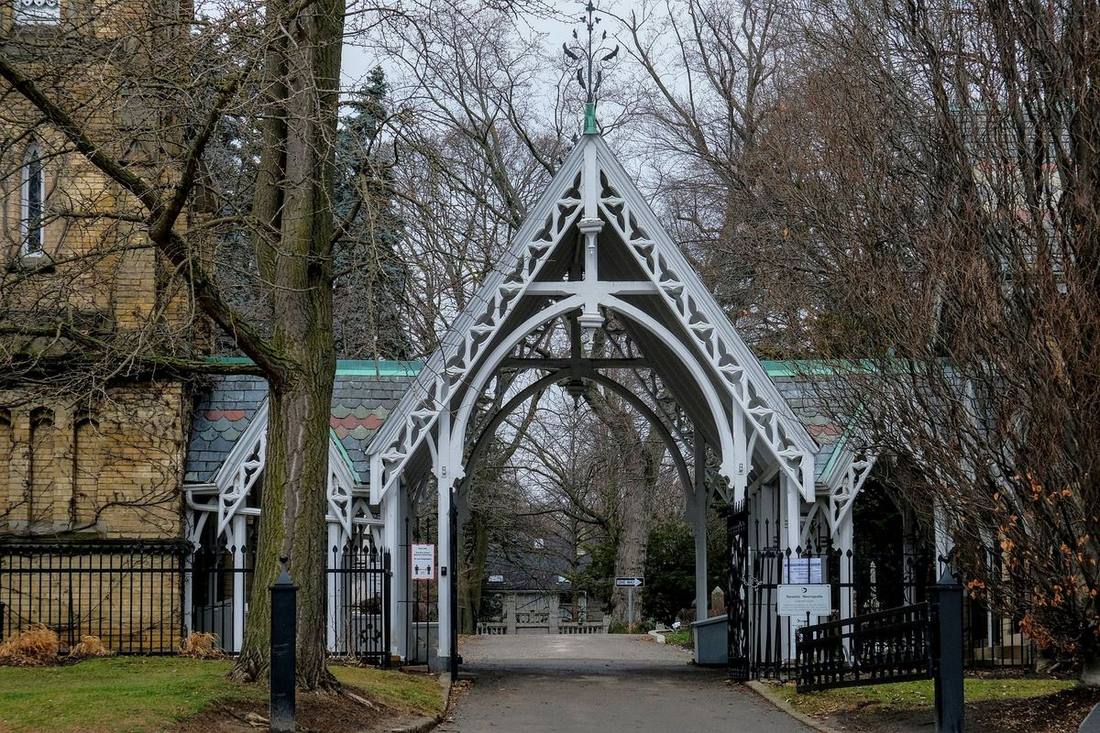
Every hospital has several entrances and one that is right for a given clinic, and the chauffeur's map has them. Toronto General (University Avenue): the main entrance on University for the Peter Munk Cardiac Centre and most clinics, the Elizabeth Street entrance for others. Mount Sinai (University): the main entrance and the Murray Street entrance. Princess Margaret (University at Murray): the main entrance for the cancer clinics and the chemotherapy daycare. SickKids (University at Gerrard): the main entrance on University, the Atrium on Elizabeth. St. Michael's (Queen at Victoria): the Queen Street entrance and the Bond Street entrance. Toronto Western (Bathurst at Dundas): the main entrance on Bathurst. Sunnybrook (Bayview): the M-wing main entrance, the Odette Cancer Centre's own entrance, the Holland Centre on Wellesley. Women's College (Grenville). St. Joseph's (the Queensway). Michael Garron (Coxwell). Humber River (Wilson). North York General (Leslie). The Scarborough Health Network (General on Lawrence, Centenary on Ellesmere, Birchmount). Trillium (Mississauga Hospital on the Queensway, Credit Valley on Eglinton). Mackenzie Health (Richmond Hill and Vaughan). Lakeridge (Oshawa, Ajax Pickering, Whitby). Southlake (Newmarket). McMaster and Hamilton Health Sciences (Hamilton). The hospital row article covers University Avenue in detail and the city and neighbourhood guides the others; a booking that names the clinic gets the right door.
Dialysis: the standing order that does not move
A dialysis patient's chair is three mornings a week at a fixed hour for years, and the standing order that serves it — the standing orders article explains the mechanics — is the one dispatch protects above almost everything: the same chauffeur, the same time, the unit's entrance, the four-hour gap covered by a return at the agreed time, a substitute chauffeur briefed the evening before on the rare weeks one is needed. A snowstorm does not cancel a dialysis run; the winter driving article explains that the SUVs go out on the days the sedans do not.
Chemotherapy and the treatment cycle
A chemotherapy cycle — Princess Margaret's daycare, Sunnybrook's Odette Centre, the Scarborough network's, Trillium's Carlo Fidani Centre, Lakeridge's Durham centre, Southlake's Stronach Centre — is a series of appointments over weeks with a pattern the oncology unit sets, and a standing order follows it: the drop at the centre's entrance, the wait or the return (treatment sessions run two to six hours and the return at an agreed time is usual, with a text from the passenger when they are ready), the gentle drive home, the family's text. Patients on treatment are tired and sometimes unwell on the way home; the chauffeur drives accordingly and carries a bag and water.
Wait or return: the arithmetic
A short appointment — a blood draw, a consultation, an imaging slot — is an hourly booking of two hours with the chauffeur in the lot; a long one — a treatment session, a day surgery — is two fares with a return at an agreed time and a text from the passenger when they are ready; the hourly vs point-to-point article has the break-even at about ninety minutes. Dispatch advises when the order is set up, and a chauffeur who is waiting on an hourly is never impatient — appointments run late and everyone in the trade knows it.
Post-procedure pickups and the discharge rules
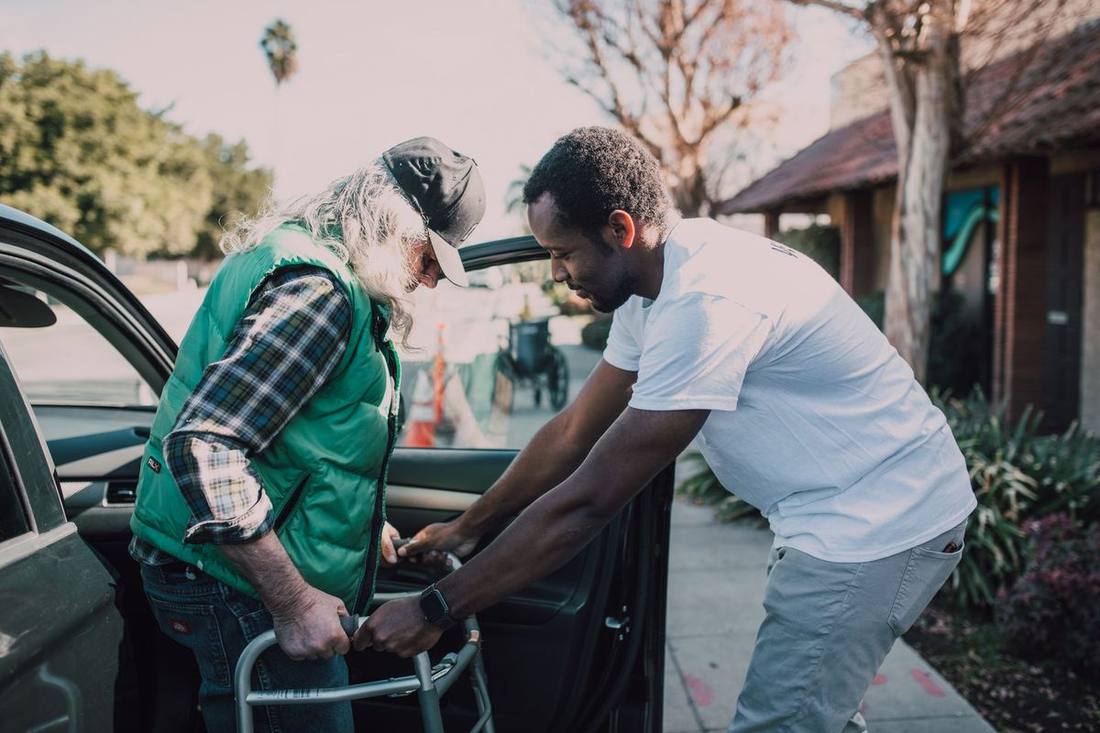
Hospitals will not discharge a patient after sedation — a colonoscopy, an endoscopy, a cataract surgery, a day-surgery procedure — to leave alone in a taxi, and require a named adult to accompany them; our chauffeur can be that named adult where the hospital's policy allows a driver (many do, with the patient's consent and the name given to the unit in advance), and where it does not, a family member rides along. The chauffeur meets the patient at the day-surgery unit's discharge area (not the front door), takes the discharge instructions and the prescription, stops at the pharmacy if asked, and sees the patient into the house and seated; the family is texted. The passenger should not be left alone if the unit says so, and the chauffeur will say so to the family. The seniors' guide describes the same care in the weekly context.
Mobility aids and the accessible vehicle
A walker, a cane, a folding wheelchair or a folding scooter goes in the trunk; a passenger who uses a wheelchair and can transfer rides in any vehicle with the chauffeur's help; a passenger who cannot transfer needs the wheelchair-accessible van the accessible service article describes, with a day or two's notice. Oxygen concentrators travel on the seat beside the passenger; a chauffeur will secure one. The hospitals' entrances have wheelchairs at the door and the chauffeur fetches one if asked.
The family's text
Most medical bookings are made by a family member — often in another city — and the account records their mobile; they receive a text when the chauffeur collects the patient, when the patient is at the clinic's door, and when the patient is home, every time, without asking. The privacy article sets the standard: the chauffeur knows where the passenger went and tells no one but the family the account names.
The pharmacy stop and the way home
A prescription from the appointment is filled on the way home — the passenger's usual pharmacy, or the hospital's — with the chauffeur waiting or going in with the prescription while the passenger stays in the car; it is a stated stop on a point-to-point fare or simply time on an hourly. A passenger who is unwell on the way home has a chauffeur with water, a bag and a gentle foot, and a family who knows.
The out-of-town patient's week
Patients come to Toronto's hospitals from across Ontario and beyond — a week of tests at Toronto General, a consultation at Princess Margaret, a child's treatment at SickKids — and stay in the hospitals' partner hotels or nearby; the week's transport is a series of short fares between the hotel and the hospital, or an hourly for a day of appointments, and the hospital row article covers the hotels near University Avenue. A family from Thunder Bay who booked the week's cars once from home and had the same chauffeur each morning is a booking we make constantly, and the healthcare executive transport article covers the other side — the visiting physicians and executives.
The pace and the manner
A medical passenger is often anxious, sometimes in pain, occasionally frightened, and the chauffeur's manner is the service: calm, unhurried, quiet unless spoken to, ready with an arm and a word. Chauffeurs who drive medical orders are chosen for it and the how chauffeurs are vetted article mentions the first-aid training every chauffeur holds; a passenger who becomes unwell in the car has a chauffeur who knows to pull over, call 911 and stay.
The fare, who pays and the receipt
The fixed fare or the hourly rate that anyone pays — the how much does a black car cost article has the structure — to the passenger's or a family member's card, with a receipt that some insurers and benefit plans accept for medical travel claims and that the Canada Revenue Agency's medical expense rules (linked below) may allow for patients travelling a distance for treatment; the expense reports article covers the receipt's contents. There is no medical surcharge.
What a black car is not
It is not an ambulance and it does not carry a passenger who needs medical care during the trip — oxygen administered, a stretcher, monitoring — or a passenger who is acutely ill; for those, 911 or the hospital's non-emergency patient transfer service, which is staffed by paramedics. A chauffeur who arrives to find a passenger who should not travel by car will say so and help call the right service. We say this plainly because families sometimes ask for more than a car can safely do, and the honest answer protects the passenger.
A worked cycle: six treatments at Princess Margaret
A woman from Leaside, six chemotherapy sessions three weeks apart at Princess Margaret's daycare, booked by her husband as a standing order. Each session: the chauffeur at the side door at 8:15, the walker stowed, University Avenue by 8:45, the Murray Street entrance, the walk to the daycare's desk, a text to the husband; four hours later a text from the passenger, the chauffeur at the entrance in ten minutes, the pharmacy on Bayview for the anti-nausea prescription, home by 1:30, the bag carried in, a text to the husband. The same chauffeur for five of the six; the sixth, a substitute briefed the evening before who knew the side door. Six fixed fares each way, the husband's card, and a receipt for the benefits claim.
Medical transport quick reference
| Situation | What the chauffeur does | Structure |
|---|---|---|
| Consultation / imaging / blood work | Drop at the clinic's entrance; walk to the desk; wait in the lot | Hourly, 2 h |
| Treatment session (2–6 h) | Drop; return at the agreed time on the passenger's text | Two fares |
| Dialysis (3×/week) | Standing order; same chauffeur; return after the session | Two fares per session |
| Chemotherapy cycle | Standing order following the unit's schedule; pharmacy stop | Two fares per session |
| Post-procedure (sedation) | Named adult where allowed; discharge area; sees the patient in | Point-to-point + wait |
| Out-of-town patient's week | Hotel ↔ hospital daily; same chauffeur | Fares or hourly |
| Wheelchair, non-transferring | Accessible van with notice | Any |
| Acute illness / stretcher / monitoring | Not a black car — 911 or patient transfer | — |
Setting it up
A call to dispatch (the contact page) with the hospital, the clinic, the pattern, the mobility aids and the family's mobile sets up the account and the standing order the same day; the seniors' guide covers the weekly context and the hospital row article University Avenue's hospitals.
Booking notes for medical transport
Three small things. Name the clinic, not just the hospital — the entrance depends on it. Say whether the passenger will be sedated, so the discharge rules are arranged in advance with the unit. And give the family's mobile; the text at each end is the part of the service families mention most.






