Production transport, in one paragraph
Film and TV production transport in Toronto serves the productions shooting at Pinewood Toronto Studios (the Port Lands), Cinespace (Eastern Avenue and Kipling in Etobicoke), the Toronto Sound Stages and the smaller stages, the broadcast studios (CBC on Front Street, Corus at the waterfront, the news studios) and locations across the city and the 905 — with talent cars (actors and directors from the hotel or the residence to set for a call time that is often 5 or 6 a.m., and back after wrap), crew and department-head cars, airport runs for visiting talent with meet and greet and discretion, and the festival's September. It is booked by the production's transportation captain or coordinator on a production account with the show's cost codes, often as day rates (a chauffeur and vehicle for the shooting day) rather than hourly, within the union agreements that govern crew transport, and it is run with the privacy and discretion that talent's presence in the city requires.
Toronto's screen industry — more than two billion dollars of production a year, the studios in the Port Lands and Etobicoke, the city doubling for New York and Chicago on a hundred streets, the broadcasters' studios, the festival that brings the world's talent every September — runs on transport that begins before dawn and ends after dark. A series shooting at Pinewood has forty people who must be at the stage by 5:30, a feature on location in the Distillery has a star at the Four Seasons who is picked up at 4:45, a broadcast studio has a guest landing at Pearson for a 6 p.m. live hit; and the transportation department that books it all — a captain, coordinators, the unit's own drivers under the union agreement, and the black car operators who supplement them — works the longest hours on the call sheet. This article describes production transport as we run it: the studios and the locations, the call time and the talent car, the crew and department heads, the airport and the visiting talent, the base camp and the unit's own drivers, the transportation captain's booking, the production account and the day rate, the union context, TIFF, and a worked shooting day.
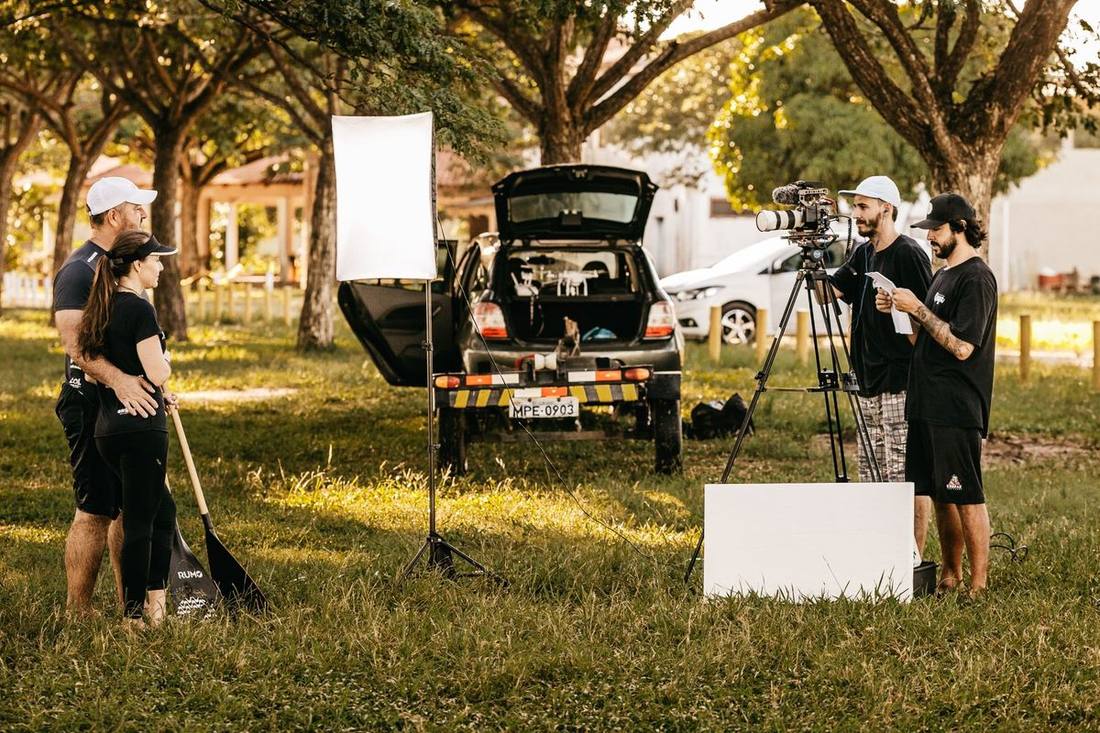
The studios
Pinewood Toronto Studios on Commissioners Street in the Port Lands — the largest sound stages in Canada, entered from Commissioners off Cherry Street, with a security gate and a base camp lot — is reached from the Gardiner's Lake Shore or Cherry Street exits; the Port Lands' reconstruction changes the approach year by year and the Distillery guide covers the neighbourhood. Cinespace Film Studios has its eastern campus on Eastern Avenue at Booth (the Leslieville stages, reached from Eastern or Lake Shore East) and its western campus on Kipling Avenue in Etobicoke (reached from the 427 or the Gardiner and Kipling; the Etobicoke guide). Toronto Sound Stages and the smaller stages are scattered — the Port Lands, Etobicoke, Mississauga, Scarborough — and the Beaches and Leslieville guide covers the east end's film district. The CBC Broadcasting Centre on Front Street West at John, Corus Quay on the waterfront at Dockside Drive, and the news and morning-show studios have their own security and drop-offs; the Harbourfront guide covers Corus.
The call time and the talent car
A production's call sheet sets each actor's pickup time — often 4:30 to 6 a.m. for a 6 or 7 call, earlier for a long makeup — and the talent car is at the hotel's porte-cochère or the residence's door at the minute, with a text to the actor's assistant or the transportation coordinator; the red-eye article describes the overnight roster that covers it. The vehicle is what the actor's deal and the production's rules specify — an Escalade or a Navigator most often, an S-Class for some, a Sprinter for a group of cast — and the same chauffeur through a shooting block is the standard, because an actor at 4:45 a.m. does not want a stranger. Wrap is when it is — 7 p.m. or 2 a.m. — and the car waits at base camp or returns on the coordinator's text.
Crew and department heads
Directors, producers, the director of photography, the production designer and the department heads travel between the production office, the stages, the locations, the scouts and the hotels on the production's cars; a director's day — the office at 7, a location scout across the city, the stage at noon, the edit suite at 6 — is an hourly with one chauffeur, and the roadshow article's buffer discipline applies. The crew at large travel by the unit's own vehicles and the union's provisions; a black car's crew work is the heads and the visiting VFX or studio executives.
Airport runs and visiting talent
An actor arriving for a shoot — from Los Angeles, London, Vancouver — is met at Pearson with meet and greet by a chauffeur with a board bearing a code word or nothing, at Door A or, for the talent who prefers it, through the private aviation terminals where the studios' aircraft land; the hotel (the Four Seasons, the Hazelton, the Ritz, the Shangri-La — the Toronto luxury hotels guide) or the production's rented residence; and the discretion that the privacy and discretion article describes: no names in the hall, tinted windows, a route that avoids the obvious, nothing said to anyone. The TIFF guide covers September, when the same procedure runs a hundred times a day.
Locations and base camp
A location shoot — a Rosedale mansion, a Financial District tower doubling for Wall Street, a Scarborough strip mall, a Muskoka lake — has a base camp of trailers on a nearby street or lot, and the talent car drops at base camp, not the set; the transportation captain's map has both and the film-friendly Toronto permits close the streets. A production shooting in the 905 — Hamilton's downtown as Brooklyn, Oshawa's Parkwood Estate, the Halton countryside — has the 407 on the account and the Hamilton guide and the Oshawa guide note the locations; Muskoka and the cottage country shoots are the Muskoka article's run with a chauffeur who stays.
The transportation captain and the booking
The production's transportation department — a captain under the union agreement (IATSE Local 411 and the Teamsters' provisions govern the unit's drivers and vehicles), coordinators, and the drivers — books the black cars it needs to supplement the unit's own: talent cars for the cast the unit's drivers cannot cover, airport runs, the department heads' hourlies, the visiting executives. The captain emails dispatch the call sheet's transport page the evening before (pickups, times, addresses, the stage or base camp, the wrap plan) and dispatch assigns the chauffeurs, who report to the captain on the day; the how dispatch works article describes the desk that receives a call sheet at 9 p.m. for a 4:30 a.m. pickup.
The production account and the day rate
Production bookings are on the production company's corporate account with the show's cost codes (the transportation department's, the talent's deal, the airport line), and the structure is often a day rate — a chauffeur and vehicle for the shooting day, twelve to fourteen hours, with overtime after — rather than hourly, because a shooting day's length is the call sheet's and a day rate is what the production's budget lines understand; the hourly vs point-to-point article explains the hourly and dispatch quotes the day rate for a production. The corporate account billing article shows the statement the production accountant reconciles against the transport budget, and the deposits and payment article covers the production's payment terms.
The union context
Toronto's productions run under the IATSE and the Directors Guild of Canada agreements, and the unit's transportation is largely the union's members driving the production's own vehicles; black car operators supplement under the agreements' provisions for hired vehicles and drivers, and a captain who books us knows the terms. Our chauffeurs on a production are not crew — they are the hired vehicle's driver — and they follow the captain's direction on the day; the becoming a chauffeur article notes that production driving is a specialty within the trade.
TIFF's September
The Toronto International Film Festival's ten days in September are production transport's annual peak: the studios' talent in the city for premieres, the festival's own fleet of sponsors' vehicles, the King Street closure for the Festival Street, the hotels' porte-cochères full of black SUVs, and the airport's private terminals busy with the industry's aircraft; the TIFF guide covers the week and the Entertainment District guide the district. Productions shooting in September plan around it.
Discretion, again
A production's presence in a neighbourhood is news, and its talent's whereabouts are the tabloids' business; the chauffeur who drives an actor from the Hazelton to Pinewood at 4:45 a.m. tells no one, the vehicle's windows are tinted to the legal limit, the pickup is at the hotel's side entrance if the front is watched, and the privacy and discretion article sets the standard that the studios' transportation departments have held us to for years. The women travelling alone article covers the safety standard that applies to an actor alone at 2 a.m. after wrap.
A worked shooting day: a series at Pinewood
9 p.m. the night before: the captain's transport page — four talent pickups (4:30, 4:45, 5:00, 5:30) from the Four Seasons, the Hazelton and two rented residences in Rosedale; a director from the Annex at 5:15; a visiting studio executive from Pearson at 2 p.m. with meet and greet and a code word; the wrap plan "call at wrap." Dispatch assigns five chauffeurs from the overnight roster and one for the airport. 4:25 a.m.: the first Escalade at the Four Seasons' side entrance; a text to the actor's assistant. 5:35: all five at Pinewood's Commissioners Street gate, base camp, the captain's check. 2:10 p.m.: the executive through Terminal 1's international exit to a board with a single word; the Gardiner and the Port Lands to the stage by 3. 8:40 p.m.: "wrap" from the captain; the five cars at base camp by 8:55; the last actor at the Hazelton at 9:40. Six day rates on the production's account, the show's cost codes, and a captain who has done it four hundred times.
Production transport quick reference
| Element | Detail |
|---|---|
| Studios | Pinewood (Port Lands, Commissioners St); Cinespace (Eastern Ave; Kipling Ave); Toronto Sound Stages; CBC (Front St W); Corus Quay |
| Talent car | Hotel/residence to base camp for the call time (often 4:30–6 a.m.); Escalade/Navigator/S-Class; same chauffeur through the block; wrap on the captain's text |
| Department heads | Hourly; office, scouts, stage, edit |
| Visiting talent | Meet and greet with a code word; private aviation terminals; discretion |
| Locations | Base camp, not the set; 905 with the 407; Muskoka with a staying chauffeur |
| Booking | Captain's transport page the evening before; chauffeurs report to the captain |
| Account | Production account; show cost codes; day rates with overtime |
| Union | IATSE / DGC agreements; hired vehicles under their provisions |
| TIFF | September's peak; King Street closed; hotels full |
Booking production transport
The corporate car service page opens the production account; the captain's transport page goes to dispatch by email; the TIFF guide covers the festival and the private aviation page the studios' aircraft.
Booking notes for productions
Three small things. Send the transport page the evening before, by 9; a 4:30 pickup assigned at midnight is a pickup assigned to whoever is awake. Give the base camp's address and the stage's gate, not the production office's. And tell dispatch the talent's preferences once — the vehicle, the side entrance, the silence — and they are on the show's account for the block.
The broadcast studios' live hits
The news and morning-show studios book cars differently from the productions: a guest landing at Pearson at 4 p.m. for a 6 p.m. live interview at the CBC on Front Street or a Corus studio at the waterfront is a single run with a hard deadline, meet and greet, the studio's guest entrance and a producer's mobile, and the Harbourfront guide has Corus Quay's drop-off; a 5 a.m. guest for a morning show is the overnight roster's. The studios' accounts carry the shows' codes and the executive assistants' guide's rules apply to the bookers who are, in this case, producers.






